Loading...
Please wait while we load the content...

Loading...
Please wait while we load the content...
Stay informed about our latest publications, calls for proposals, and special announcements. As a subscriber, you'll also enjoy exclusive member discounts of 10%-20% on all orders. Join our community of scholars, librarians, and readers today.
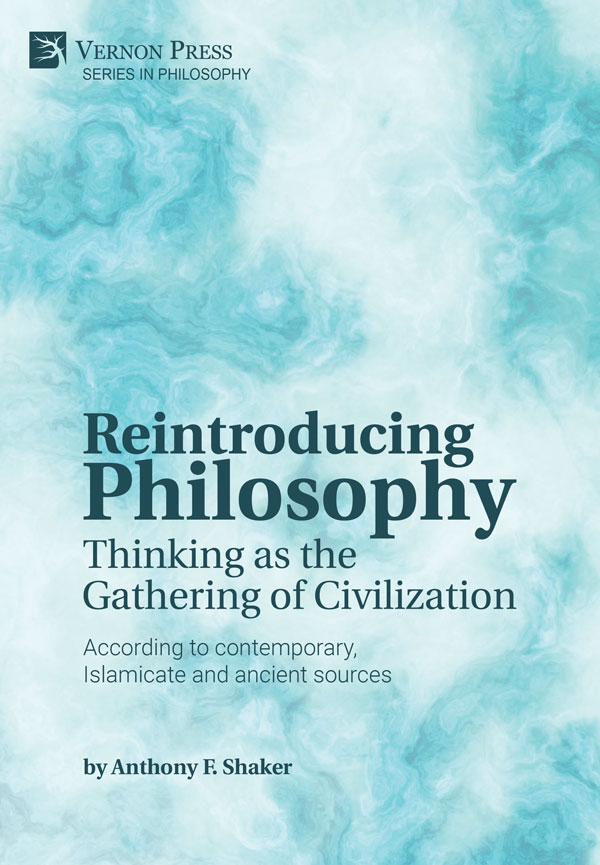


Availability
In stock
ISBN
9781622738373
Edition
1
Publication Date
October 6, 2020
Physical Size
236mm x 160mm
Number of Pages
770
Currency
Quantity
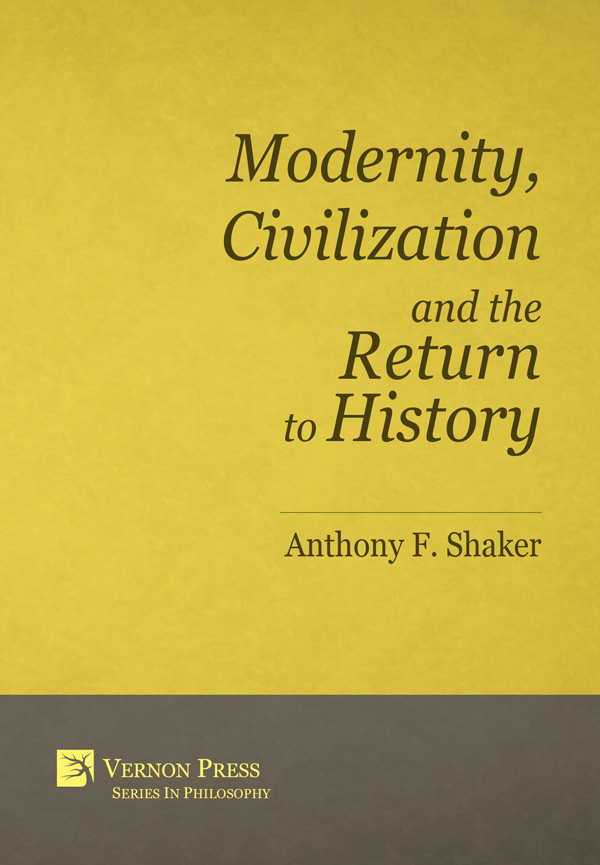
Shaker demonstrates a profound erudition in different philosophical traditions, ancient and recent, Western and Eastern. I particularly admire his insights into Islamic philosophy, or Ḥikma, and his precise grasp of the doctrines of Qūnawī and Mullā Ṣadrā, pivotal for this tradition. Delving deep into the history of different branches of Islamic thought, he reveals the paradigmatic role which the Islamicate civilization played in relation to western Europe, which can justly be described as both its heir and antagonist. Another merit of Shaker’s book is its eloquent style and colourful language which makes reading it a highly enjoyable experience for specialist and non-specialist readers alike.
Dr. Janis Esots
Institute of Ismaili Studies, UK & University of Latvia
Anthony Shaker’s book is an ambitious attempt to show the contemporary social and political relevance of ancient Greek, Islamic, and modern German philosophy. Addressing global concerns with a view to the timeless relevance of the classics of world philosophy, Shaker is not content with an exercise in the historiography of philosophy or comparative philosophy but aims to draw from his adopted traditions to develop something novel that is capable of addressing problems endemic to our time. At the same time, his conviction is that the capacity for renewal in the three philosophical traditions can only be actualised by thinking anew, and thereby making our own, the problems, and the constitutive insights that lie at their roots.
Prof. Jari Kaukua
Department of Social Sciences and Philosophy, University of Jyväskylä, Finland
In many ways, "Reintroducing Philosophy" is a postcolonial work that moves far beyond the theoretical confines of academic post-colonialism. Drawing on his knowledge of the Chinese, Indian, Greek, Islamicate, and modern German traditions of philosophy, Shaker’s bold and creative work is a meditation of sorts on what philosophy should look like in a post-Western world...
Prof. Atif Khalil
University of Lethbridge, Canada
Shaker sees, like many others, the closure of an era of global Western dominance. But while we normally discuss that in terms of politics and economics, he is looking at its ramifications for philosophy and the ‘decolonization’ of knowledge. Clearly, though, the sheer depth and breadth of the author’s philosophical knowledge allows him to imagine these in a much deeper, positive sense than perhaps the comparatively more shallow, reactive sense in which they are usually discussed...For the ‘neo-traditionalists', this book challenges their fixation on the past by directing focus on the post-Western future...backed by formidable scholarship.
Prof. Edward R. Moad,
Department of Humanities, Qatar University, Qatar
Anthony Shaker provides interesting arguments about the treasure of ‘human inheritance’, which is not to be found in the physical world, since this vanishes in time...Academics of all faiths and none will find this a thought-provoking text to contemplate.
Dr. Charles Morris Lansley FLS
Author of Darwin’s Debt to the Romantics
Stressing the responsibility of the thinkers/philosophers in the post-Western World, Shaker seeks ways of introducing a thinking proper to philosophy, away from what he calls the “tribal ideologies” of our age...His tour de force of the history of philosophy from Ancient Greece to the Islamicate and Western worlds rests on an objection to Western-centric history-telling. But if he is correct in his assessment of modern positivism and reductionism and their truncation of philosophy in the name of science, how is humanity to return to its "natural course of history", as no serious thinking about existence can miss its relation to God?
Dr. Tuncay Başoğlu
Turkiye Diyanet Foundation, Centre for Islamic Studies, Turkey
Anthony Shaker has written an impressive book in which he argues his point with great scholarly precision, using finely polished language...He achieves his goals with distinction and a rare ability to recognize and illustrate the connections and relationships that shape his subject matters. He demonstrates intricate philological and philosophical knowledge of the Greek and Arabic traditions effortlessly and insightfully, contributing significantly to the further dissolution of a persistent bias toward "Western" philosophy...This extensive study is by no means a history of philosophy, but indeed a work of genuine philosophy in its own right which, with the idea of "Thinking as the Gathering of Civilization", provides an original approach that will enrich intercultural discussion and bring us closer to the goal, as Shaker puts it, to "take possession of our humanity, and act as a species capable of determining its destiny".
Dr. Björn Freter
Vernon Press ought to be congratulated for publishing this extraordinarily rich book, which I highly recommend...At this critical juncture of history, this study should serve as a rude awakening, according to the author, who points to the fact that philosophy has meekly turned itself into an administrative cover for specializations—one recalls Frascati and other lists, as well as webometrics...)—and a moral commitment to little more than gadget technology...As far as this reviewer is concerned, the thematic scope of this new book is itself testimony that "new thresholds are possible for our troubled humanity".
Prof., Dr. Nevad Kahteran
Faculty of Philosopjy
University of Sarajevo
Discover books that expand on the themes explored in this work—titles that engage with similar questions, intersecting disciplines, and complementary perspectives to deepen understanding and broaden the conversation.
Browse all titles