Loading...
Please wait while we load the content...

Loading...
Please wait while we load the content...
Stay informed about our latest publications, calls for proposals, and special announcements. As a subscriber, you'll also enjoy exclusive member discounts of 10%-20% on all orders. Join our community of scholars, librarians, and readers today.


Availability
In stock
ISBN
9781622732890
Edition
1
Publication Date
January 31, 2018
Physical Size
236mm x 160mm
Number of Pages
424
Currency
Quantity
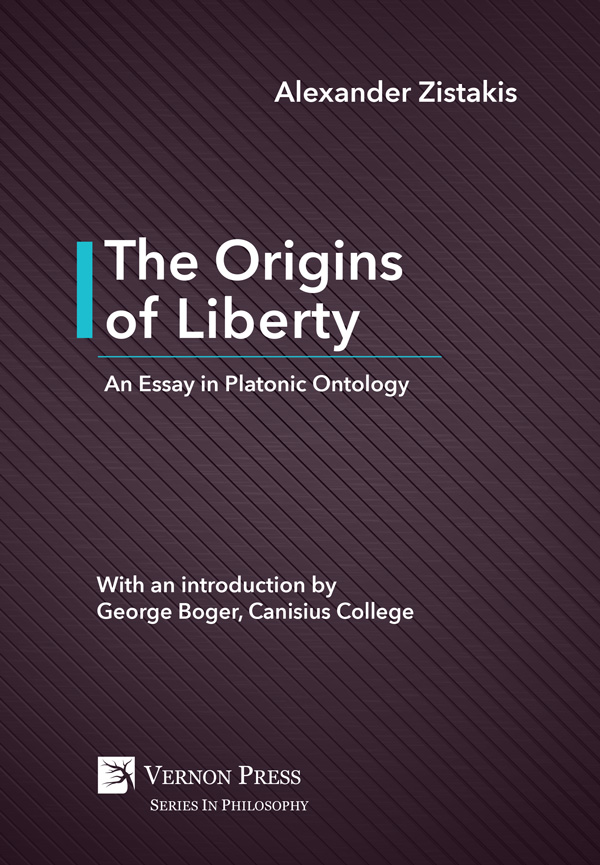
Unlike the vast majority of existing literature on Plato, this book seeks to argue that liberty constitutes the central notion and preoccupation of Platonic thought and that his theory of ideas is indeed a theory of liberty. Moreover, this book contends that Plato’s thought can be understood to be both one of liberty and a theory of liberation. Bound up in its efforts to reveal both the ideal liberty and the conditions and possibility of its existence in the so-called ‘real world,’ the thought of liberty tends to be all-encompassing. Consequently, this book seeks to expose how liberty can be understood to influence Plato’s ontological form of analysis in relation to politics, philosophy, and anthropology, as well as its influence on the structural unity of all three. Understood from such a perspective, this book frames Platonic philosophy as primarily an investigation, an articulation and as a way of establishing the relationship between the individual and the collective. Importantly, this relationship is acknowledged to be the natural and original framework for any conception and exercise of human liberty, especially within democratic theory and politics. By treating Plato’s philosophy as a continuous effort to find modes and dimensions of liberation in and through different forms of this relationship, this book hopes to not only engage in the discussion about the meaning of Platonic ontological-political insights on different grounds, but also to provide a different perspective for the evaluation of its relevance to the main contemporary issues and problems regarding liberty, liberation, democracy and politics. This book will be of interest to both undergraduate students, experienced scholars and researchers, as well as to the general public who have an interest in philosophy, classics, and political theory.
Discover books that expand on the themes explored in this work—titles that engage with similar questions, intersecting disciplines, and complementary perspectives to deepen understanding and broaden the conversation.
Browse all titles