Loading...
Please wait while we load the content...
Loading...
Please wait while we load the content...

Discover the latest news, reviews, and achievements from the Vernon Press community - new releases, author features, awards, and events that celebrate innovation and collaboration in scholarly publishing across the humanities and social sciences.
Stay informed about our latest publications, calls for proposals, and special announcements. As a subscriber, you'll also enjoy exclusive member discounts of 10%-20% on all orders. Join our community of scholars, librarians, and readers today.

Vernon Press is committed to ensuring that every title receives the visibility and recognition it deserves. We believe effective marketing is an integral part of academic publishing, helping authors extend the reach of their ideas both within scholarly circles and to wider audiences. Working closely with authors, advisory editors, and academic associations, we create customized marketing plans for each title—combining traditional outreach with digital innovation to enhance discoverability and impact.
Review / 22 June 2026
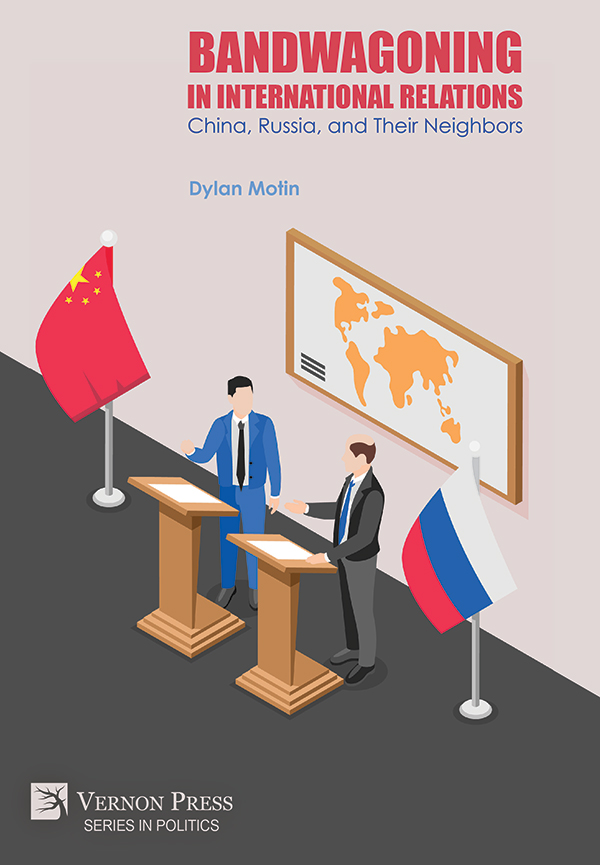
We are pleased to announce that 'Bandwagoning in International Relations: China, Russia, and Their Neighbors' by Dylan Motin (Kangwon National University, Korea) has been reviewed by Christophe Kerdodé in 'Cahiers du Comité Asie Pacifique’ (Jeunes IHEDN association (in French)), 24e Édition. P. 146:[...] En somme, le livre apporte un éclairage novateur sur le débat entre la stratégie de l’équilibre et celle du ralliement, tout en exploitant de façon originale la littérature néoréaliste existante. Il a également le mérite d’explorer des cas souvent oubliés. L’auteur aborde frontalement des enjeux de politique internationale et propose des recommandations claires pour les décideurs. Cependant, les chercheurs non réalistes et les spécialistes des États ou régions concernés risquent de rester indifférents aux généralisations et recommandations de Motin. Le débat entre l’équilibre des puissances et le bandwagoning reste bien vivant.[Extract from book review on ‘'Cahiers du Comité Asie Pacifique’ (Jeunes IHEDN association (in French)), 24e Édition. P. 146. Reviewer: Christophe Kerdodé. https://www.jeunes-ihedn.org/2026/les-cahiers-du-comite-asie-pacifique-n24-la-guerre-hors-limites/]Find out more about the book and order your copy here: Bandwagoning in International Relations: China, Russia, and Their NeighborsWhether states balance against or bandwagon with threatening great powers remains an unsolved problem for international relations theory. One school argues that military power compels minor powers to accommodate threats, while another defends that it elicits balancing instead. With the emergence of potential hegemons in both Asia and Europe — namely China and Russia — understanding state alignment is more urgent than ever. This book shows that bandwagoning has been a rare choice in contemporary Asia and Europe. The only states that chose bandwagoning with China or Russia faced both conflicts with third rivals and low levels of U.S. assistance. Going further, I divide bandwagoning between full alignment, survival accommodation, and profit accommodation. Bandwagoners choose among these three options based on the severity of the threat posed by the potential hegemon, the intensity of third conflicts, and the level of U.S. assistance. I test this novel theory against three European (Armenia, Belarus, and Serbia) and four Asian (Cambodia, Myanmar, North Korea, and Pakistan) cases. This study is the first to provide an exhaustive and compelling explanation of bandwagoning fully compatible with neorealism and adds to the balancing-bandwagoning debate. Beyond scholarly implications, this research’s findings offer advice for policymakers concerned with the changing balance of power in Asia and Europe and how to counter China and Russia’s influence.
News / 17 June 2026
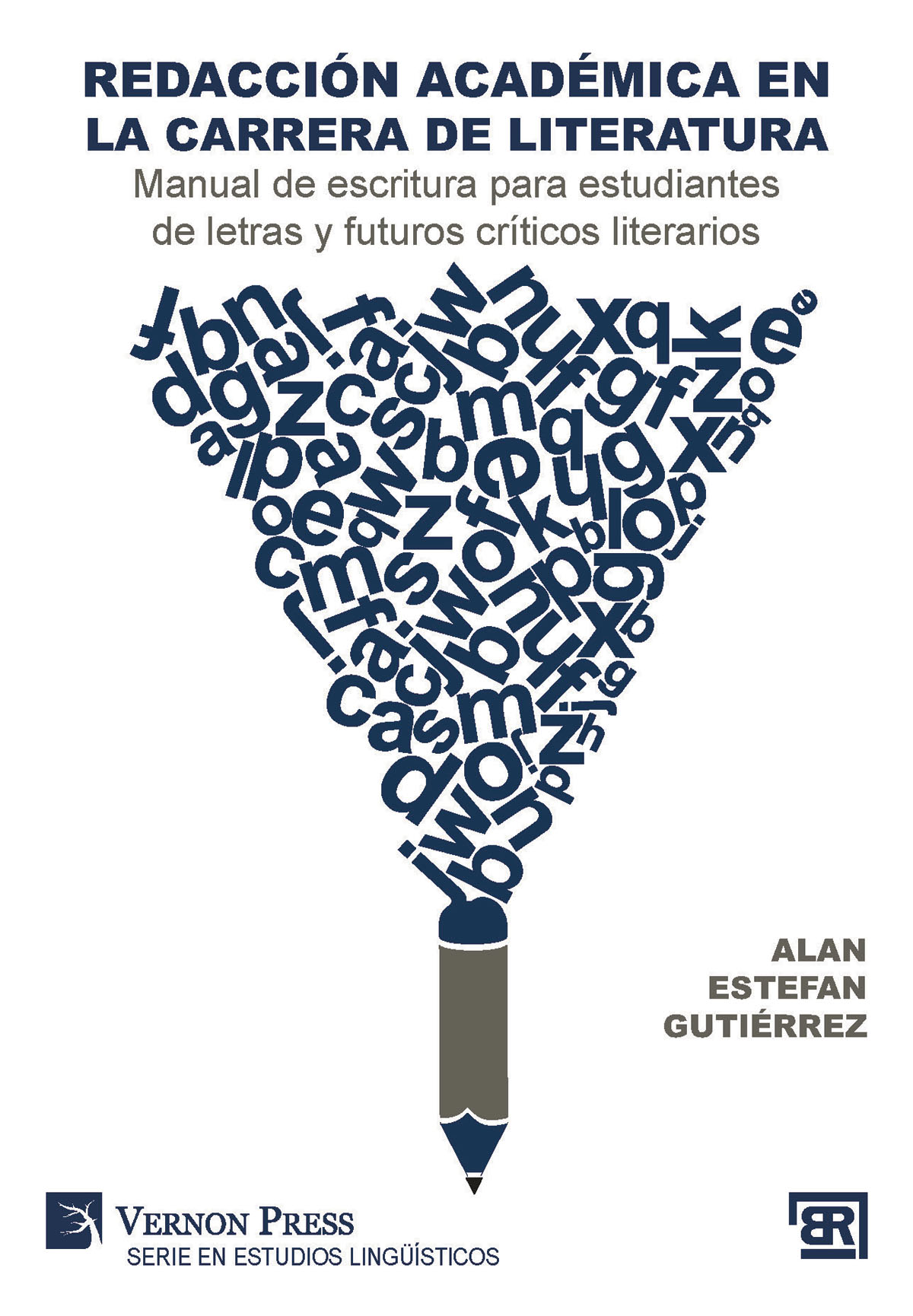
Vernon Press is pleased to share that author Alan Estefan Gutiérrez recently presented his book, Redacción académica en la carrera de literatura, at the Feria del Libro de la Frontera 2026 (FELIF) in Ciudad Juárez, Chihuahua, Mexico.Held at the Centro Cultural Paso del Norte, FELIF is one of the most important literary and cultural gatherings in northern Mexico. The 2026 edition brought together writers, publishers, scholars, cultural promoters, and readers for a rich program of book presentations, conversations, workshops, and artistic activities. Within this vibrant setting, Gutiérrez’s presentation offered an opportunity to discuss the role of academic writing in literary education and the importance of developing clear, rigorous, and reflective writing practices among students of literature.Redacción académica en la carrera de literatura addresses a central challenge in higher education: how to guide students in the production of academic texts that are not only formally correct but also intellectually meaningful. By focusing on writing within the context of literary studies, the book contributes to ongoing conversations about pedagogy, critical reading, argumentation, and the formation of students as researchers and writers.The presentation at FELIF featured the participation of Dr. Thelma García Jovita, full-time professor at the Universidad Autónoma de Ciudad Juárez (UACJ), who served as commentator and moderator. Her contribution helped frame the book’s relevance for university teaching, academic development, and the broader educational community in Ciudad Juárez.In addition to the book presentation, Gutiérrez also participated in an interview with Radio UACJ, the radio station of the Universidad Autónoma de Ciudad Juárez, alongside Dr. García Jovita. The interview provided a further platform to discuss the book’s aims, its academic context, and its value for students and instructors working in literature and the humanities.For Vernon Press, the participation of Redacción académica en la carrera de literatura at FELIF 2026 highlights the importance of bringing scholarly work into public cultural spaces. Book fairs such as FELIF create meaningful encounters between authors, academic communities, students, and general readers, helping scholarly publications reach audiences beyond the classroom.We congratulate Alan Estefan Gutiérrez on the presentation of his book at FELIF 2026 and thank Dr. Thelma García Jovita for her valuable role as commentator, moderator, interviewer, and contributor to the volume.About the bookRedacción académica en la carrera de literatura is a scholarly work dedicated to academic writing in literary studies. It offers students and instructors a framework for understanding the practices, expectations, and challenges involved in producing academic texts within the field of literature.About FELIFThe Feria del Libro de la Frontera is a major cultural event in Ciudad Juárez, Chihuahua, bringing together authors, publishers, educators, artists, and readers through a wide-ranging program of literary and cultural activities.
Review / 9 June 2026
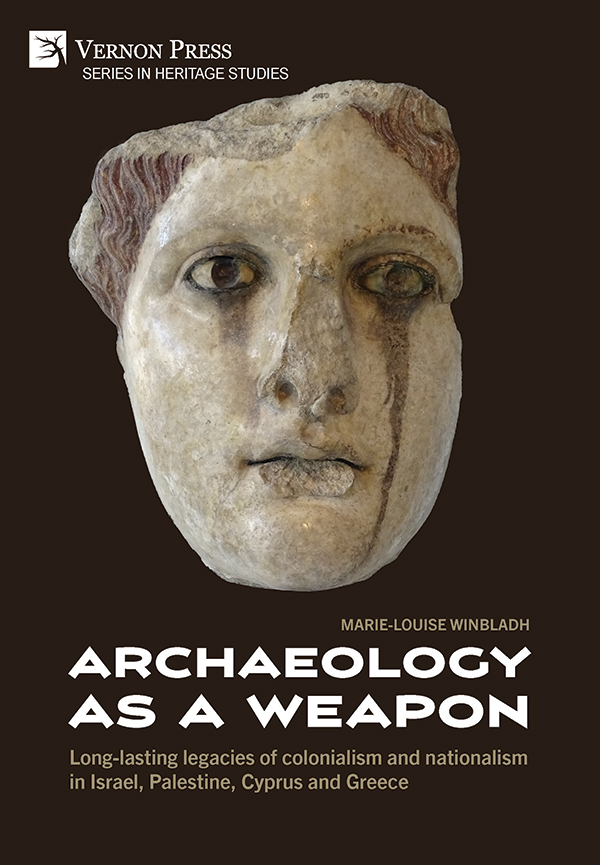
We are pleased to announce that 'Archaeology as a Weapon: Long-lasting legacies of colonialism and nationalism in Israel, Palestine, Cyprus and Greece' by Marie-Louise Winbladh has been reviewed by Yannis Hamilakis in ‘Antiquity’, 2026, Vol. 100 (411): 876–878:[…] Winbladh’s heart is in the right place, she is motivated by the desire to react to social injustices implicating past materialities, and has produced a book that contains valuable information. […][Extract from book review on ‘Antiquity’, 2026, Vol. 100 (411): 876–878. Reviewer: Yannis Hamilakis. https://doi.org/10.15184/aqy.2026.10316 ]Find out more about the book and order your copy here: Archaeology as a Weapon: Long-lasting legacies of colonialism and nationalism in Israel, Palestine, Cyprus and GreeceIn Israel, Palestine, Cyprus and Greece, the reconstruction of the past through archaeology has been used to strengthen national identity. Narratives about the past and origin myths have been constructed for political purposes. Cyprus and Palestine have both suffered from British colonialism since the early twentieth century, which has had a profound influence on their cultural heritage. Through nationalism, archaeology has been exploited by far-right movements and political parties to claim ownership of heritage and has become an efficient political tool.In Israel, archaeology and religion have been exploited to construct the Israeli state and still play a crucial role. The country claims to be the conqueror of Palestine under the protection of God, who they believe gave them possession of the land. Western religious groups are convinced that it is the religious duty of Christians to support the modern nation-state of Israel. Biblical archaeology has become an ultra-religious American speciality, marked by fraud and pseudoresearch. Notorious smuggling scandals were staged by American Christian multibillionaires buying artefacts looted from the National Museum of Iraq and other countries.Looting, plundering and blacklisting are among the most serious problems in Cyprus, causing irreparable damage to artefacts, monuments and society. Palestine’s rich archaeological, historical, and religious heritage has been undermined by occupation and land confiscation. Hundreds of sites have been looted during the Israeli occupation, and an illegal trade of ancient artefacts has occurred on a large scale.Populism is frequently associated with extreme nationalism and racism. Over the past few years, white nationalists and supremacists have seized the history of Greece and Rome. White nationalists and neo-Nazis in the US have used the slogan “Classics Made Great Again” showing their obsession with ancient sculptures and their alleged whiteness. When visiting Jerusalem, the Trump administration promoted an evangelical program where the politics of moral superiority is associated with white Christian supremacy.
Review / 3 June 2026
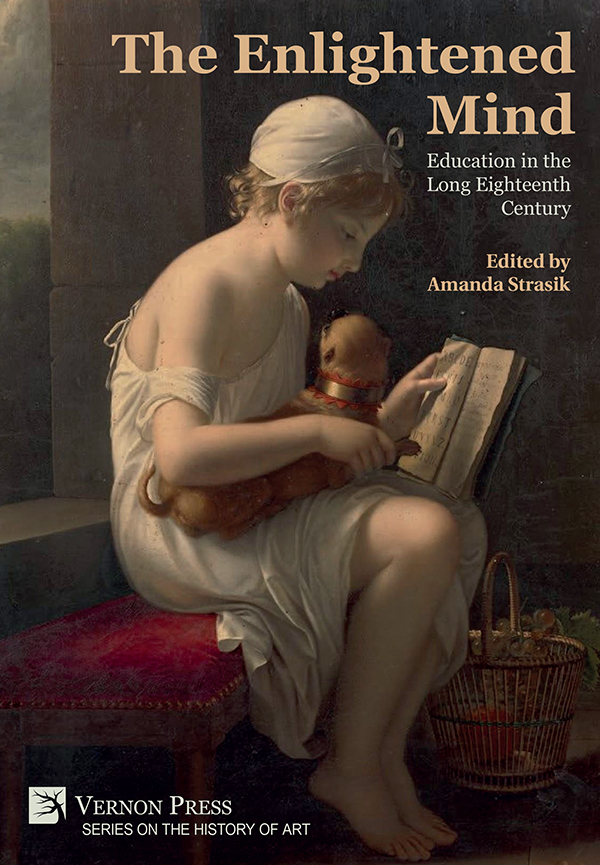
We are pleased to announce that 'The Enlightened Mind: Education in the Long Eighteenth Century' by Amanda Strasik has been reviewed by Katherine Arpen (Auburn University) in 'XVIII New Perspectives on the Eighteenth Century', Vol. 21, Summer 2024, pp. 103-105:[...] the volume covers an impressive diversity of material, including lesser-studied texts, artists, and art practices, as well as a recurring focus on women’s cultural contributions. The authors effectively demonstrate how eighteenth-century artworks and texts were shaped by period ideas while also serving as tools to extend those lessons within bourgeois and elite society. The essays included in the volume, in turn, enhance the reader’s knowledge on subjects of interest to multiple specializations, including eighteenth-century culture, art history, literature, and gender studies.[Extract from book review on 'XVIII New Perspectives on the Eighteenth Century', Vol. 21, Summer 2024, pp. 103-105. Reviewer: Katherine Arpen (Auburn University) https://www.seasecs.org/npec]Find out more about the book and order your copy here: 'The Enlightened Mind: Education in the Long Eighteenth Century'The rise of Enlightenment philosophical and scientific thought during the long eighteenth century in Europe and North America (c. 1688-1815) sparked artistic and political revolutions, reframed social, gender, and race relations, reshaped attitudes toward children and animals, and reconceptualized womanhood, marriage, and family life. The meaning of “education” at this time was wide-ranging and access to it was divided along lines of gender, class, and race. Learning happened in diverse environments under the tutelage of various teachers, ranging from bourgeois mothers at home, to Spanish clergy, to nature itself.The contributors to this cross-disciplinary volume weave together methods in art history, gender studies, and literary analysis to reexamine “education” in different contexts during the Enlightenment era. They explore the implications of redesigned curricula, educational categorizations and spaces, pedagogical aids and games, the role of religion, and new prospects for visual artists, parents, children, and society at large. Collectively, the authors demonstrate how new learning opportunities transformed familial structures and the socio-political conditions of urban centers in France, Britain, the United States, and Spain. Expanded approaches to education also established new artistic practices and redefined women’s roles in the arts. This volume offers groundbreaking perspectives on education that will appeal to beginning and seasoned humanities scholars alike.
Review / 20 May 2026
We are pleased to announce that 'Permanent Wars, The Neocons, and East-West Relations' by Alexander R. Dawoody has been reviewed by Shahub Tossi in 'The Innovation Journal: The Public Sector Innovation Journal', Volume 31(1) 2026, article 5:[...] Overall, “Permanent Wars, The Neocons, and East-West Relations” is a thoughtful and well-developed contribution that not only challenges conventional approaches to international relations but also advances a more dynamic and systems-oriented understanding of global conflict. By integrating complexity theory with contemporary case analyses, Dr. Dawoody provides a compelling framework for rethinking how conflict is analyzed and addressed. For scholars and practitioners interested in innovation, public policy, and global governance, the book offers both a critique of existing paradigms, such as traditional state-centric and linear models of international relations, and a meaningful step toward more adaptive, systems-based approaches.[Extract from book review at 'The Innovation Journal: The Public Sector Innovation Journal', Volume 31(1) 2026, article 5. Reviewer: Shahub Tossi. https://innovation.cc/document/permanent-wars-the-neocons-and-east-west-relations-the-ukraine-and-gaza-wars-in-context/ ]Find out more about the book and order your copy here: Permanent Wars, The Neocons, and East-West RelationsThe focus in this book is not on the various distinctions between classic liberalism and orientalism. Such traits are specific to normative values than hurt, suffering, and victimhood by one group at the expense of another. Rather, the focus is on the dichotomy between neoliberalism and orientalism as relates to the injuries caused by neoliberalism’s harmful practices to ordinary people both in the West and the Global South.The book is a qualitative study in phenomenology, seeking to explain the nature of neoliberal-oriental dichotomy through selected observations in international relations. It builds on the kernel understanding of the dichotomy through meanings as experienced by people, especially in the developing countries (the Global South). The observations are organized in 9 chapters (including an introduction and conclusion) involving descriptive analyses of applied utilities (tools) used by neoliberalism, the state of opposition and ethnic and religious minorities in the Global South, the misuse of energy resources and conflicts, uncovering the double-standards and hypocrisy applied in the observation of selected narratives in Iraq, Ukraine, and Gaza, and the emerging of new trajectories and models for inclusion, cooperation, and peace based on interpretations by complexity sciences.The book uses narrative observations to uncover meanings and experiences in the East-West dichotomy on issues of security, national interests, militarism, alliances, and conflict resolution. The chapters examine the utilities applied by neoliberalism in furthering the divide, understanding causality, and the recommended models for bridging the contradictions toward peace and inclusion based on the complexity sciences.The purpose of this book is not just to observe the gulf between neoliberalism and orientalism but to bridge between them for the sake of healing, minimizing divisions and atrocities, and promoting progress based on shared interests. The main themes in the book are the assessments of public policy orientation in international relations, the rule of the media and social networks, and the impact of global institutions on peace, conflicts, militarism, interventions, sanctions, and regime change scenarios on the East-West dichotomy.
News / 14 May 2026
Vernon Press is pleased to announce that Yunus Emre Ozigci , author of 'NATO’s Meaning and Existence: Within the Interstate Intersubjectivity' , was recently featured on the New Books Network podcast. In the interview, hosted by Piotr Pietrzak , Ozigci discusses the central ideas behind his newly published book, offering listeners an accessible introduction to his original study of NATO , international relations theory , phenomenology , and interstate intersubjectivity . A New Philosophical Approach to NATO and International Relations Published by Vernon Press in May 2026, 'NATO’s Meaning and Existence' offers a distinctive and ambitious contribution to the study of NATO’s identity , alliance politics , and the philosophical foundations of international relations . Rather than approaching NATO only as a military or institutional structure, Ozigci examines it as an intersubjective phenomenon : a political community whose meaning is shaped through the perceptions, recognitions, interactions, and historical experiences of states. The book argues that entities in the sphere of international relations — including states, alliances, events, and political environments — are not merely objective facts. They are also constituted through shared meanings, temporal transformations, and acts of recognition among international actors. NATO Beyond Military Power In the New Books Network episode, the discussion highlights one of the book’s most important contributions: its effort to rethink NATO’s existence beyond conventional accounts of military power and strategic policy . Ozigci’s work explores how NATO has continued to exist through changing international environments, including the transition from bipolarity to unipolarity , the transformation of NATO-Russia relations, and the renewed geopolitical tensions surrounding Ukraine. By drawing on phenomenology and phenomenological ontology , the book offers a framework for understanding how NATO’s identity has been repeatedly redefined across different historical moments. Phenomenology, Intersubjectivity, and the Meaning of Alliances A key strength of 'NATO’s Meaning and Existence' is its interdisciplinary method. The book brings together political science , international relations theory , and continental philosophy to examine how alliances emerge, endure, and transform. The podcast introduces listeners to the book’s central claim: that studying NATO “as is” requires attention not only to material capabilities, policies, and documents, but also to the deeper structures of meaning through which states understand themselves, their counterparts, and their shared environment. This makes the book especially relevant for scholars and students interested in NATO studies , security studies , IR theory , phenomenology , European politics , and global security . About the Author Yunus Emre Ozigci holds a PhD in Political Sciences from the Université Catholique de Louvain . His academic work focuses on international relations theory , phenomenology , the transformation of international structures, and the foreign policies of major global actors. Since 2000, he has worked as a diplomat in the Turkish Ministry of Foreign Affairs , serving in Algeria, Belgium, Switzerland, Russia, and Kenya, as well as in several directorates of the Ministry. His professional experience gives the book a rare combination of theoretical depth and diplomatic insight. Listen to the Interview and Explore the Book The New Books Network interview offers an engaging entry point into Ozigci’s study and its relevance to current debates about NATO’s future , international order , and the changing nature of interstate relations. Readers interested in the philosophical foundations of international politics, the evolution of NATO, and the role of meaning in global affairs are encouraged to listen to the full episode and explore the book. Listen to the podcast: New Books Network: Yunus Emre Ozigci on 'NATO’s Meaning and Existence' Order the book: 'NATO’s Meaning and Existence: Within the Interstate Intersubjectivity'
Review / 7 May 2026
We are pleased to announce that 'NATO’s Meaning and Existence: Within the Interstate Intersubjectivity' by Yunus Emre Ozigci, Ministry of Foreign Affairs of the Republic of Turkiye (Turkey) has been reviewed by Piotr Pietrzak in ‘Journal of Liberty and International Affairs’ 12 (1):200-203:[…] His “NATO’s Meaning and Existence” (2026), like his previous publications, does not follow the standard script of recycled, uninspiring solutions drawn from outdated textbooks to address contemporary problems. Instead, it offers genuine insight into modern foreign policy, informed by decades of diplomatic experience: he currently serves in Turkey’s diplomatic corps in one of the most geostrategically significant regions of Africa. This book provides a contemplative critique of NATO’s nature, in contrast to conventional political textbooks that often repeat flattering slogans without critical reflection. […][Extract from book review on the ‘Journal of Liberty and International Affairs’ 12 (1):200-203. Reviewer: Piotr Pietrzak. https://doi.org/10.47305/jlia.2026.2126]Find out more about the book and order your copy here: 'NATO’s Meaning and Existence: Within the Interstate Intersubjectivity'Entities, events, phenomena and states of affairs of the sphere of international relations/ interstate interactions are purely intersubjective recognisances. Their “subjects”, in particular the States, are themselves pre-theoretically, intersubjectively co-constituted and temporalised, ascribed with subject qualities especially in their “interactions” and experienced as such through intentional acts of perceiving, defining, remembering, anticipating, judging and so on. The said ascription includes their own community-building dynamics within an also intersubjectively given environment of interstate interactions. NATO is one of the most prominent State-communities. It has not only been defined by but has also been a constituent of the environment in which it existed. It gained its meaning from its existential relationship with its constituent State-subjects, its interactional counterparts and the meaningful appearance of its “environment”, and also made part of their meaningful appearances. NATO existed through transformations of environment and counterpart(s), continuing to be valid and viable in different identities and temporalisations. It is currently being re-identified and re-temporalised face to a new transformation of the interstate environment.Studying NATO requires co-studying its constituents, counterparts and environment in their substances and temporal states as they are given pre-theoretically, immediately, intersubjectively, which form parts of an expanded, existential kind of reality lived and lived-within by true subjects, replacing the objectivity in its narrow sense with meaningfulness, appearing as objectivity itself on the ground of a universal, pre-theoretical, immediate familiarity and intelligibility ground. Studying NATO “as is” in its identities and temporalisations with its environment, constituents and counterparts requires access to that pre-theoretical ground of meaningful, intersubjective appearances. Here, phenomenology and the phenomenological ontology offer useful concepts and tools which, due to the particular nature of the IR field, complement each other for conducting such a study of the “being and time” of NATO.
Review / 6 May 2026
We are pleased to announce that 'Archaeology as a Weapon: Long-lasting legacies of colonialism and nationalism in Israel, Palestine, Cyprus and Greece' by Marie-Louise Winbladh has been reviewed in ‘Antiquity’, Published online April, 2026.Find out more about the book and order your copy here: Archaeology as a Weapon: Long-lasting legacies of colonialism and nationalism in Israel, Palestine, Cyprus and GreeceIn Israel, Palestine, Cyprus and Greece, the reconstruction of the past through archaeology has been used to strengthen national identity. Narratives about the past and origin myths have been constructed for political purposes. Cyprus and Palestine have both suffered from British colonialism since the early twentieth century, which has had a profound influence on their cultural heritage. Through nationalism, archaeology has been exploited by far-right movements and political parties to claim ownership of heritage and has become an efficient political tool.In Israel, archaeology and religion have been exploited to construct the Israeli state and still play a crucial role. The country claims to be the conqueror of Palestine under the protection of God, who they believe gave them possession of the land. Western religious groups are convinced that it is the religious duty of Christians to support the modern nation-state of Israel. Biblical archaeology has become an ultra-religious American speciality, marked by fraud and pseudoresearch. Notorious smuggling scandals were staged by American Christian multibillionaires buying artefacts looted from the National Museum of Iraq and other countries.Looting, plundering and blacklisting are among the most serious problems in Cyprus, causing irreparable damage to artefacts, monuments and society. Palestine’s rich archaeological, historical, and religious heritage has been undermined by occupation and land confiscation. Hundreds of sites have been looted during the Israeli occupation, and an illegal trade of ancient artefacts has occurred on a large scale.Populism is frequently associated with extreme nationalism and racism. Over the past few years, white nationalists and supremacists have seized the history of Greece and Rome. White nationalists and neo-Nazis in the US have used the slogan “Classics Made Great Again” showing their obsession with ancient sculptures and their alleged whiteness. When visiting Jerusalem, the Trump administration promoted an evangelical program where the politics of moral superiority is associated with white Christian supremacy.
Review / 29 April 2026
We are pleased to announce that 'Simply to be Americans?: literary radicals confront monopoly capitalism, 1885–1938' by Joel Wendland-Liu (Grand Valley State University) has been recommended by CHOICE, June 2026 Vol. 63 No. 10.This recognition highlights the book’s importance within the fields of American literature, radical literary studies, Marxist criticism, labor history, and African American studies. Combining literary analysis, political history, and cultural criticism, the book explores how radical U.S. writers challenged the forces of monopoly capitalism, imperialism, racism, and patriarchy between 1885 and 1938.Readers can learn more about the book here: Simply to Be Americans? Literary Radicals Confront Monopoly Capitalism, 1885-1938.Exploring Radical American Literature in the Age of Monopoly CapitalismIn Simply to Be Americans?, Wendland-Liu examines how writers and activists used literature to redefine what it meant to be “American” during a period marked by industrial expansion, labor unrest, racial violence, and global imperialism.The study brings together both canonical and lesser-known writers whose works exposed the contradictions of American capitalism and challenged dominant nationalist narratives. Through detailed close readings, the book reveals how fiction, satire, poetry, speculative writing, and political commentary became tools of resistance against exploitation and oppression.Early literary radicals such as Lucy Parsons, Albert Parsons, and Sutton Griggs confronted the realities of class exploitation and white supremacy while imagining alternative forms of collective social life.Mark Twain, W.E.B. Du Bois, and the Politics of Literary RadicalismOne of the book’s major contributions is its re-evaluation of major literary figures through the lens of radical political thought and anti-capitalist critique.Wendland-Liu explores how authors such as Mark Twain, Jack London, W. E. B. Du Bois, and Gertrude Nafe used satire, allegory, and speculative fiction to challenge nationalism, imperial conquest, racial hierarchy, and capitalist ideology.Rather than presenting radical literature as ideologically unified, the study also examines the tensions and limitations within early revolutionary movements, offering a nuanced account of how writers grappled with the complexities of race, gender, class, and empire.Revolutionary Internationalism and Anti-Imperialist LiteratureAs the twentieth century unfolded, radical writers increasingly linked domestic struggles in the United States to broader global anti-imperialist and labor movements.The book traces how figures such as John Reed and Hubert Harrison embraced revolutionary internationalism, drawing inspiration from the Russian Revolution and worldwide labor uprisings.Wendland-Liu demonstrates how literature became deeply connected to emerging political movements, encouraging solidarity across borders and articulating new visions of social transformation.A Timely Contribution to American Literary and Cultural StudiesAt a time when debates surrounding capitalism, racial justice, national identity, and social inequality remain central to public discourse, Simply to Be Americans? offers a timely and deeply researched account of how literature can challenge systems of power and imagine alternative futures.By recovering these interconnected histories of resistance, Joel Wendland-Liu demonstrates that radical American literature remains essential for understanding both the past and the ongoing struggles shaping contemporary society.
Review / 16 March 2026
We are pleased to announce that 'Archaeology as a Weapon: Long-lasting legacies of colonialism and nationalism in Israel, Palestine, Cyprus and Greece' by Marie-Louise Winbladh has been reviewed in ‘European Journal of Archaeology’, Published online 2026:1-4: Contemporary academic research, particularly in archaeology, often revolves around narrowly defined topics. The rise of increasingly sophisticated archaeornetric methods has encouraged increasingly fine-grained analysis of excavated material. While this approach has the capacity to yield precise insights into a site’s formation, it often neglects a broader contextual analysis— especially the political, social, and economic forces that shape both the past and our interpretations of it.Marie—Louise Winbladh’s “Archaelogy as a Weapon” stands in stark contrast to this trend. The book offers a comparative analysis of how archaeology has been politically instrumentalized in Israel, Palestine, Cyprus, and Greece. Its most significant contribution is its examination of this phenomenon not as an isolated national issue, but as part of a cross-regional pattern rooted in colonial and nationalist ideologies.While the political use of archaeology in the Eastern Mediterranean has been studied before, Winbladh’s book breaks new ground by demonstrating that the weaponization of archaeology in all these regions is part of a shared struggle to contend with the legacies of colonialism and the pressures of neoliberalism. […][Extract from book review on the ‘European Journal of Archaeology’, Published online 2026:1-4. https://doi.org/10.1017/eaa.2026.10034]Find out more about the book and order your copy here: Archaeology as a Weapon: Long-lasting legacies of colonialism and nationalism in Israel, Palestine, Cyprus and GreeceIn Israel, Palestine, Cyprus and Greece, the reconstruction of the past through archaeology has been used to strengthen national identity. Narratives about the past and origin myths have been constructed for political purposes. Cyprus and Palestine have both suffered from British colonialism since the early twentieth century, which has had a profound influence on their cultural heritage. Through nationalism, archaeology has been exploited by far-right movements and political parties to claim ownership of heritage and has become an efficient political tool.In Israel, archaeology and religion have been exploited to construct the Israeli state and still play a crucial role. The country claims to be the conqueror of Palestine under the protection of God, who they believe gave them possession of the land. Western religious groups are convinced that it is the religious duty of Christians to support the modern nation-state of Israel. Biblical archaeology has become an ultra-religious American speciality, marked by fraud and pseudoresearch. Notorious smuggling scandals were staged by American Christian multibillionaires buying artefacts looted from the National Museum of Iraq and other countries.Looting, plundering and blacklisting are among the most serious problems in Cyprus, causing irreparable damage to artefacts, monuments and society. Palestine’s rich archaeological, historical, and religious heritage has been undermined by occupation and land confiscation. Hundreds of sites have been looted during the Israeli occupation, and an illegal trade of ancient artefacts has occurred on a large scale.Populism is frequently associated with extreme nationalism and racism. Over the past few years, white nationalists and supremacists have seized the history of Greece and Rome. White nationalists and neo-Nazis in the US have used the slogan “Classics Made Great Again” showing their obsession with ancient sculptures and their alleged whiteness. When visiting Jerusalem, the Trump administration promoted an evangelical program where the politics of moral superiority is associated with white Christian supremacy.
Review / 27 February 2026
We are pleased to announce that 'Concepción Gimeno de Flaquer (1850-1919): Cartas, cuentos cortos y artículos periodísticos' by Ana Isabel Simón Alegre has been reviewed by Eulalia Ramírez Nueda and published in the ‘Cuadernos de Historia Contemporánea’, 2025. vol. 48, vol. 48, n.º 1, 2026, pp. 257-8:El presente volumen, un inmenso y erudito esfuerzo documental cuidadosamente editado –casi al tiempo en inglés y en castellano–, es una aproximación más de la doctora Ana Isabel Simón Alegre a la vida y obra de Concepción Gimeno de Flaquer (Alcañiz, España, 1850 – Buenos Aires, Argentina, 1919). La autora, madrileña en los Estados Unidos, es Associate Professor en el Center for African, Black and Caribbean Studies de la Universidad Adelphi, de Nueva York. Y, aunque anteriormente Ana Simón Alegre ya se había acercado a la biografía de una de las escritoras es-pañolas –tal vez podríamos decir iberoamericanas– del siglo XIX más poliédricas, y aunque no es la primera en hacerlo, en este libro traza la mejor y más documentada biografía de Gimeno de Flaquer, fruto de una ardua y muy cuidadosa investigación basada en una numerosa y variada serie de fuentes documentales. [...][Extracto de reseña en 'Cuadernos de Historia Contemporánea', vol. 48, vol. 48, n.º 1, 2026, pp. 257-8, Autora: Eulalia Ramírez Nueda. doi: https://doi.org/10.5209/chco.104995]Find out more about the book and order your copy here: 'Concepción Gimeno de Flaquer (1850-1919): Cartas, cuentos cortos y artículos periodísticos'Concepción Gimeno de Flaquer (Alcañiz, 1850-Buenos Aires, 1919) fue una periodista y editora española que dedicó su vida al mundo de las letras. Fue, además de escritora, una apasionada viajera en una época en la que cruzar el Atlántico no era una tarea fácil. En sus viajes transanlánticos puso en marcha y participó en numerosas tertulias y se dedicó a dirigir periódicos, escribir novelas, cuentos cortos, cartas, ensayos, críticas de teatro, artículos de opinión y columnas de sociedad en diferentes periódicos.En este libro se explora cómo en la trayectoria vital y profesional de Concepción Gimeno de Flaquer quedó entrelazado su proyecto político literario en el que el activismo feminista jugaría un importante papel. Esta edición anotada contribuye a las investigaciones previas sobre Gimeno de Flaquer analizando una colección de textos que no se han estudiado aún en detalle.‘Concepción Gimeno De Flaquer (1850-1919): Cartas, cuentos cortos y artículos periodísticos’ incluye diez cartas que Concepción Gimeno escribió al actor y empresario teatral Manuel Catalina y Rodriguez (1820-1886), siete cuentos y una selección de diecisiete de sus artículos periodísticos más representativos.
Review / 13 February 2026
We are pleased to announce that 'The City on Screen: Modern Strangers of Cinematic Istanbul' by Sertaç Timur Demir (Gümüşhane Üniversitesi, Turkey) has been reviewed by Ian-Malcom Rijsdijk (University of Cape Town) and published in the ‘Historical Journal of Film, Radio and Television’, 2025. Vol. 45, Nº 4, pp. 939-974:[…] The book's theoretical orientation draws together classical sociology and urban studies with a wealth of studies of Istanbul history and film from Turkish scholars. The five films’ relation to strangerhood is grounded in sociological context while the discussion combines stylistic analysis of the films and research from scholars on history and Turkish cinema. […][Extract from book review on the ‘Historical Journal of Film, Radio and Television’, 2025. Vol. 45, Nº 4, pp. 939-974. Reviewer: Ian-Malcom Rijsdijk (University of Cape Town). https://doi.org/10.1080/01439685.2025.2541524]Find out more about the book and order your copy here: The City on Screen: Modern Strangers of Cinematic Istanbul‘The City on Screen: Modern Strangers of Cinematic Istanbul’ attempts to analyze how Istanbul is captured through the projector; in other words, the ontological relationship between city and film and how it is elaborated within the context of Istanbul and the sense of strangerhood. This book shifts the axis of Istanbul, typically known as a touristic city, to its underlying details through the strangers in the modern city. Five different films set in this region are analyzed in the text that help to reveal and clarify the socio-urban life of modern Istanbul. The characters and stories in these films tell how Istanbul has socially and architecturally become a city of strangers. The films analyzed include ‘A Touch of Spice’ (2004), ‘Men on the Bridge’ (2009), ‘A Run for Money’ (1999), ‘Distant’ (2002), and ‘10 to 11’ (2009).The theoretical framework of this book is based on the works of Georg Simmel, Zygmunt Bauman and Richard Sennett. These three thinkers have all attempted to look for answers to the sociological question of strangerhood in urban living. This book accomplishes this connection by discussing the similarities and differences between each of their theories regarding the city, cinema and strangerhood.
Showing 1 to 12 of 139 news items