Loading...
Please wait while we load the content...
Loading...
Please wait while we load the content...

Explore peer - reviewed titles across the humanities and social sciences - rigorous research, fresh perspectives, and scholarship that inspires dialogue across disciplines.
Stay informed about our latest publications, calls for proposals, and special announcements. As a subscriber, you'll also enjoy exclusive member discounts of 10%-20% on all orders. Join our community of scholars, librarians, and readers today.

From special discounts and global distribution partners to downloadable catalogs, flyers, and high-resolution covers, we make it easy to enrich your library’s collection. Access bibliographic data, explore subject-specific listings, and stay updated on forthcoming titles.
Become part of our librarian network and access dedicated tools, discounts, and resources to support collection development and promote new titles to your patrons.

Partner with Vernon Press to provide your customers with high-quality, peer-reviewed scholarship. We offer flexible ordering options, reseller agreements, and promotional materials to support your sales and outreach.

Vernon Press provides dedicated resources to help instructors adopt our books for courses and to support students with affordable access to high-quality scholarship. From desk and examination copies to tailored student editions, we aim to make our titles accessible in the classroom.
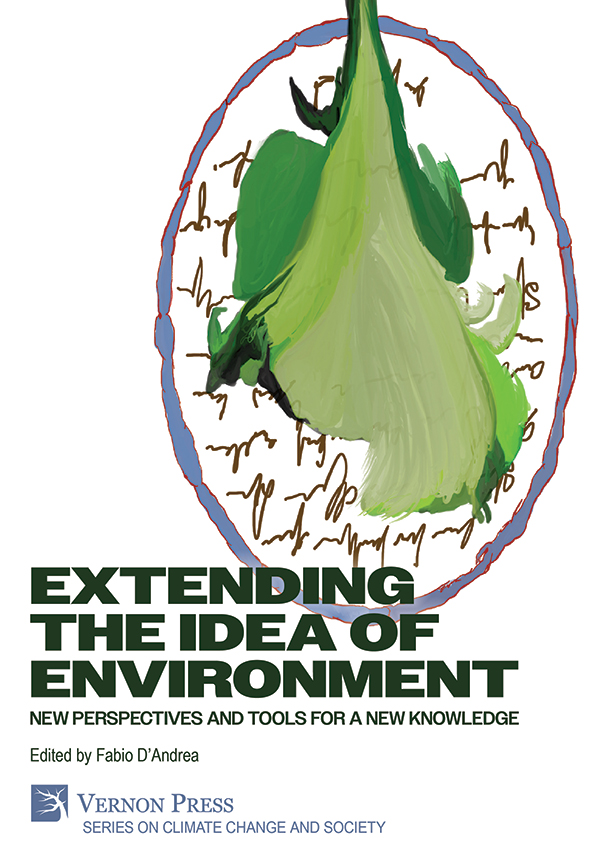
Sagie Narsiah, Mary N.O. Jimoh, Lucia Picarella, Francesca Cubeddu, Maria Carmina Sgambato, Elvira Martini, Matej Makarovič, Tea Golob, Isabella Corvino, Chryssoula Mitsopoulou, Aditi Basu, Andrea Lampis, Ignacio Rubio Carriquiriborde, and Ali Arshad
Most scholars and actors in civil society no longer deny the existence of a climate crisis. Very little is being done about it, however, which appears logically and rationally incomprehensible. To try and find a reason for this peculiar behavior, since it could be vital to the survival of our species, the hypothesis might be advanced that it is a symptom of a much greater misunderstanding of the world, which has biased and distorted our ways of creating knowledge. This book is mainly about putting forward new ideas and strategies to cope with climate change, in the shared conviction that a new understanding is crucial to stand a chance against its consequences and to be up to mending what has so far been broken. The authors focus on various facets of the complexity of the environmental issue, and their arguments enter a powerful resonance that shows their inner interconnectedness and how letting it flow achieves interesting and useful results. The book is composed of three parts: the first, ‘Perspectives’, contains chapters proposing alternative ways of understanding the environment and its dominant narrative. The authors are mostly committed to changing the reference frame through which the whole question is being addressed. The second part, ‘Propositions’, is focused on highlighting significant aspects of the environmental crisis that still need to be properly taken into account and on suggesting new policies and tools to cope with it. It has an ethical and strategic flavor. The third part, ‘Cases’, deals with the ‘real’ world, making use of field research and accurate analysis that illustrate the close link between what we are used to calling ‘theory’ and ‘practice’. You will find it easy to establish parallels and connections between the chapters. I hope you will enjoy it.
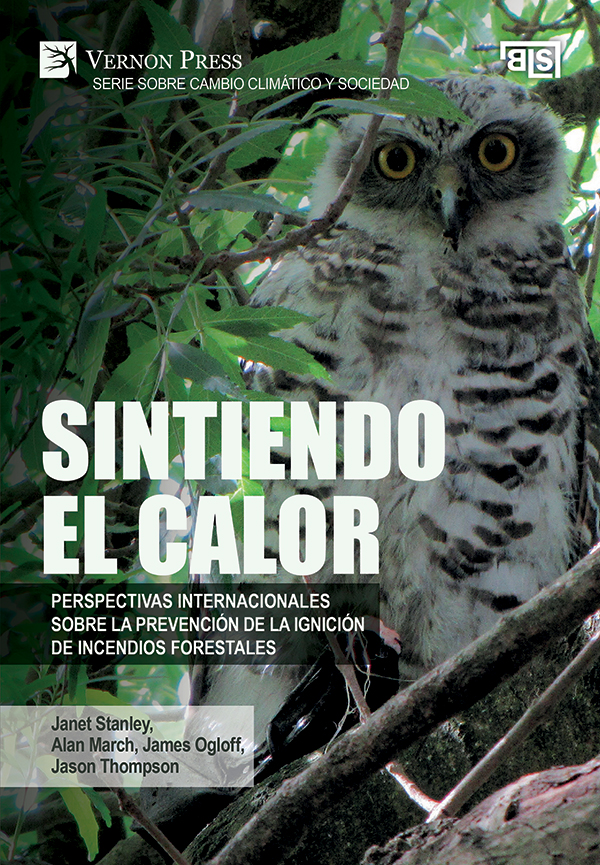
Janet Stanley, James Ogloff, Jason Thompson, and Alan March
| Altamente recomendado por CHOICE, julio de 2021 Vol. 58 No. 11 En el contexto del cambio climático, el crecimiento de la población mundial y el colapso de los sistemas ecológicos, los incendios forestales suelen ser un acontecimiento catastrófico y traumático. Su impacto puede incluir la pérdida de vidas, lesiones que cambian la vida, estrés psicológico a largo plazo; aumento de la violencia doméstica; destrucción de propiedades, negocios y ganado; inseguridad en la vivienda a largo plazo; aumento de las primas de seguros, de los costes de extinción de incendios, legales y sanitarios; así como cambios significativos y pérdidas de especies en el entorno natural. “Sintiendo el calor: Perspectivas internacionales sobre la prevención de la ignición de incendios forestales” es la culminación de más de una década de investigación sobre los incendios forestales y provocados, y adopta un enfoque interdisciplinar para comprender el tema de forma exhaustiva. Este libro revisa los conocimientos internacionales actuales y presenta nuevos hallazgos sobre los factores de riesgo políticos, espaciales, psicológicos, socioecológicos y socioeconómicos. En él se argumenta que si queremos invertir la tendencia al aumento de la incidencia y la gravedad de los incendios forestales, hay que utilizar todos los enfoques de prevención, ampliando la dependencia de la modificación del medio ambiente. Tales medidas de prevención van desde la importancia crítica de reducir los gases de efecto invernadero hasta el tratamiento de los factores psicológicos y socioeconómicos que provocan los incendios. En particular, se aboga por un enfoque coordinado y colaborativo entre sectores, que incluya la coordinación a nivel local, estatal y nacional, así como un organismo internacional. La obra resultará de interés para investigadores y estudiantes de distintas disciplinas e intereses, planificadores y responsables políticos, servicios de emergencia, asesores y organizaciones no gubernamentales (ONG), así como para el sector agrícola y forestal.
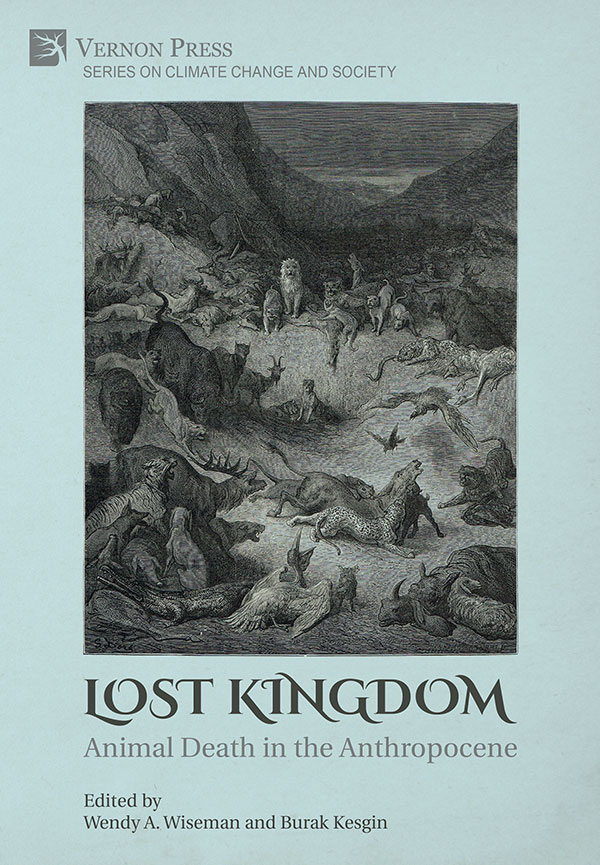
Shelby House, Tess Beschel, Rachel Ann Rothenberg, Nastasia Paul-Gera, Zoe Todd, Steven Best, Rimona Afana, Lorelei L. Hanson, Lisa Sideris, Ishaan Selby, Éric Baratay, Adrienne Krone, Janelle Baker, Andrea Ringer, Jodey Castricano, Eduardo Mendieta, María Elena García, and Kai Horsthemke
The authors in ‘Lost Kingdom’ grapple with both the catastrophe of mass animal extinction, in which the panoply of earthly life is in the accelerating process of disappearing, and with the mass death of industrial animal agriculture. Both forms of anthropogenic violence against animals cast the Anthropocene as an era of criminality and loss driven by boundless human exceptionalism, forcing a reckoning with and an urgent reimagining of human-animal relations. Without the sleights of hand that would lump “humanity” into a singular Anthropos of the Anthropocene, the authors recognize the differential nature of human impacts on animal life and the biosphere as a whole, while affirming the complexity of animal worlds and their profound imbrications in human cultures, societies, and industries. Confronting the reality of the Sixth Mass Extinction and mass animal death requires forms of narrativity that draw on traditional genres and disciplines, while signaling a radical break with modern temporalities and norms. Chapters in this volume reflect this challenge, while embodying the interdisciplinary nature of inquiry into non-human animality at the edge of the abyss—historiography, cultural anthropology, post-colonial studies, literary criticism, critical animal studies, ethics, religious studies, Anthropocene studies, and extinction studies entwine to illuminate what is arguably the greatest crisis, for all creatures, in the past 65 million years.
Achille Castaldo, Federico Luisetti, Alberto Baracco, Danila Cannamela, Jessica Sciubba, Massimo Lollini, Paolo Saporito, Serenella Iovino, Serena Ferrando, and Emiliano Guaraldo Rodriguez
What can Italy teach us about our relationships with the nonhuman world in the current socio-environmental crisis? 'Italy and the Ecological Imagination: Ecocritical Theories and Practices' focuses on how Italian writers, activists, visual artists, and philosophers engage with real and fictional environments and how their engagements reflect, critique, and animate the approach that Italian culture has had toward the physical environment and its ecology since late antiquity. Through a comparative and interdisciplinary approach, the essays collected in this volume explore topics including climate change, environmental justice, animal ethics, and socio-environmental degradation to provide a cogent analysis of how Italian ecological narratives fit within the current transnational debate occurring in the Environmental Humanities. The aim of 'Italy and the Ecological Imagination' is thus to explore non-anthropocentric modes of thinking and interacting with the nonhuman world. The goal is to provide accounts of how Italian historical records have potentially shaped our environmental imagination and how contemporary Italian authors are developing approaches beyond humanism in order to raise questions about the role of humans in a possible (or potentially) post-natural world. Ultimately, the volume will offer a critical map of Italian contributions to our contemporary investigation of the relationships between human and nonhuman habitats and communities.
James Ogloff, Jason Thompson, Alan March, and Janet Stanley
| Highly recommended by CHOICE, July 2021 Vol. 58 No. 11 In the context of climate change, world population growth and crashing ecological systems, wildfire is often a catastrophic and traumatic event. Its impact can include loss of life, life-changing injuries, long-term psychological stress; increases in domestic violence; destruction of properties, business and livestock; long-term housing insecurity; increased insurance premiums, fire-fighting, legal and health costs; as well as significant changes and species losses in the natural environment. In Australia, an average of 4,500 wildfires occur weekly. Yet how to prevent these wildfires, 85% of which are caused by human activities, has received extraordinarily little attention. The current approach to the prevention of arson can be summarised as small in scale, uncoordinated and rarely evaluated. ‘Feeling the heat: International perspectives on the prevention of wildfire ignition’ is the culmination of over a decade of research into wildfires and arson; taking an interdisciplinary approach to comprehensively understand the topic. This book reviews current international knowledge and presents new findings on political, spatial, psychological, socio-ecological and socio-economic risk factors. It argues that if we are to reverse the increasing occurrence and severity of wildfires, all prevention approaches must be utilised, broadening from heavy reliance on environmental modification. Such prevention measures range from the critical importance of reducing greenhouse gases to addressing the psychological and socio-economic drivers of arson. In particular, it calls for a coordinated and collaborative approach across sectors, including place-based, state and country coordination, as well as an international body. It will hold appeal for researchers and students from a range of disciplines and interests, government planners and policymakers, emergency services, counsellors and NGOs, and those in agriculture and forestry.
Lucy Weir
This book links three themes, non-dualistic agency, ‘the good’ of systems, and compassionate attunement, and relates them to the ecological emergency. The author begins by examining how we currently understand our ability to choose what we do, our agency and conclude that this is dualistic: we think of an action to do, and then we physically act. Yet an understanding that we are enmeshed in context means our capacity to act freely dissolves in the mesh. We evolved capacities for consciousness and awareness, capacities that allow us to realise that we are here, now but that do not inevitably imply choice. Our capacity for ‘realisation’ gives us the ability to elicit an emotional response. When we understand our enmeshment, we can attune to a deep compassion for ourselves and indeed for all systems unfolding through time. Compassionate attunement allows a different set of options for action to become available to us. This then shifts how we respond to ourselves, our human relationships and to the ecological emergency we are currently embroiled in. This work is inspired by the great Kamakura Zen Master Eihei Dōgen. The book’s contribution is to extend and link the notion of practice-realisation with the literature on evolutionary biology and entropy maximisation which allows us to speak of ‘the good’ of systems. Systems unfold as ‘good’ for us when biodiversity maximisation occurs. By considering the ecological emergency in light of compassionate attunement, we open ourselves to a new array of possibilities for action. Some of these the author outlines in the conclusion, relating them to existing literature on compassionate achievement and compassionate communication, to show how our this practice shifts our relationship to ourselves, to one another, and to the ecological emergency, thus changing the course of human history.
Effective Approaches to Fighting Climate Denial
Nicole Dahmen, John Cook, Kim Sheehan, Anthony Karefa Rogers-Wright, Ishana Ratan, David L. Morris II, Nancy LaPlaca, and Cynthia Barnett
For over 30 years the science on climate change has been clear: it is happening, we humans caused it, and it puts all our futures at risk. Global warming can still be reversed, or at least the worst prevented, if we act in time. However, despite valiant efforts by scientists, activists and science reporters, little meaningful change has occurred. This is largely the result of well-funded professional strategic communication efforts by vested interests. They have been highly successful in achieving their central goal: protecting the profitable status quo by creating gridlock to slow down meaningful action on climate change. Strategic Climate Science Communications: Effective Approaches to Fighting Climate Denial analyzes some of the communication strategies employed by deniers and the psychological mechanisms behind how they work. Several experts offer specific counter-strategies to change the conversation and foster meaningful societal change on global warming. The book helps environmental journalists to build up resistance against being manipulated by highly effective public relations techniques often successfully used against them. It can also help scientists and activists to become more effective communicators. An effective strategy is best countered by even better strategy.
Suiven John Paul Tume, John K. M. Kuwornu, Avishek Datta, Damba, T. Osman, Joseph Amikuzuno, Christopher Gordon, Adelina Mensah, Elaine Tweneboah Lawson, Franklin Kodzo Avornyo, Mohammed Tiyumtaba Shaibu, Suhiyini Issah Alhassan, Mustapha Abubakar Sadiq, Ramatu M. Al-Hassan, Njodzeka Gilbert Njodzeka, Armah Ralph Nii Armah, Moye Eric Kongnso, Derick T. Adu, Yaw Bonsu Osei-Asare, Mbu Dora Nyuykighan, Bankui Andrew Dzeaye, Mairong Frederick Nsaikii, Ali Essossinam, Sampson Osei, and Abdulrazak Karriem
The adverse effects of climate change and climate variability have become some of the biggest environmental and socio-economic challenges for society, and for food supply chain actors, in particular. Serving as a serious inhibitor to the attainment of food security, climate change poses a fundamental threat to the availability, accessibility, stability and utilization of nutritious food and quality drinking water. The threat of this global phenomenon is not only apparent from the difficulties faced by all food supply chain actors, but is also felt acutely by households dependent on semi-subsistence agriculture. As evidenced by numerous studies conducted by the academic community, governmental and non-governmental organisations, climate change and climate variability will have disastrous effects on entire food supply chains across the world. This edited volume looks to address: How vulnerable are food supply chain actors to climate change and climatic variability? What adaptation strategies are they adopting? How is the resilience of food supply chains being supported? Are they being financed and/or supported by international organizations to cope with climate change? And what governmental support are they receiving to help cope with climate change? This book is an essential resource for students, lecturers, researchers, agribusinesses, marketing firms, agricultural institutions, climate change adaptation institutions, policymakers and many others with an interest in agricultural development and the global food industry.
Takudzwa Leonard Mathende, Abraham R. Matamanda, Njodzeka Gilbert Njodzeka, Nyuykongadzem Emma Dindze, Mbu Dora Nyukighan, Moye Eric Kongnso, Rejoice Madobi, K.C. Anup, Lun Yin, Innocent Chirisa, Vincent Itai Tanyanyiwa, Suiven John Paul Tume, and Tatenda Nhapi
‘Climate Change Perception and Changing Agents in Africa & South Asia’ presents first-hand experiences of climate change perception. Now more than ever understanding public perceptions of climate change is fundamental in creating effective climate policies, especially within countries that are particularly vulnerable to climate change. Striving to present a comprehensive study of climate perception in Africa and South Asia, this volume presents seven in-depth case studies from Cameroon, the Eastern Himalayas, Kenya, Nepal, and Zimbabwe. In order to combat climate change, effective communication is essential in order to educate, persuade, warn and mobilize the masses. Therefore, climate change communication is shaped not only by our different experiences and beliefs but also by the underlying cultural and politic values of a country. Within this volume, climate change communication is examined from Cameroonian, Kenyan and Zimbabwean perspectives. From the role of stakeholders to practical field experiences, the individual case studies present an interesting and informative portrait of climate change communication. It is often the poorest and most vulnerable people who are most affected by the impacts of climate change. Therefore, community-based adaptation is an approach that is aimed at empowering communities in the process of planning for and coping with climate change. In this book, this progressive and innovative approach is examined from a grass-roots perspective that looks to both the Eastern Himalayas and Zimbabwe. Readers are presented with case-studies that investigate the importance of indigenous knowledge, community-based research and the role of social workers in climate change mitigation. This high-quality resource puts forward a well-informed and accessible discussion of climate change perception that will be of interest to both students and scholars, alike.