Loading...
Please wait while we load the content...

Loading...
Please wait while we load the content...
Stay informed about our latest publications, calls for proposals, and special announcements. As a subscriber, you'll also enjoy exclusive member discounts of 10%-20% on all orders. Join our community of scholars, librarians, and readers today.


Availability
In stock
ISBN
9781622734368
Edition
1
Publication Date
March 31, 2019
Physical Size
236mm x 160mm
Illustrations
2 Color, 48 B&W
Number of Pages
172
Currency
Quantity
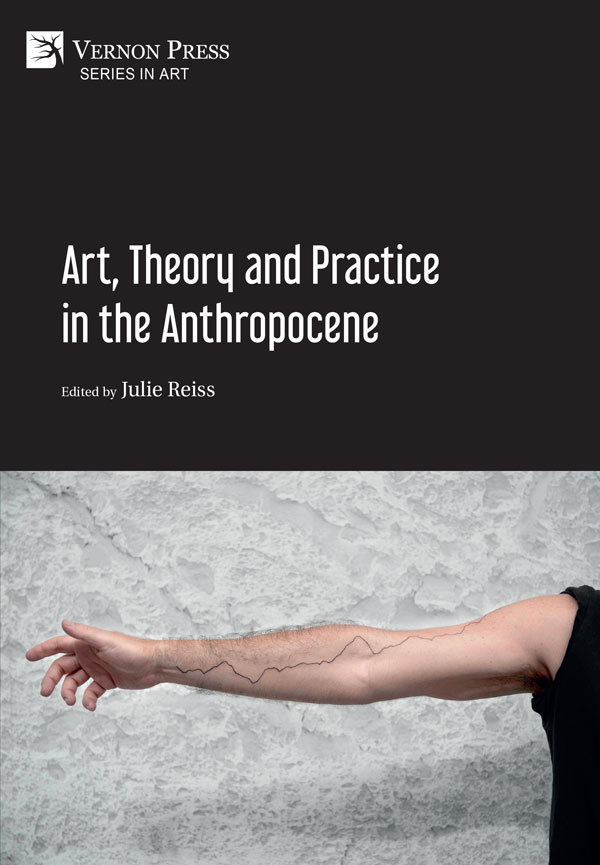
I am honored to offer a review of 'Art, Theory and Practice in the Anthropocene', edited by Julie Reiss. This outstanding collection of essays focuses on the role of art (primarily visual) in response to environmental awareness and audience engagement in the context of the Anthropocene. The volume’s essays range from scholarly theory and reflection on the role of arts during a time of dramatic anthropogenic climate change and ecological/species decline to thoughts and reflections on specific exhibits, installations, projects and collaborations, community and pedagogical examples, and activist art projects. Reiss’ Introduction notes the increasing need for art and the humanities to creatively connect with audiences in rethinking/reimaging their place in the other-than-human world in order to forge new stories of change and possibly even hope.
While differing in style and purpose, each essay is excellently written and cogent to a wide array of readers.
Art, Theory and Practice in the Anthropocene is an essential book in the catalogue of environmental humanities scholarship by contextualizing the possibilities for environmentally engaged visual arts.
Prof. David Taylor
Stony Brook University
Art, Theory and Practice in the Anthropocene” will be an invaluable resource for artists and art teachers who are trying to figure out how art can make a difference in a time of climate change. Its authors present a wide range of perspectives. They take on, among other questions: how can art directly act on environmental problems? What practical effects can art have on specific audiences? What standards can be created to evaluate the relative effectiveness of various approaches? This book is an important addition to the growing literature on our increasingly fraught situation and injects a note of hope and agency into a vital debate.
Eleanor Heartney, Contributing Editor, Art in America
Discover books that expand on the themes explored in this work—titles that engage with similar questions, intersecting disciplines, and complementary perspectives to deepen understanding and broaden the conversation.
Browse all titles
Lee Davidson and Leticia Pérez-Castellanos
View more
Joana Antunes, Maria de Lurdes Craveiro, and Carla Alexandra Gonçalves (Eds.)
View more