Loading...
Please wait while we load the content...
Loading...
Please wait while we load the content...

Explore peer - reviewed titles across the humanities and social sciences - rigorous research, fresh perspectives, and scholarship that inspires dialogue across disciplines.
Stay informed about our latest publications, calls for proposals, and special announcements. As a subscriber, you'll also enjoy exclusive member discounts of 10%-20% on all orders. Join our community of scholars, librarians, and readers today.

From special discounts and global distribution partners to downloadable catalogs, flyers, and high-resolution covers, we make it easy to enrich your library’s collection. Access bibliographic data, explore subject-specific listings, and stay updated on forthcoming titles.
Become part of our librarian network and access dedicated tools, discounts, and resources to support collection development and promote new titles to your patrons.

Partner with Vernon Press to provide your customers with high-quality, peer-reviewed scholarship. We offer flexible ordering options, reseller agreements, and promotional materials to support your sales and outreach.

Vernon Press provides dedicated resources to help instructors adopt our books for courses and to support students with affordable access to high-quality scholarship. From desk and examination copies to tailored student editions, we aim to make our titles accessible in the classroom.
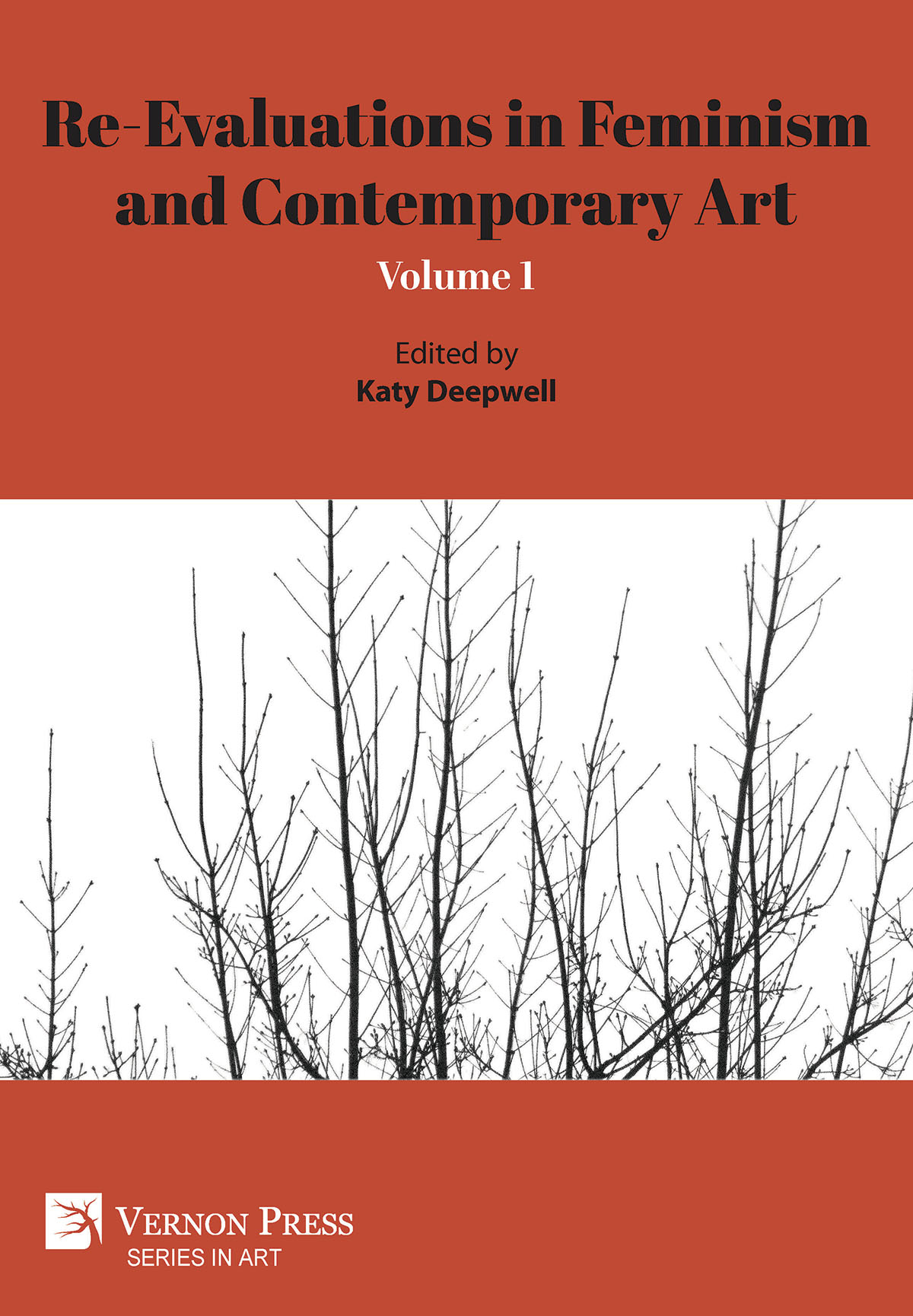
Volume 1
Oksana Briukhovetska, Katy Deepwell, Suzana Milevska, Maria Kheirkhah, Kimberly Lamm, Qingyu Shen, Karolina Majewska-Güde, Lisa Moravec, Fran Cottell, Valeria Mari, Wiktoria Szczupacka, Angela Maderna, Pedro Merchán Mateos, Gabriela Traple Wieczorek, Jana Kukaine, Virginia Marano, and Alexandra Kokoli
It could be said all new research contains a “re-evaluation” of past work but these two volumes attempt a re-evaluation of feminist research in contemporary art as it has developed over the last 50 years in relation to different local/global dynamics and/or about certain artists, artworks or exhibitions. Feminism(s) aim was to interrogate existing histories and provide significant corrections to what constitutes “history”. The two volumes explore some of the ways feminism(s)’ challenges have changed museums’ curatorial practices, critical writing and art history and how feminism itself has been transformed over time and its presence in many locations. Feminism’s absence from the stories told today about the recent past and present of contemporary art represents a starting point for these essays to explore the different strategies that have been attempted in cultural and political terms and to offer fresh assessments. Their re-evaluation of artists, artworks and exhibitions goes beyond questions of reputation or recognition, to embrace questions about identifying issues in feminist research, engaging in collective work and re-examining the personal in relation to politics/aesthetics. These volumes include different voices and perspectives on feminism and contemporary art from many parts of the world by academics, critics, artists, curators and researchers. Volume 1 has three sections that each address local and transnational issues in interpretations of feminism and amongst exhibiting artists through considering local/global dynamics and/or national frameworks (section 1); feminist cultural politics within exhibitions and writing exhibition histories (section 2) and within histories of conflicts in different local/national situations (section 3). The writers come from North Macedonia, UK, Iran, USA, China, Poland, Austria, The Netherlands, Italy, Spain, Ukraine, Latin America and Latvia – and their work engages work undertaken in Japan, Thailand, France, Vietnam, Mexico, Argentina and Brazil.
James H. Rubin
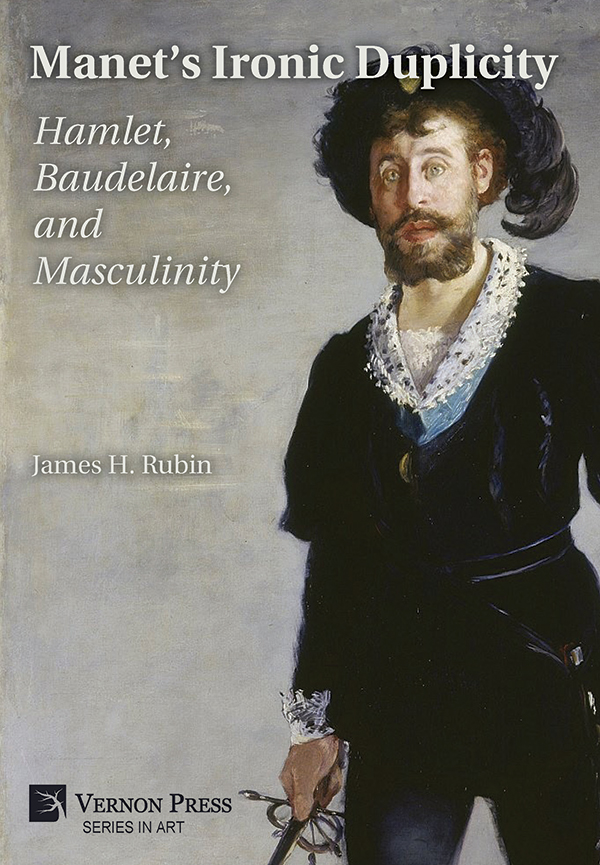
The painter Edouard Manet (1832-1883) was a central figure for momentous and lasting changes in the realm of art that still resound today. His art speaks directly to the philosophical issues and political conflicts of his own time and is therefore deeply embedded in the development of modernity. 'Manet’s Ironic Duplicity' focuses on that situation and the historically conscious artist’s sometimes ambivalent struggle for authenticity. Rather than another full chronological monograph, the book is an interdisciplinary study organized around key concepts. It reframes the major, and sometimes disparate issues in Manet scholarship by focusing on a never-before-considered overriding theme—duplicity—which itself is multiple in its manifestations and variants, hence 'duplicities'. Reversing the usual narrative, this study deconstructs and enlightens the myth of the heroic artist struggling for individual and original vision by revealing how so much of Manet’s creativity and irony was prompted by frustrations due to repressive politics, censorship, and challenges to his sense of self. A key aspect of the latter was his masculinity. Although Manet’s association with the ideas of the poet and critic Charles Baudelaire is well known, never has Baudelaire’s essay 'On the Essence of Laughter and the Comic in the Visual Arts' been brought to bear on the concept of irony in Manet’s work. Given Baudelaire’s rapprochement between actors and artists, as well as Manet’s familiarity with the theatrical milieu, the book focuses on Manet’s two little-studied representations of 'Hamlet' as both the starting and end point of its analysis. It then concludes with a re-reading of the painter’s illustrated letters to women as a dissimulation of his final, fatal illness in order to maintain his masculine honor.
James H. Rubin
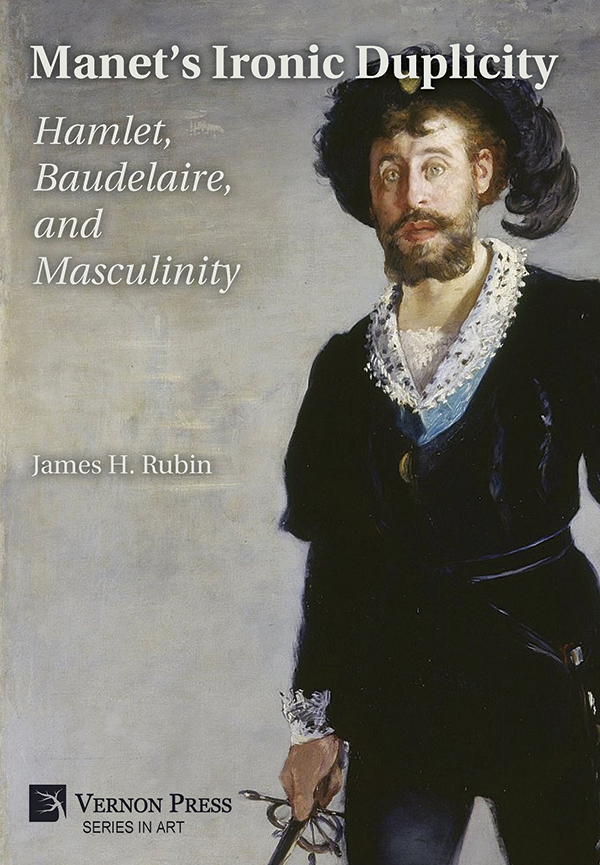
The painter Edouard Manet (1832-1883) was a central figure for momentous and lasting changes in the realm of art that still resound today. His art speaks directly to the philosophical issues and political conflicts of his own time and is therefore deeply embedded in the development of modernity. 'Manet’s Ironic Duplicity' focuses on that situation and the historically conscious artist’s sometimes ambivalent struggle for authenticity. Rather than another full chronological monograph, the book is an interdisciplinary study organized around key concepts. It reframes the major, and sometimes disparate issues in Manet scholarship by focusing on a never-before-considered overriding theme—duplicity—which itself is multiple in its manifestations and variants, hence 'duplicities'. Reversing the usual narrative, this study deconstructs and enlightens the myth of the heroic artist struggling for individual and original vision by revealing how so much of Manet’s creativity and irony was prompted by frustrations due to repressive politics, censorship, and challenges to his sense of self. A key aspect of the latter was his masculinity. Although Manet’s association with the ideas of the poet and critic Charles Baudelaire is well known, never has Baudelaire’s essay 'On the Essence of Laughter and the Comic in the Visual Arts' been brought to bear on the concept of irony in Manet’s work. Given Baudelaire’s rapprochement between actors and artists, as well as Manet’s familiarity with the theatrical milieu, the book focuses on Manet’s two little-studied representations of 'Hamlet' as both the starting and end point of its analysis. It then concludes with a re-reading of the painter’s illustrated letters to women as a dissimulation of his final, fatal illness in order to maintain his masculine honor.
Giorgio Busi Rizzi, Silvia Vari, Lisa Maya Quaianni Manuzzato, Lorenzo Di Paola, Yesim Tonga, Francesca Leonardi, Francesca Fino, Nicole Crescenzi, Maria Luisa Catoni, Dario Boemia, Rodolfo Dal Canto, Alice Parrinello, Claudia Cerulo, and Lorenzo Bonoldi
Volume II of 'Italian Comics in the New Millennium' offers an in-depth exploration of the dynamic transformations in the Italian comics industry, focusing on the intersections of innovation, tradition, and contemporary socio-political issues. This collection highlights the rapidly evolving production and consumption landscape, including the rise of self-publishing, digital comics, and the impact of online platforms. The book examines the role of digital comics in reshaping narrative and aesthetic possibilities, while also addressing the changing working conditions of comics creators in the digital age. Key themes explored in this volume include the integration of comics into journalism; the emergence of reality-based narratives; and the growing representation of gender, sexuality, and immigration in contemporary graphic novels. Special attention is given to new waves of Italian comics that explore regional identities, historical memory, and personal lineage, offering a diverse range of case studies from emerging authors and established figures. This collection is a vital resource for researchers, students, and professionals in comics studies, media, and cultural studies. It provides an extensive overview of the most recent developments in Italian comics, offering a blend of critical analysis and fresh perspectives on the medium’s cultural significance. With its focus on evolving narrative forms and innovative production models, this volume serves as both a reference tool and a thought-provoking exploration of the present – and future – of Italian comics.
Author information not available
The first issue of a two-volume collection, this book explores the transformation of Italian comics in the new millennium, offering a comprehensive analysis of the evolving landscape of “fumetti” through both historical and contemporary lenses. The book examines iconic serials from Disney Italia and Sergio Bonelli Editore, alongside innovative auteur-driven works, providing readers with an in-depth look at how Italy’s most influential comics publishers have adapted to shifting cultural and industrial contexts. Contributions focus on the challenges of maintaining the essence of beloved series while integrating modern sensibilities, exploring shifts in audience, narrative strategies, and thematic explorations. The volumes also delve into the works of influential Italian comic artists, from the groundbreaking legacy of Andrea Pazienza to the contemporary innovations of Gipi and Zerocalcare, offering fresh insights into narrative styles, intermedial experimentation, and socio-political commentary. With contributions from leading scholars in the field, this collection highlights the vibrant, dynamic nature of Italian comics and their growing international recognition. This work provides a vital resource for anyone interested in the intersection of popular culture, artistic innovation, and the evolving nature of graphic storytelling. Drawing on a rich variety of methodological approaches, the book serves as both a reference tool and a thought-provoking exploration of the role of comics in contemporary society in the Italian context.
John G. Hatch, Christa DiMarco, Debra DeWitte, Amy McNair, Natalie E. DeQuarto, Debbie Whelan, Cynthia Haveson Veloric, Melinda McVay, Hamza El Fasiki, Victoria Nolte, and Rory O’Dea
'Perspective: Selected Essays on Space in Art and Design' explores the ways in which visual and physical space have been designed and experienced in different cultures. This book amplifies the significance of space as a design element by examining its implications in various contexts through a global perspective of art and design.
Amélie Brisson-Darveau, Olivia McGilchrist, Elke Mark, Lindsey French, Petra Köhle, Nicolas Vermot-Petit-Outhenin, Kai Ziegner, Sarah Burger, Jonah Jeng, Friederike Sigler, Treva Michelle Legassie, Matthew-Robin Nye, and Karen Wong
This volume gathers research at the intersection of art and the interdisciplinary humanities to develop an understanding of media assemblages that insist on the generativity of their situatedness within ecologies of practice. These contributions propose media assemblages that enlarge the time and space for co-compositions between media and bodies that reshape subjective, perceptual, and affective registers of experience. Media assemblages include photography, performance, criticism, curation, installation, animation, collage, video and VR, as well as archival and somatic practices. Research as a form of practice is a key orientation in this volume since it offers a means of engaging the world-making proposition offered by Isabelle Stengers that practices are specified through irreducible entanglements that cause one to think, feel, and hesitate. The generative linkages between different disciplinary approaches for engaging research practice across the arts and humanities are favoured over disciplinary and media-based exclusivity. When practice is not posed as an intervention or counterpoint to scholarly research or in opposition to the discursive, differences emerge, not based on convention but through the situatedness of emergent insight. The goal is thus not to forward a reproducible formula for knowledge creation but to weave the conditions for utterances both within and in excess of discipline, convention, and establishment. How can research engender the making of communities between, across, and in excess of institutional frameworks through the emergent affinities, postures, and formats of evolving and inclusive forms of research? This volume is a valuable reference for researchers/practitioners within the arts and humanities as it exemplifies both critical and situated methods for developing interdisciplinary research as a means of transforming the terms of research itself.
Patricia Emison
What ties western art together? This extended essay attempts to distill some of the basic ideas with which artists and observers of their art have grappled, ideas worthy of ongoing consideration and debate. The fostering of visual creativity as it has morphed from ancient Greece to the present day, the political and economic forces underpinning the commissioning and displacement of art, and the ways in which contemporary art relates to past periods of art history (and in particular, the Renaissance), are among the topics broached. Architecture, drawings, prints, films, painting, sculpture, and decorative arts from Europe and the US are considered and examined, often including nonstandard examples, occasionally including ones from the immediate surroundings of the author (who is based in New England). Although this book is primarily geared to those who would like a brief introduction to some basic aspects of a visual tradition spanning thousands of years, students of aesthetics might also discover useful benchmarks in this concise overview. The author places the emphasis on how art has been used and loved (or sometimes despised or ignored) more than on which works should be most famous.
Patricia Emison
What ties western art together? This extended essay attempts to distill some of the basic ideas with which artists and observers of their art have grappled, ideas worthy of ongoing consideration and debate. The fostering of visual creativity as it has morphed from ancient Greece to the present day, the political and economic forces underpinning the commissioning and displacement of art, and the ways in which contemporary art relates to past periods of art history (and in particular, the Renaissance), are among the topics broached. Architecture, drawings, prints, films, painting, sculpture, and decorative arts from Europe and the US are considered and examined, often including nonstandard examples, occasionally including ones from the immediate surroundings of the author (who is based in New England). Although this book is primarily geared to those who would like a brief introduction to some basic aspects of a visual tradition spanning thousands of years, students of aesthetics might also discover useful benchmarks in this concise overview. The author places the emphasis on how art has been used and loved (or sometimes despised or ignored) more than on which works should be most famous.