Loading...
Please wait while we load the content...

Loading...
Please wait while we load the content...
Stay informed about our latest publications, calls for proposals, and special announcements. As a subscriber, you'll also enjoy exclusive member discounts of 10%-20% on all orders. Join our community of scholars, librarians, and readers today.


Availability
In stock
ISBN
9798881903756
Edition
1
Publication Date
March 24, 2026
Physical Size
236mm x 160mm
Illustrations
107 B&W
Number of Pages
372
Currency
Quantity
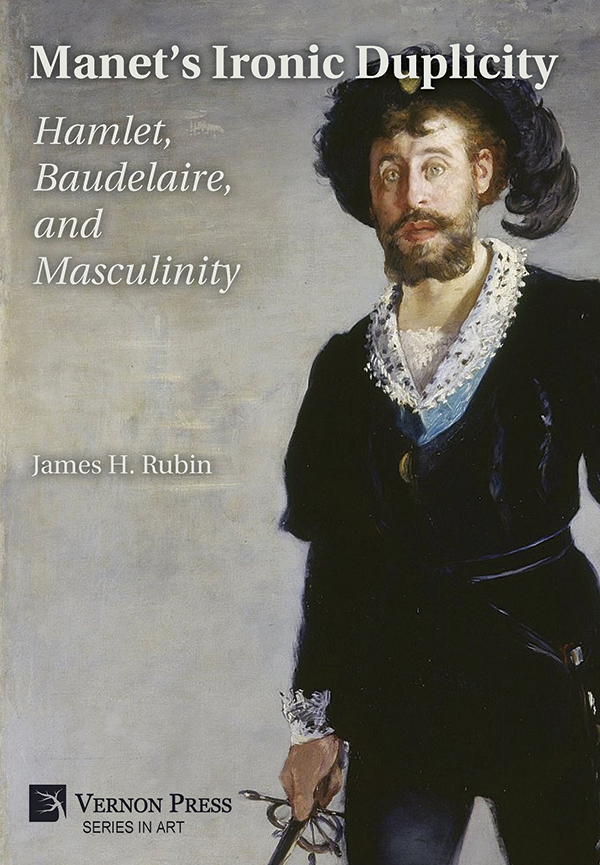
James Rubin is well-established as a major voice in the highly contested field of Manet scholarship, and this book will further our understanding of Manet’s impact on modernism. The text is beautifully written with a well-crafted and original take on Manet and masculinity. His analysis of the history of role playing and pseudonyms in the French tradition solidifies his argument. His insertion of Durkheim is superb and highly innovative without ever lapsing into jargon. His take on the Manet-Morisot relationship is newly intriguing and entirely convincing. He manages to deepen our understanding with his deft and provocative readings of images. The book presents complex research by making particular cases such as his focus on Hamlet visually and thematically emblematic of larger issues.
Dr. Therese Dolan
Tyler School of Art, Department of Art History
Temple University
The author has put forward a remarkably compelling and persuasive argument for the central place of performance, various forms of duplicity and duality, and notions of masculinity in Manet’s work, life, and sense of self. The author’s analysis of Baudelaire’s work, the relationship between Baudelaire’s and Manet’s ideas, and the connections of both to their historical moments are also profoundly meaningful contributions to the existing literature, as is the highly illuminating positioning of Manet’s work in relation to Baudelaire’s writings on acting and their relevance to the writer’s views on visual art. Of great value is also the author’s in-depth, sophisticated, and wonderfully original interpretation of the multi-layered significance of Manet’s representations of Hamlet. While conceptually complex, the author's arguments are articulated in an accessible manner, with clear interpretive threads that run throughout the manuscript that tie the chapters together and make the text as a whole feel argumentatively consistent and cohesive.
Dr. Michelle Foa
Art History, Newcomb Art Department
Tulane University
Discover books that expand on the themes explored in this work—titles that engage with similar questions, intersecting disciplines, and complementary perspectives to deepen understanding and broaden the conversation.
Browse all titles
Joana Antunes, Maria de Lurdes Craveiro, and Carla Alexandra Gonçalves (Eds.)
View more