Loading...
Please wait while we load the content...

Loading...
Please wait while we load the content...
Stay informed about our latest publications, calls for proposals, and special announcements. As a subscriber, you'll also enjoy exclusive member discounts of 10%-20% on all orders. Join our community of scholars, librarians, and readers today.


Availability
In stock
ISBN
9781648893483
Edition
1
Publication Date
June 7, 2022
Physical Size
236mm x 160mm
Illustrations
36 Color
Number of Pages
585
Currency
Quantity
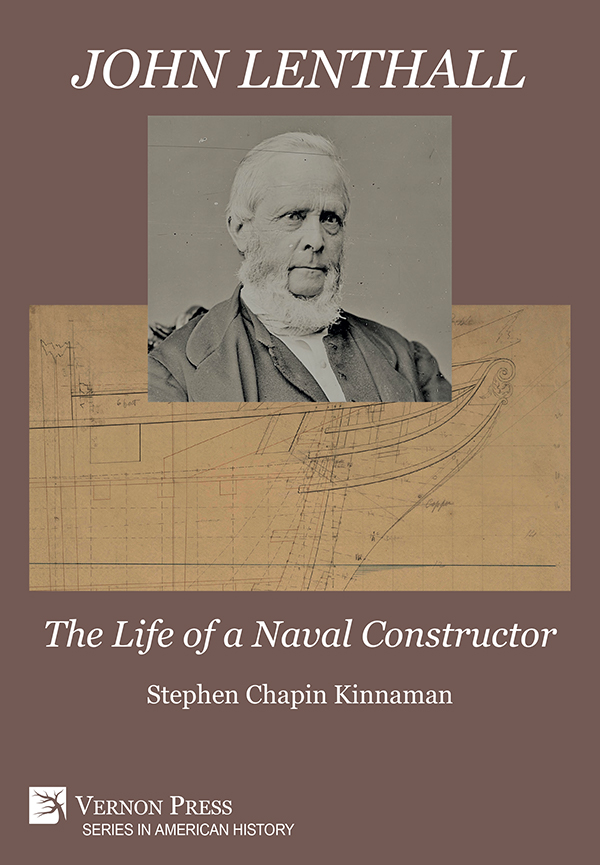
This work fills a major gap in the story of the US Navy in the mid-19th century, and thus will be of enormous interest to both scholars and aficionados of the Civil War, naval and maritime history writ large, and naval technology in particular. Most books about this period are of the officers-and-tactics theme, or they focus solely on individual ships like the ironclads “Monitor” and “Virginia”. When other ships are mentioned, they typically appear suddenly, unheralded. There is rarely an origin story of how these ships came to be, and even more rarely any discussion of the naval constructors who brought them from concept into wood, iron and steam. John Lenthall was certainly the most important of these constructors, having overseen the development of the entire Union Navy, which proved key to blockading the South and preventing Britain and France from entering the Civil War on the side of the Confederacy. Like any good “hero’s journey”, Kinnaman's biography is the story of a quest for knowledge, an adventure, a transformation, various defeats and victories, and finally, a reckoning that changes his country forever. Stephen’s prose is precise and engaging without ever being tedious, and he covers both high political strategies and arcane technical points with equal facility.
I am deeply impressed by the quality, carefulness and thoroughness of Stephen’s scholarship. He has plumbed the archives and libraries of both the United States and France (the French use the term dépouiller which literally means “to strip”), highlighting important contextual narratives as well as uncovering minor personal details which bring the subject to life. For example, he emphasizes the fact that Lenthall’s strategic arguments for a blue-water navy (“how much better it is to fight at the threshold than upon the hearthstone”), which was picked up by the British press, predated by a generation the similar, highly influential ideas of Alfred Thayer Mahan. By the same token, his discussion of the Lenthall family’s relationship with Benjamin Latrobe (pp. 30ff) sheds new light on the early architectural development of Washington DC.
Prof. Dr. Larrie D. Ferreiro
George Mason University
Discover books that expand on the themes explored in this work—titles that engage with similar questions, intersecting disciplines, and complementary perspectives to deepen understanding and broaden the conversation.
Browse all titles
Barry Turner, Daniel Barredo, and Steven James Grattan (Eds.)
View more