Loading...
Please wait while we load the content...
Loading...
Please wait while we load the content...

Explore peer - reviewed titles across the humanities and social sciences - rigorous research, fresh perspectives, and scholarship that inspires dialogue across disciplines.
Stay informed about our latest publications, calls for proposals, and special announcements. As a subscriber, you'll also enjoy exclusive member discounts of 10%-20% on all orders. Join our community of scholars, librarians, and readers today.

From special discounts and global distribution partners to downloadable catalogs, flyers, and high-resolution covers, we make it easy to enrich your library’s collection. Access bibliographic data, explore subject-specific listings, and stay updated on forthcoming titles.
Become part of our librarian network and access dedicated tools, discounts, and resources to support collection development and promote new titles to your patrons.

Partner with Vernon Press to provide your customers with high-quality, peer-reviewed scholarship. We offer flexible ordering options, reseller agreements, and promotional materials to support your sales and outreach.

Vernon Press provides dedicated resources to help instructors adopt our books for courses and to support students with affordable access to high-quality scholarship. From desk and examination copies to tailored student editions, we aim to make our titles accessible in the classroom.
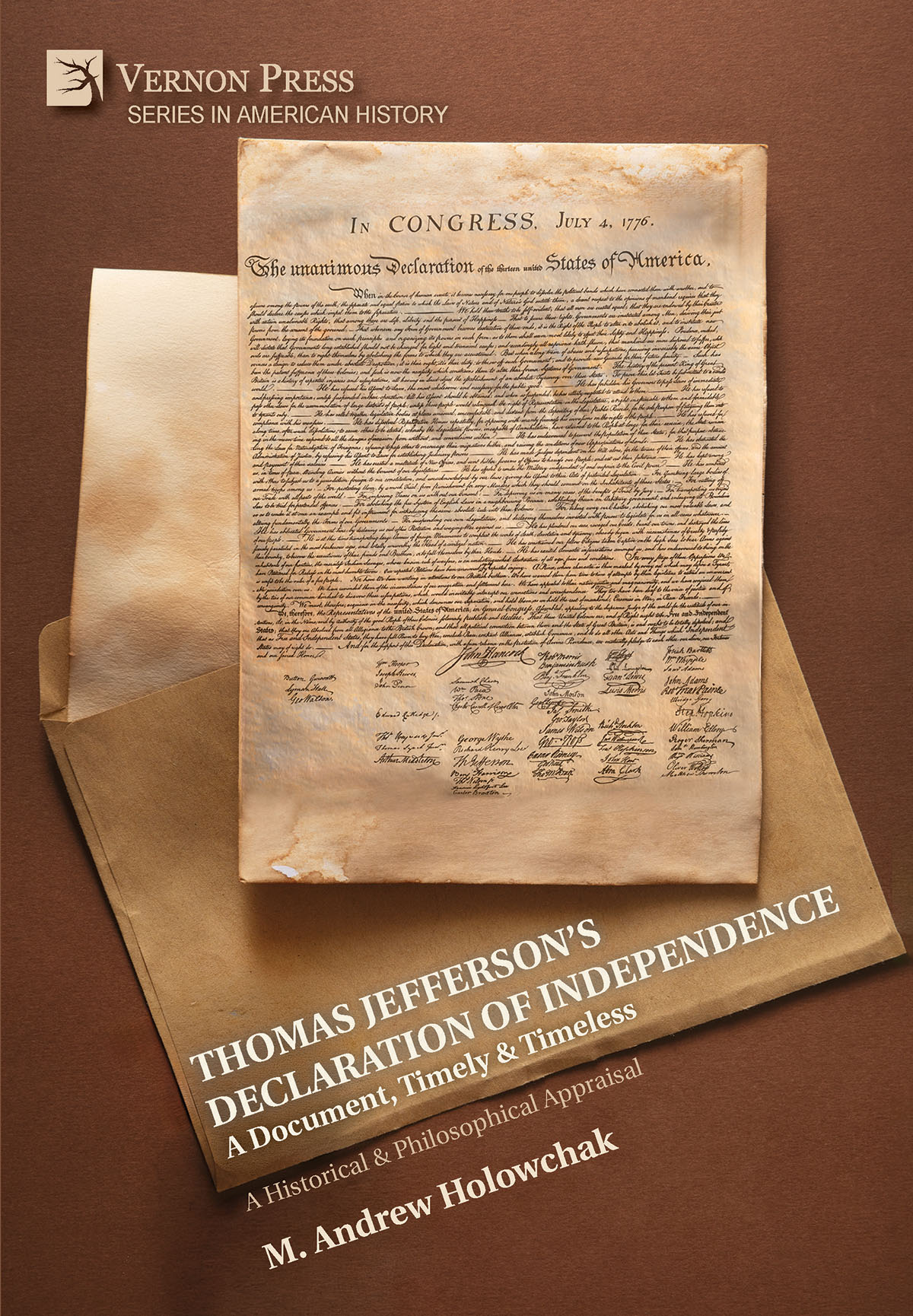
A Historical & Philosophical Appraisal
M. Andrew Holowchak
The Declaration of Independence is alive, because its sentences are crafted with elegance and concision—and the Congress much contributed to its concision—and because the author, not just the drafter, of the document captured things commonly known, yet profound, concerning human nature and human wellbeing. The Declaration of Independence, thus, is not just a proclamation to the world, of Americans’ independence and of the reasons for it, but it is also, and most singularly, a moral document that grounds a rich and robust liberal political philosophy. The bedrock of that political philosophy, argues Holowchak, is human equality, not human liberty.
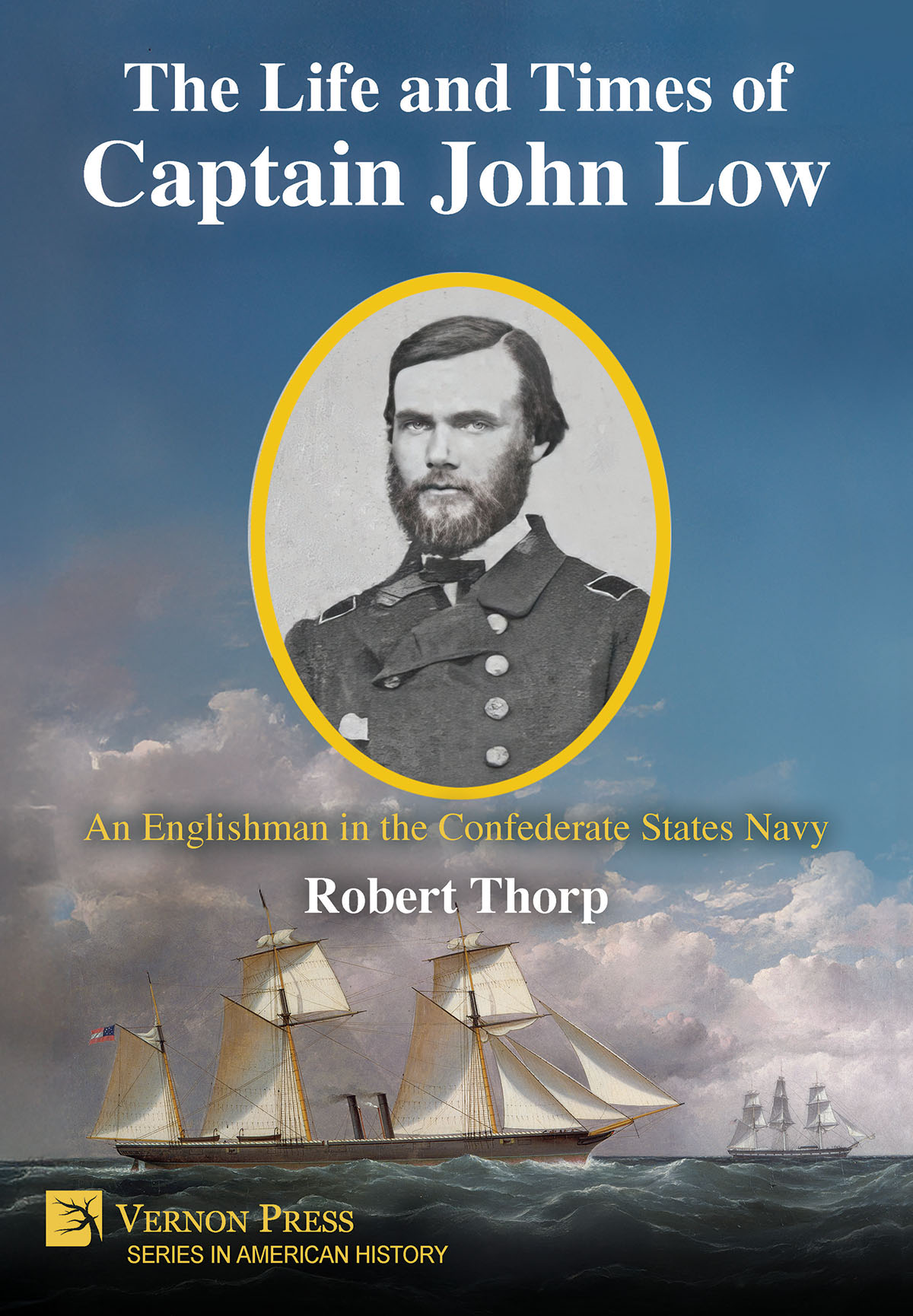
An Englishman in the Confederate States Navy
Robert Thorp
Captain John Low (1836 -1906) earned his place in history through four years of service in the Confederate States Navy (1861-1865). He served on CSS 'Fingal', 'Florida', and 'Alabama', and commanded CSS 'Tuscaloosa' and 'Ajax'. However, it would be wrong to define the man simply by his Civil War record. His seventy-year life was full of adventures, triumphs, tragedies, and altruistic philanthropy. He led a good life and was known as a good man, respected and revered by all who knew him. This book contains a detailed account of Captain Low’s whole life from cradle to grave. Using primary source documents, not available to earlier biographers, the author delves into John Low’s life to a much greater depth than any preceding work has been able to achieve. For the first time ever, his genealogy is fully divulged, allowing previously misunderstood relationships to be challenged and corrected, and the roles of his previously unknown siblings to be fully explored. Description of his military service is based on his personal log books and the eye witness accounts of his contemporaries. Along the way, the book sheds new perspectives on the roles played by his relations, Charles Green and Andrew Low of Savannah, in facilitating purchase of CSS 'Fingal'; it unmasks the mysterious Thomas Byrne, Louisiana’s secret agent, and explains the hitherto unrecognised role of Liverpool’s Isaac, Low & Co. The captain’s post-war life, firstly as a manager of Lancashire cotton mills, and latterly as a successful Liverpool businessman, is similarly illuminated with many previously unwritten facts. Anyone with an interest in Civil War history will find a wealth of new and unique material between these covers. Those who just enjoy a good biography should also be delighted.
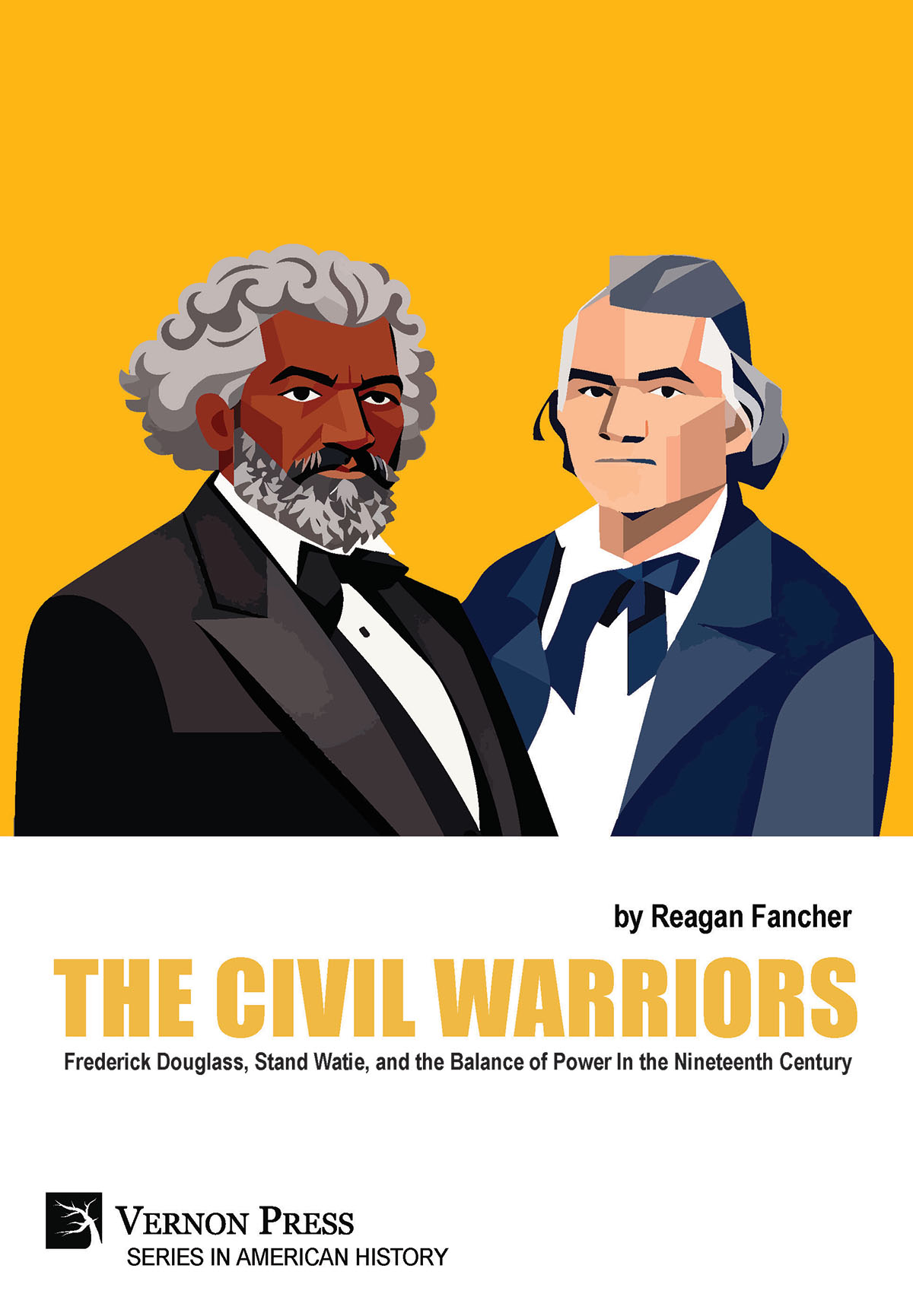
Frederick Douglass, Stand Watie, and the Balance of Power In the Nineteenth Century
Reagan Fancher
Frederick Douglass and Stand Watie, two men on opposite sides of the American Civil War, may seem to have little in common. Yet in 'The Civil Warriors', Reagan Fancher seeks to help students of American History understand the nuances of both men’s actions and decisions while calling attention to the striking similarities between Douglass, an abolitionist leader and adviser to President Abraham Lincoln, and Watie, a “mixed-blood” Cherokee slaveholder who became the last Confederate general to surrender. Despite their stark contrasts, these two men proved more similar than different in their character and courage in striving to aid their respective peoples. Douglass’s liberty message contributed to the enfranchisement of the freedmen and the breaking of political barriers, while Watie’s wisdom in laying aside his personal grievances against the Northern Cherokee rivals of his Southern Cherokee people helped heal the Cherokee Nation’s simmering sectarianism, reignited by the Civil War and paved the way for intratribal peace. In contrast to previous works, 'The Civil Warriors' examines the wartime and postwar lives and actions of both Douglass and Watie in a single volume for the first time, calling scholars’ attention to the similar paths on which each man embarked in serving his respective republic. Through this book, Fancher seeks to both inform collegiate-level students about Watie and Douglass’s lasting contributions that often seem to be overlooked or underemphasized in many other recent works and provide a useful classroom teaching tool for scholars while exploring both men’s lives and legacies. Revisiting and rebutting some popular misperceptions of each man, the book also fills a gap in Watie scholarship and seeks to both inform and inspire casual readers and scholars alike, bringing together those of different perceptions of the Civil War and Reconstruction and guiding today’s Americans in casting aside their differences and working together.
M. Andrew Holowchak
Jefferson’s views on Indians were characterized by ambivalence. Jefferson both loved and hated Native Americans, because he loved Native Americans. Jefferson was, through his father Peter, exposed early on and directly, though likely infrequently, to mysterious but congenial Indigenes, and he came to respect profoundly their courage, physical endurance, artistry, integrity, and most importantly, their large love of liberty, even if they were “uncivilized.” So impressed by Indians' culture was Jefferson that he made their nature and culture objects of study in his ‘Notes on Virginia.’ Though uncivilized, Indians showed marked signs of being readily civilizable. Thus, Jefferson, qua politician and philosopher, hoped that they would mix their blood with Whites and become part of what he saw as a great American “empire for liberty.” Miscegenation meant integration, willful or by force, into American culture and abandonment of Aboriginal ways and their radically different way of seeing the land upon which they lived, which Natives could only grudgingly accept. Was Jefferson’s Indian policy, though guided by true concern for their wellbeing, genocidal? This book ultimately aims to answer that question.
Thomas Jefferson, History, & Liberty: A Philosophical Analysis
M. Andrew Holowchak
Liberty for Jefferson was 'the' driving force of human history and a realizable state of the human organism and of a society of men. Study of history and anthropology showed that humans were moving from the barbaric independence suffered in primal hordes, which lived inefficiently on lands, to a more economical, human-friendly use of land in social settings, demanding laws for order. Those laws, historically, favored the powerful few to the detriment of the hoi polloi. As a pupil of the Enlightenment, Jefferson argued that all humans were by nature equal, and thus, deserving of as much civic liberty as a reason-oriented and sciences-loving society, a Jeffersonian republic, could guarantee them. This book, philosophical, explains how such a society was possible, given Jefferson’s conception of the nature of man, and how the realization of one such society could lead, through contagion, to a global community of such societies. There are a large number of books that cover Jefferson’s political ideology (e.g., Gordon Wood’s 'Empire of Liberty' and Adrienne Koch’s 'The Philosophy of Thomas Jefferson')—too many to limn—but none that gets at the philosophical implications of TJ’s views on liberty. This book, examining TJ as a natural scientist and philosophy, examines and situates him in the manner of other great political ideologists of his day—e.g., Hume and Kant.
Paul Jeffrey Cook
This book presents the U.S. Army Asymmetric Warfare Group (AWG) as an example of successful change by the Army in wartime. It argues that creating the AWG required senior leaders to create a vision differing from the Army’s self-conceptualization, change bureaucratic processes to turn the vision into an actual unit, and then place the new unit in the hands of uniquely qualified leaders to build and sustain it. In doing this, it considers the forces influencing change within the Army and argues the two most significant are its self-conceptualization and institutional bureaucracy. The work explores three major subject areas that provide historical context. The first is the Army’s institutional history from the early 1950s through 2001. This period begins with the Army seeking to validate its place in America’s national security strategy and ends with the Army trying to chart a path into the post-Cold War future. The Army’s history is largely one of asymmetric warfare. The work thus examines several campaigns that offered lessons for subsequent wars. Some lessons the Army took to heart, others it ignored. As the AWG was a direct outgrowth of the failures and frustrations the Army experienced in Afghanistan and Iraq, the book examines these campaigns and identifies the specific problems that led senior Army leaders to create the AWG. Finally, the work chronicles the AWG’s creation in 2006, growth, and re-assignment from the Army staff to a fully-fledged organization subordinate to the U.S. Army Training and Doctrine Command in 2011 to its deactivation. This action resulted not from the unit’s failure to adapt to a post-insurgency Army focusing on modernization. Rather, it resulted from the Army failing to realize that while the AWG was a product of counterinsurgency, it provided the capability to support the Army during a period of great strategic and institutional uncertainty.
Complete Correspondence with Critical Commentary
M. Andrew Holowchak
This is the only book to offer the complete correspondence between Thomas Jefferson and Maria Cosway, a talented artist for whom Jefferson fell while in France. There is agreement in the secondary literature that Jefferson’s affection for Hemings was reciprocated. This book shows that that cannot be believed. Holowchak also shows that Cosway, through letters late in life, much longs for Jefferson’s company, suggestive of regret for not having earlier in life reciprocated Jefferson’s feelings—hence, the importance of a book with the complete correspondence. Holowchak also offers in the introduction a short psychobiography of Cosway that shows the significance of key early-life events—e.g., her childhood in a tavern, her removal to a convent, her introduction to art, and two singular dreams. Cosway would ever be tugged antipodally by the lure of earthy living as well as the asceticism of Catholic piety.
Stephen Chapin Kinnaman
In the opening days of the American Civil War, the U.S. Navy suffered the catastrophic loss of its most valuable navy yard at Gosport, Virginia, commonly known as the Norfolk Navy Yard. Its fate was sealed by Virginia’s vote for secession and the subsequent resignation of most of the yard’s Southern officers, leaving its commandant, Charles Stewart McCauley, virtually defenseless. Early in the morning of Sunday, 21 April, fleeing federal forces set fire to and abandoned the Gosport Navy Yard, burning ten warships and surrendering 1,200 naval guns to Virginia’s militia. A year later, the Confederate ironclad "Virginia", built on the charred hulk of the steam frigate "Merrimack", chose the sloop "Cumberland"—the one ship to escape Gosport—as her first target during the Battle of Hampton Roads. "Virginia" then attacked the frigate "Congress", leaving in her wake nearly 280 dead or wounded Union sailors and two sunken ships. The birds from the disaster of Gosport had finally come home to roost. In his quest to uncover the details behind Gosport’s destruction, the author methodically cross-tracked chronologies, carefully examined primary sources and dug deeper into the principal officers’ backgrounds to grasp just what was in their minds during the hours leading up to the navy yard’s burning. This fresh focus has yielded a more nuanced explanation of McCauley’s decision to hold back "Merrimack", of Paulding’s rush to burn the yard and run, and of opportunities for success missed by all three commodores present. "A Crisis of Loyalties" is the first full-length work of history to present the entire story of the destruction and abandonment of the Gosport Navy Yard.
M. Andrew Holowchak
Why did Jefferson write 'Notes on the State of Virginia'? There are today two common theses. The first, the Alphabet-Soup Thesis, maintains that the book is more or less a loose collection of notes in answer to the 22 queries given by French diplomat François Barbé-Marbois. Jefferson’s altering the arrangement of his answers to the questions is a matter of allowing for a smoother “narrative” for his answers, but other than that, one ought to be cautious not to read too much into his restructuring. The second, the Deconstructionist Thesis, is that meticulous deconstruction of the text reveals a latent thesis, which Jefferson, consciously or subconsciously, kept from his readers. Both views are problematic. The former cannot explain why Jefferson fell so deeply into the project, rearranged Marbois’ questions so that the book would flow smoothly from nature to culture, and continually revise his often-lengthy answers, even after the Stockdale edition in 1787. The latter suffers from the fact that Jefferson tended never to write elliptically. "Thomas Jefferson’s ‘Notes on the State of Virginia’: A Prolegomena" is an attempt to provide an alternative, “dialectical” reading to current interpretations of the book. The book, Holowchak asserts, is neither a simple omnium gatherum nor is its message accessible only through deconstruction. There is an obvious movement from nature (Gr., 'phusis') in the first seven queries to culture (Gr., 'nomos') in the remaining 16 queries, but that “movement” is not linear. Early naturalistic queries set up neatly Jefferson’s discussion of the cultural aspects of Virginia, and Jefferson’s explication of the cultural aspects of Virginia cannot be grasped without frequent returns to the naturalistic queries, hence its dialectic. Jefferson’s aim overall, sums Holowchak, is the appropriation of what nature had given for humans’ use—to perfect the social state by taming nature and putting it to use for human betterment.