Loading...
Please wait while we load the content...

Loading...
Please wait while we load the content...
Stay informed about our latest publications, calls for proposals, and special announcements. As a subscriber, you'll also enjoy exclusive member discounts of 10%-20% on all orders. Join our community of scholars, librarians, and readers today.


Availability
In stock
ISBN
9781622732661
Edition
1
Publication Date
August 31, 2017
Physical Size
236mmx160mm
Illustrations
46 B&W
Number of Pages
272
Currency
Quantity
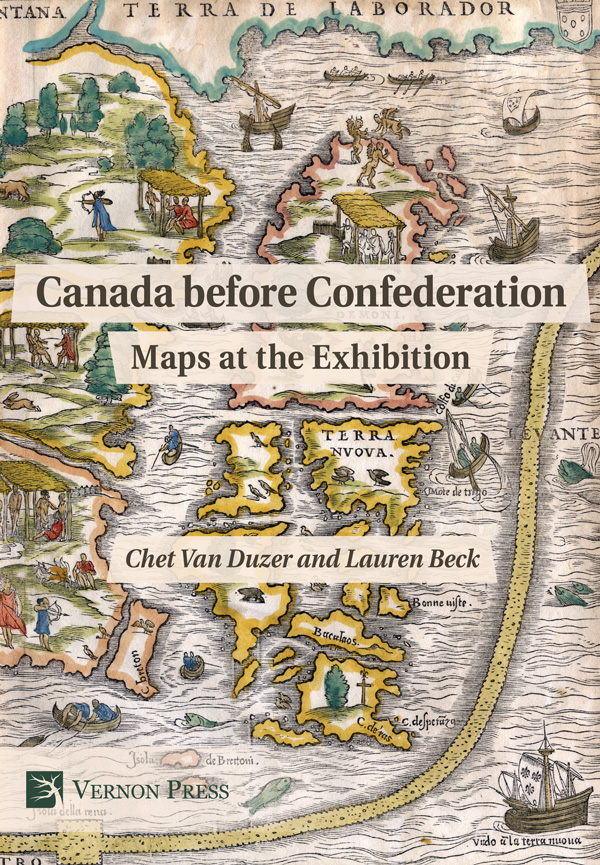
"More than mere drawings of coastlines, rivers, mountains, and settlements on flat sheets of paper, European cartography was a tool of power, domination, and colonization, not only over the land that became Canada but, more significantly, over the Indigenous Peoples who lived in the areas, the First Nations. In this informative and thought-provoking collection of scholarly essays regarding 18 maps dated from 1508 to 1772 illustrative of early Canadian history, the two authors have brought forth a work that is important for all historians to read, yet is also easily accessible to the general public. The authors have consciously examined each of these maps, not only for evidence of the Indigenous Peoples upon the European image of Canada over time, as represented in the maps, but also for the effects, often adverse, that the use of the maps had upon the Indigenous Peoples. The quality of the scholarship is of the highest level. The reader will be engaged by the richness of depth and detail. Each map is placed within the historical events surrounding it, disclosing the interactions, confrontations, and minglings between the British, French, and Indigenous Peoples that led to the formation of the nation of Canada. In addition to a checklist of 51 books and over a hundred articles, the footnotes provide dozens of additional sources not listed. This bibliographical richness makes this book an important source for Canadian history of the 16th, 17th, and 18th centuries. As a bonus, the footnotes provide links to digital copies of the maps for further, more detailed examinations."
Gregory C. McIntosh
University of Lisbon
Discover books that expand on the themes explored in this work—titles that engage with similar questions, intersecting disciplines, and complementary perspectives to deepen understanding and broaden the conversation.
Browse all titles
Lee Davidson and Leticia Pérez-Castellanos
View more
Eva Darias-Beautell (Ed.)
View more