Loading...
Please wait while we load the content...

Loading...
Please wait while we load the content...
Stay informed about our latest publications, calls for proposals, and special announcements. As a subscriber, you'll also enjoy exclusive member discounts of 10%-20% on all orders. Join our community of scholars, librarians, and readers today.

Availability
In stock
ISBN
9781622731664
Edition
1
Publication Date
January 5, 2017
Physical Size
236mm x 160mm
Illustrations
15 Color
Number of Pages
334
Currency
Quantity
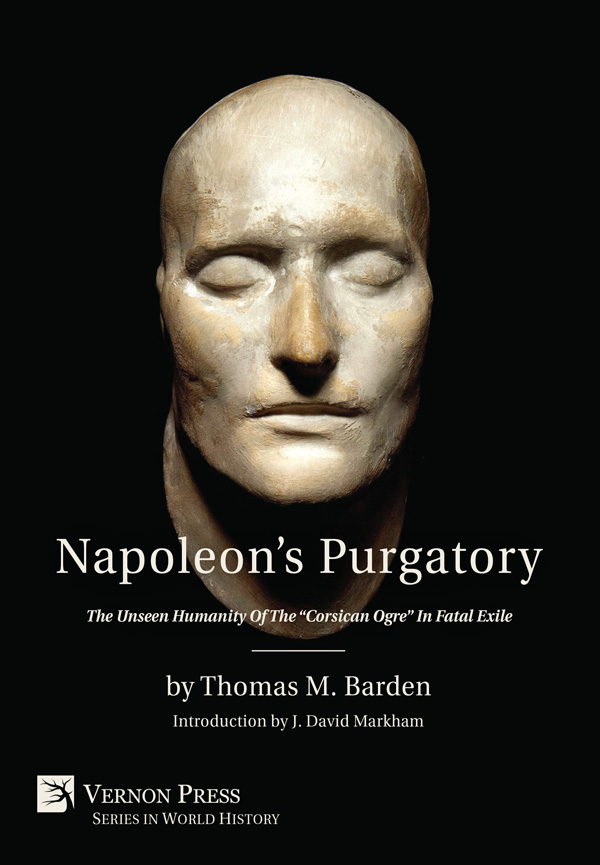
The primary mission of this fascinating study of Napoleon's final exile on St. Helena is to humanize history's larger than life perceptions of this military and political icon. Barden's work peels away the layers of partisan stereotypes about Napoleon as the “Corsican Ogre”, an image that was used to frighten naughty children among Napoleon's European enemies.
Drawing on extensive diaries and memoirs written by several of those among Napoleon's entourage who shared his confinement on St. Helena, these revealing sources offer great insights. They paint an intimate portrait of Napoleon's character and temperament by analyzing his day-to-day interactions during the six years of his very restricted confinement on St. Helena from October 1815 until his painful death there in May 1821. Napoleon himself proclaimed “You may make my body prisoner, but my soul is free.”
Barden's revealing work sheds light on Napoleon's resentment toward his British guardians; his playful love of children; his strong emotional ties to the Balcombe family, especially young Betsy; the personal tensions within his own entourage; his skeptical interactions with his doctors; his virulent conflicts with the British commander Governor Lowe; and his deep affection in absentia for his wives Josephine and Marie Louise, and his son.
Despite his physical ailments and the military constraints on his actions and movements, Barden shows that Napoleon greatly valued the friendships with his associates on St. Helena. He said “There is nothing like having friends in time of war….One doesn't need many. Above all, there must be friends. They take the place of so much more!”
David W. King,
SUNY Professional Science Master's Consortium
Discover books that expand on the themes explored in this work—titles that engage with similar questions, intersecting disciplines, and complementary perspectives to deepen understanding and broaden the conversation.
Browse all titles