Loading...
Please wait while we load the content...

Loading...
Please wait while we load the content...
Stay informed about our latest publications, calls for proposals, and special announcements. As a subscriber, you'll also enjoy exclusive member discounts of 10%-20% on all orders. Join our community of scholars, librarians, and readers today.
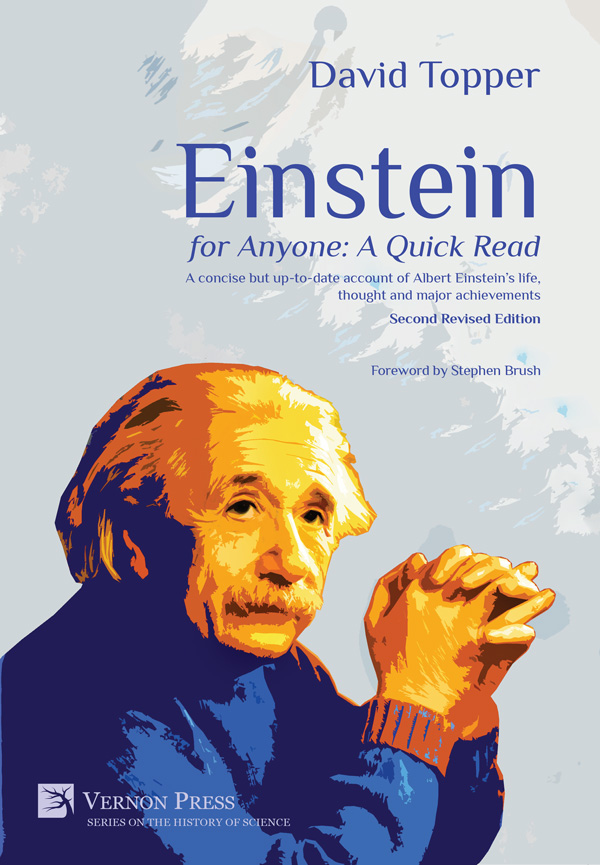

Availability
In stock
ISBN
9781622732579
Edition
2
Publication Date
March 1, 2017
Physical Size
236mm x 160mm
Illustrations
12 Color
Number of Pages
128
Currency
Quantity
"[...] a fascinating introduction to Einstein's career and scientific achievements."
Stephen G. Brush, University of Maryland.
"This is a book for anyone and everyone who has ever wondered about who Albert Einstein was and what he actually achieved. David Topper's achievement is to offer us something that can be read in a single sitting yet that transforms the greatest icon of modern scientific genius, 'Einstein', so often emptied of personal psychology (as Roland Barthes once said) into the human being, Albert, who was no monk or saint but had a life of struggle, love, exploitive relationships, personal crisis, irregular faith, and ultimate success. Topper clearly knows (and loves) his material, and, as a long-time teacher of quality, knows how to present it to us. There are profound suggestions of deeper meaning here, too. For, having lived through the most uncertain and dangerous time of the modern era for Jews, Einstein held out to the end against a quantum mechanics that conceived reality as indeterminate and statistical. In the end, he sought (but never found) a higher, more final, and, some might say, near-religious reality in the unity of all things."
Scott Montgomery, Jackson School of Int'l. Studies.
"This is a rich in contents book, very well informed and documented. The interplay between science and society uncovers with this biography a wide field of interactions."
Basil Evangelidis, National and Kapodistrian University of Athens
"[...] a good quick read to provide a temporal framework before tackling one of the longer volumes."
Virginia Trimble, The Observatory


