Loading...
Please wait while we load the content...

Loading...
Please wait while we load the content...
Stay informed about our latest publications, calls for proposals, and special announcements. As a subscriber, you'll also enjoy exclusive member discounts of 10%-20% on all orders. Join our community of scholars, librarians, and readers today.


Availability
In stock
ISBN
9781648894077
Edition
1
Publication Date
July 5, 2022
Physical Size
236mm x 160mm
Illustrations
1 Color
Number of Pages
256
Currency
Quantity
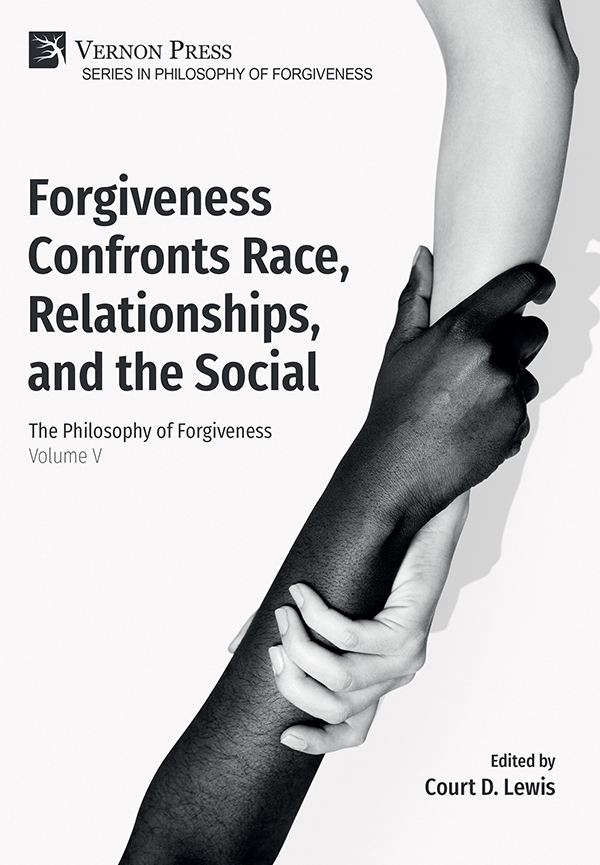
“Forgiveness Confronts Race, Relationships, and the Social” is the cutting edge of philosophical exploration of the many facets of forgiveness. In this volume Court Lewis has assembled a rich and diverse collection of essays highlighting many largely overlooked perspectives on forgiveness. The issues addressed in this exciting volume range from the role that forgiveness plays in combating racism to the nature of self-forgiveness to political forgiveness in moving from war to peace. The volume is well thought out and timely. Simply put, “Forgiveness Confronts Race, Relationships, and the Social” is a must-read for anyone interested in the nature of forgiveness.
Dr. Kevin McCain
Professor of Philosophy
University of Alabama at Birmingham
Court Lewis’ worthwhile volume addresses the very important and relevant topic of forgiveness and how it relates to race, parenting, other relationships, and forgiving oneself. It further offers accounts of the nature of forgiveness, its ethical dimensions, and its relevance in the social and political spheres, for example, in postwar situations and an era of political hyper-polarization and tribalism, but also how forgiveness is construed in religious contexts: Christianity, Scientology, and Gnosticism. The contributions to this volume are insightful, scholarly, well-researched, and accessible. In addition, the contributors come from around the globe, which offers a valuable international perspective on forgiveness. The book has a very broad and interdisciplinary appeal for those philosophers and scholars working on the topic of forgiveness, and it is an important contribution to that scholarship. The book’s accessibility and readability of the chapters make it appropriate for undergraduate and graduate students. The topic of forgiveness is intrinsically interesting, and virtually all humans must grapple with it at some point in their lives; thus, this volume is a valuable aid to anyone wishing to understand the nature and functionality of forgiveness more deeply.
Dr. Paula Smithka
Program Coordinator for Philosophy & Religion
School of Humanities
The University of Southern Mississippi
Forgiveness, we are coming to understand, plays a vital, but not yet fully understood role in human flourishing. The chapters in “Forgiveness Confronts Race, Relationships, and the Social” broaden and enrich our understanding by considering forgiveness from a wide variety of religious, philosophical, personal, and societal perspectives. More importantly, the work expands our consideration of forgiveness relative to formal (churches, states) and informal (racism) institutions. This expansion illuminates a need for further work clarifying the notion (or notions?) of forgiveness, its relationship to agency, and the distinction between the concept itself and the moral conditions relevant to an act of forgiving.
Dr. Charles E. Cardwell
Emeritus Professor of Philosophy
Pellissippi State Community College
Discover books that expand on the themes explored in this work—titles that engage with similar questions, intersecting disciplines, and complementary perspectives to deepen understanding and broaden the conversation.
Browse all titles
Simon Smith and James Beauregard (Eds.)
View more