Loading...
Please wait while we load the content...
Loading...
Please wait while we load the content...

Explore peer - reviewed titles across the humanities and social sciences - rigorous research, fresh perspectives, and scholarship that inspires dialogue across disciplines.
Stay informed about our latest publications, calls for proposals, and special announcements. As a subscriber, you'll also enjoy exclusive member discounts of 10%-20% on all orders. Join our community of scholars, librarians, and readers today.

From special discounts and global distribution partners to downloadable catalogs, flyers, and high-resolution covers, we make it easy to enrich your library’s collection. Access bibliographic data, explore subject-specific listings, and stay updated on forthcoming titles.
Become part of our librarian network and access dedicated tools, discounts, and resources to support collection development and promote new titles to your patrons.

Partner with Vernon Press to provide your customers with high-quality, peer-reviewed scholarship. We offer flexible ordering options, reseller agreements, and promotional materials to support your sales and outreach.

Vernon Press provides dedicated resources to help instructors adopt our books for courses and to support students with affordable access to high-quality scholarship. From desk and examination copies to tailored student editions, we aim to make our titles accessible in the classroom.
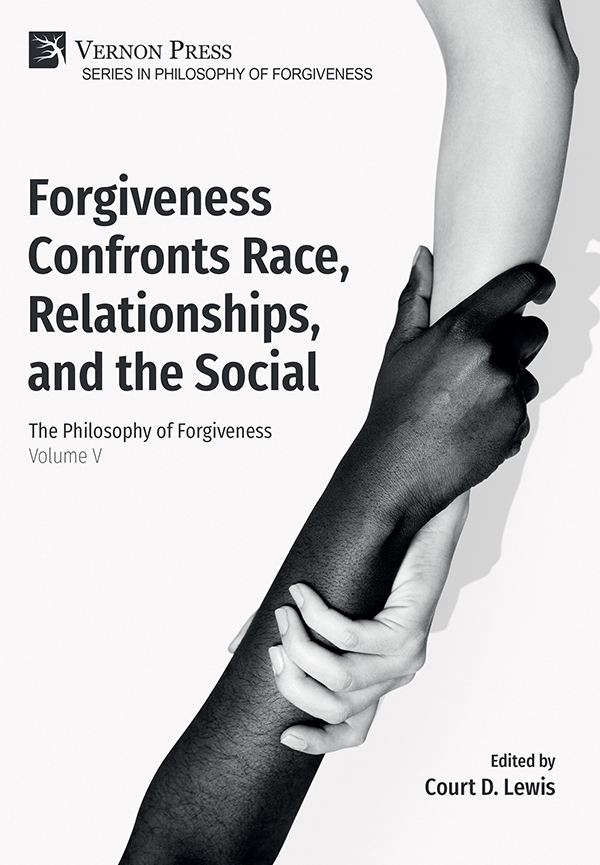
The Philosophy of Forgiveness - Volume V
Andrew J. Latham, Merianna Neely Harrelson, Bennet Soenen, Isadora Mosch Hefner, L. Brooke Rudow, Laci Hubbard-Mattix, Subhobroto Banerjee, Jason Cook, William N. Schabio Jr., Elisa Rapaport, Colin Lewis, James Norton, Kristie Miller, Russell Luke, Jennifer Kling, Adam Barkman, Leonard Kahn, Gregory L. Bock, and Court D. Lewis
'Forgiveness Confronts Race, Relationships, and the Social', Volume V of Vernon Press’s The Philosophy of Forgiveness series, is an exercise in listening. Listening to others, and not just waiting for them to stop speaking, requires a willingness to recognize the worth of the other and to believe that what they say is worthy of consideration. Much like reading a book, one must strive to quiet the constant voice in one’s head in order to hear and process the information communicated. Listening is not always easy, and it takes considerable practice, but it is one of the most effective means for developing understanding and growing as an intellectual and moral person. Literature dealing with forgiveness lacks many important voices, including those from First Peoples, African American, LatinX, and LGTBQ+ , and many others, and the authors of 'Forgiveness Confronts Race, Relationships, and the Social' begin the task of closing these gaps, discussing topics from folk and other social and political issues to racism, systems of oppression, and religion. The authors were asked to explore forgiveness from their own understandings of underrepresented aspects of forgiveness, and readers will hopefully be enlightened and inspired to make their own diverse voices of forgiveness heard, creating a true dialogue of diversity and wisdom.
Christian Perspectives on Forgiveness
Richard Thomas, Melissa Chia-Mei Tan, Joshue Orozco, William J. Devlin, William Lane Craig, J. Michael Cervantez, Chad Bogosian, Everett L. Worthington, Jr., Raymond Aaron Younis, Dylan Pahman, R. T. Allen, John McClellan, Kathleen Poorman Dougherty, and David Wright
The Philosophy of Forgiveness, Volume IV: Christian Perspectives on Forgiveness is a collection of essays that explores different Christian views on forgiveness. Each essay takes up a different topic, such as the nature of divine forgiveness, the basis for forgiving our enemies, and the limits of forgiveness. In some chapters, the views of different philosophers and theologians are explored, figures such as St. John Climacus, Bonaventure, and Nietzsche. In other chapters, the concept of forgiveness is analyzed in light of historical events, such as the Nickel Mines shooting, the Charleston shooting, and the Armenian genocide. The contributors to the volume come from different backgrounds, including philosophy, theology, and psychology. The essays are written for scholars in the humanities, social sciences, and theology, as well as graduate students and upper-division undergraduate students.
Forgiveness in World Religions
Donald B. Kraybill, Everett L. Worthington, Jr., John M. Thompson, Jae Jerkins, Mahdi Hasanzadeh, Jordan R. Corner, Winfried Corduan, Sinkwan Cheng, Adam Barkman, Rasool Akbari, Enzo Guerra, Raja Bahlul, and David R. Corner
The Philosophy of Forgiveness, Volume III: Forgiveness in World Religions is a collection of essays that explores the philosophy of forgiveness in different religions, including Judaism, Christianity, Islam, Hinduism, Buddhism and Confucianism. Each chapter scours one of these religions for insights on the concept of forgiveness, asking questions such as whether forgiveness is a virtue, whether it is conditional, whether God has standing to forgive, and whether it is permissible not to forgive some extreme wrongs. In some of the chapters, the concept of forgiveness in one religion is compared with that in another. In other chapters, the ideas of different traditions within a religion are compared and contrasted. Also, some chapters compare a religious concept to the views of a philosophical figure, such as Aristotle, Kant, or Derrida. The contributors to the volume come from various cultural and religious backgrounds and from different disciplines, such as philosophy, religious studies, and psychology. The collection is written for scholars, graduate students, and upper-division undergraduate students interested in forgiveness or comparative religious philosophy.
New Dimensions of Forgiveness
Kathleen Poorman Dougherty, Joshua M. Hall, Adrian Switzer, Zachary Thomas Settle, Ryan Michael Murphy, John McClellan, Jeff Lambert, Frederik Kaufman, Leonard Kahn, A.G. Holdier, Mariano Crespo, Elisabetta Bertolino, and Court D. Lewis
Volume II of Vernon Press’s series on the Philosophy of Forgiveness offers several challenging and provocative chapters that seek to push the conversation in new directions and dimensions. Volume I, Explorations of Forgiveness: Personal, Relational, and Religious, began the task of creating a consistent multi-dimensional account of forgiveness, and Volume II’s New Dimensions of Forgiveness continues this goal by presenting a set of chapters that delve into several deep conceptual and metaphysical features of forgiveness. New Dimensions of Forgiveness creates a theoretical framework for understanding the many nuanced features of forgiveness, namely, third-party forgiveness, forgiveness as an aesthetic process, the role of resentment in warranting forgiveness, the moral status of self-forgiveness, epistemic trust, forgiveness’s influence on the moral status of persons, forgiveness in time, the status of Substance and Subject within a Hegelian framework, Jacques Derrida’s “impossible” forgiveness, and the use of imaginative “magic” to become a maximal forgiver. Readers will be challenged to question and come to terms with many oft-overlooked, yet important philosophical dimensions of forgiveness.
Explorations of Forgiveness: Personal, Relational, and Religious
Elisabetta Bertolino, Court D. Lewis, Joshua M. Hall, Adrian Switzer, Zachary Thomas Settle, Ryan Michael Murphy, John McClellan, Jeff Lambert, Frederik Kaufman, Leonard Kahn, A.G. Holdier, Kathleen Poorman Dougherty, and Mariano Crespo
Volume II of Vernon Press’s series on the Philosophy of Forgiveness offers several challenging and provocative chapters that seek to push the conversation in new directions and dimensions. Volume I, Explorations of Forgiveness: Personal, Relational, and Religious, began the task of creating a consistent multi-dimensional account of forgiveness, and Volume II’s New Dimensions of Forgiveness continues this goal by presenting a set of chapters that delve into several deep conceptual and metaphysical features of forgiveness. New Dimensions of Forgiveness creates a theoretical framework for understanding the many nuanced features of forgiveness, namely, third-party forgiveness, forgiveness as an aesthetic process, the role of resentment in warranting forgiveness, the moral status of self-forgiveness, epistemic trust, forgiveness’s influence on the moral status of persons, forgiveness in time, the status of Substance and Subject within a Hegelian framework, Jacques Derrida’s “impossible” forgiveness, and the use of imaginative “magic” to become a maximal forgiver. Readers will be challenged to question and come to terms with many oft-overlooked, yet important philosophical dimensions of forgiveness.