Loading...
Please wait while we load the content...

Loading...
Please wait while we load the content...
Stay informed about our latest publications, calls for proposals, and special announcements. As a subscriber, you'll also enjoy exclusive member discounts of 10%-20% on all orders. Join our community of scholars, librarians, and readers today.
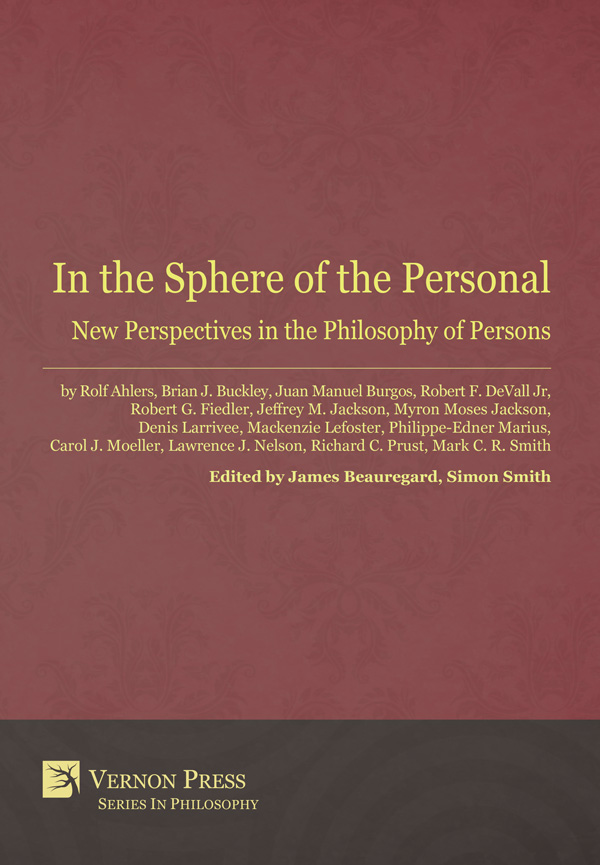


Availability
In stock
ISBN
9781622730636
Edition
1
Publication Date
May 1, 2016
Physical Size
236mm x 160mm
Number of Pages
377
Currency
Quantity
<i>"The book reflects the style and objectives of 13th International conference on Persons: to think from the person and about the person from a unitary and pluralistic personalist tradition. The book seeks not only to look back to the past but also to the future, addressing the problems of our social context, something achieved thanks to the contributions of both young and established authors.
"The text is very rich. Along with reflections based upon classics like Freud, Nietzsche, Pringle-Pattison, Schelling, Descartes or Bergson, the effort is appreciated to address the problems of the present. Only as a sample we can mention the proposals on identity, on the origin of knowledge, the connection between neuroethics and impersonalism, the current problems posed by sexuality or the review of the dynamic tension between public and private. For this multiplicity and wealth, the book will interest all those who want to delve into the validity of the notion of person in our society"</i>
Professor Juan Manuel Burgos, University San Pablo CEU, Madrid
<i>"Simon Smith and James Beauregard had the daunting task of editing and encapsulating the varied spectrum of divergent viewpoints that structure what could be loosely called the “philosophy of persons.” On the one hand, this book certainly relishes traditional understandings of personhood, with all the consolations that a solid metaphysical grounding brings to these orthodox positions. On the other hand, the book does well not to flinch from confronting the brave new world of perspectives (e.g., Larrivee’s “Neuroethics and Impersonalism”) that have the potential to eradicate any normalized conception of “person” entirely. Here, coldly logical conclusions present themselves with frightening clarity and force: the supplantation of the human person with eugenically designed “enhanced” human specimens hearkens in the specter of an existence where basic human rights have no real metaphysical, epistemological, or ethical grounding in the transcendent.
"For the record, Simon Smith’s and James Beauregard’s introduction is, by itself, worth the purchase price of this book. For it effectively polishes the fine art of balancing a comprehensive synopsis of the book’s contents, while, at the same time, providing a logically compelling critique of any reductionist viewpoints that might eventually lead one to a Socratic absurdity. The introduction, in an admirably nuanced fashion, bravely pounces upon the blatant, self-refuting, and ironic positions that utilize self-evident, personal capacities (powers) to impotently refute the very existence of these obvious powers, or of any distinguishable, personal experiences that persist over time."</i>
John F. Hofbauer
Chair, Division of Philosophy & Religious Studies
Associate Professor of Philosophy
Mount Saint Mary College


