Loading...
Please wait while we load the content...

Loading...
Please wait while we load the content...
University of Surrey
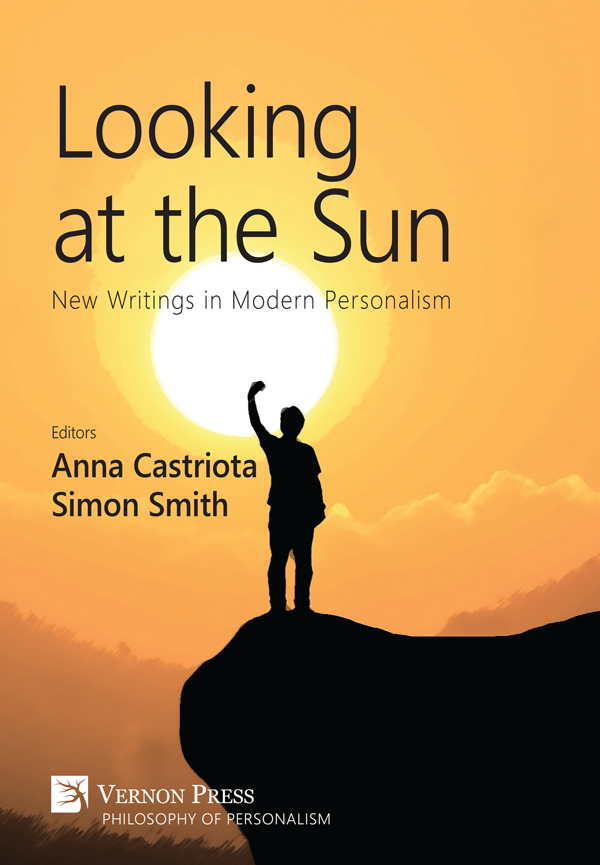
Simon Smith, James Beauregard, Daniel Gustafsson, Jan Nilsson, Stefano Rossi, Julian Stern, David Treanor, Dries Deweeer, Benjamin Bàcle, and Torgeir Fjeld
Every kind of exploration is touched in some way by a philosophy of persons; touched and often vitally enhanced. This collection sets out to mine this rich seam of influence, bringing together authors keen to strike new developments and applications. Together, they have put their philosophy of persons to work in fields as wide-ranging as the moral and the metaphysical, the practical and the political, the cultural and the cosmological. In doing so, they have drawn on and illustrated the depth and breadth of modern Personalist thought, demonstrating its crucial relevance to debates across the entire philosophical spectrum. Whether they are familiar with the Personalist tradition or no, readers from every corner of the philosophical world will find much here to challenge and stimulate them. Most importantly, they will find a new and badly needed philosophical perspective.
A Study in Applied Metaphysics
Simon Smith
The meaning of “God-talk” remains the fundamental issue facing religious thinkers today. This study concerns the analogies needed to make sense of that talk. Embracing those analogies signals the application of Austin Farrer’s cutting-edge theology. Almost fifty years after his death, Farrer remains one of the twentieth century’s last great metaphysical minds, his grasp of faith and philosophy unequalled. Having defended religious thought against both Positivist and Process reduction, he pursued his own revision of scholastic tradition, ultimately developing the vital corrective to an overweening impersonalism, one which depersonalises the divine so severs the cosmological connection. Following this course returns us to an earlier tradition, to a metaphysic of persons exemplified in the expressions of lived faith. This draws upon the logic of personal identity: what it means to be, or rather, to become, a person. Hence, journey’s end lies in a Feuerbachian anthropology of theology or ‘anthropotheism’. Like Farrer, Feuerbach used the believer’s language to relocate theology and philosophy within a framework that makes fertile use of anthropomorphic personifications to ‘think’ God. Revisiting the personalist presuppositions of metaphysics in this way throws light on the most vital questions of personal identity. To answer them is to ‘draw’ reality on a grander scale than either realism or consequentialism is capable of. Most importantly, it is locate our place within that image. Doing theology dynamically or psychologically informed – as both Farrer and Feuerbach insisted – means recognising the constitutive role such images play in self-construction. Without active participation in our ideals and aspirations, we cannot become persons at all; participation entails the enactment of our prospective selves. This returns us to the practice of piety: faith in a Godly person. Here we find the reconstruction of Feuerbach’s anthropology as applied theology and, by extension or amplification, the completion of Farrer’s personalist metaphysics.
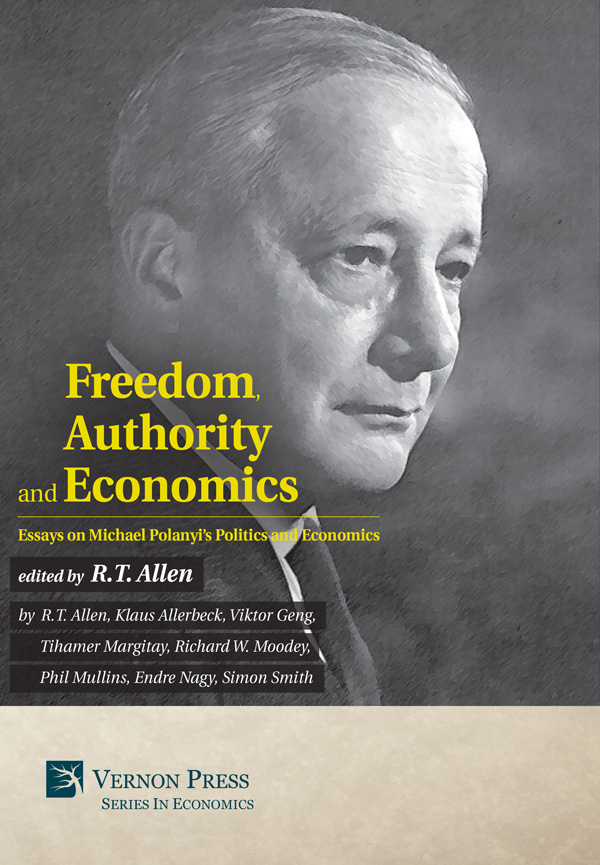
Phil Mullins, Klaus Allerbeck, Richard W. Moodey, R. T. Allen, Viktor Geng, Endre Nagy, Tihamer Margitay, and Simon Smith
This edited volume of original contributions deals with the economic and political thought of Michael Polanyi. Requiring little prior knowledge of Polanyi, this volume further develops a somewhat neglected side of Polanyi's work. In particular it examines the 'tacit integration', of subsidiary details into focal objects or actions as central to all knowing and action. It traces ontological counterparts in the structures of comprehensive entities and complex actions, and a multi-level universe in which lower levels have their boundary conditions, the extents to which they apply, determined by those of the next higher level, whilst each possessing its own laws or operative principles. This schema of 'dual control' preserves the reality and relative autonomy of each level, and its interactions with others, against the various reductions. The essays in this volume also employ and develop important additional concepts and distinctions such as: 'corporate' and 'spontaneous' order; 'public' and 'private' liberties; 'general' and 'specific authority'; and 'moral inversion'; which, as the essays show, are necessary for understanding and maintaining a free society and the freedom of institutions within it. Among the topics treated with them are: more of the prerequisites of freedom in public liberties dedicated to principles and transcendent values; totalitarianism and society as spontaneous order; the balance of general and specific authority in society and particular institutions; reductionism, totalitarianism and consumption in consumer societies, as moral inversions; the mutual interactions of economics and politics as distinct and autonomous but interacting levels; the sociological aspects of economics; and Polanyi's own contributions to sociology. Although, as indicated, Polanyi has his special terms, the essays in this volume, like his works, give them meaning with concrete examples and so avoid merely shuffling a mass of abstractions. Together the essays show that his work is a rich seam of ideas and inspiration for yet further extension and application.
James Beauregard, Simon Smith, Moeller Carol, Denis Larrivee, Rolf Ahlers, Jeffrey M. Jackson, Mark C. R. Smith, Robert F. Devall Jr., Brian J Buckley, Myron M. Jackson, Robert G. Fiedler, Lawrence J. Nelson, Juan Manuel Burgos, Philippe - Edner Apostol - Marius, Mackenzie Lefoster, and Richard Prust
The papers in this collection were originally presented at the 13th International Conference on Persons, held at the University of Boston in August 2015. This biennial event, founded by Thomas O. Buford and Charles Conti in 1989, attracts a host of international scholars, both the venerable and the aspiring. It is widely regarded as the premier event for those whose research concerns the philosophical tradition known as ‘personalism’. That tradition is, perhaps, best known today in its American and European manifestations, although there remains a small but fiercely defended stronghold in Britain. Personalism is not an exclusively Western development, however; its roots are also found in India, China, and Japan. What unites these disparate intellectual cultures may seem quite small. There is little, if any, methodological or doctrinal consensus among them. They are all, however, responses to the impersonal and depersonalising forces perceived to be at work in philosophy, theology, and, most recently, the natural and political sciences. Their common aim is to place persons at the heart of these discourses, to defend the idea that persons are the metaphysical, epistemological, and moral ‘bottom line’, the vital clue to knowledge of self, reality, and all conceivable values. The authors in this collection do not simply reflect upon this tradition, they put it to work on a range of philosophical and theological problems, both classical and contemporary; problems of free will, personal identity, and the nature of reality, as well as the very current concerns of environmental philosophers, bio- and neuro-ethicists. Their perspectives, too, are many and varied, so offer profound insights into key debates among other philosophical traditions, such as the Kantian, Hegelian, phenomenological, and process schools.