Loading...
Please wait while we load the content...

Loading...
Please wait while we load the content...
Stay informed about our latest publications, calls for proposals, and special announcements. As a subscriber, you'll also enjoy exclusive member discounts of 10%-20% on all orders. Join our community of scholars, librarians, and readers today.

Availability
In stock
ISBN
9781622732258
Edition
1
Publication Date
June 30, 2017
Physical Size
236mmx160mm
Number of Pages
342
Currency
Quantity
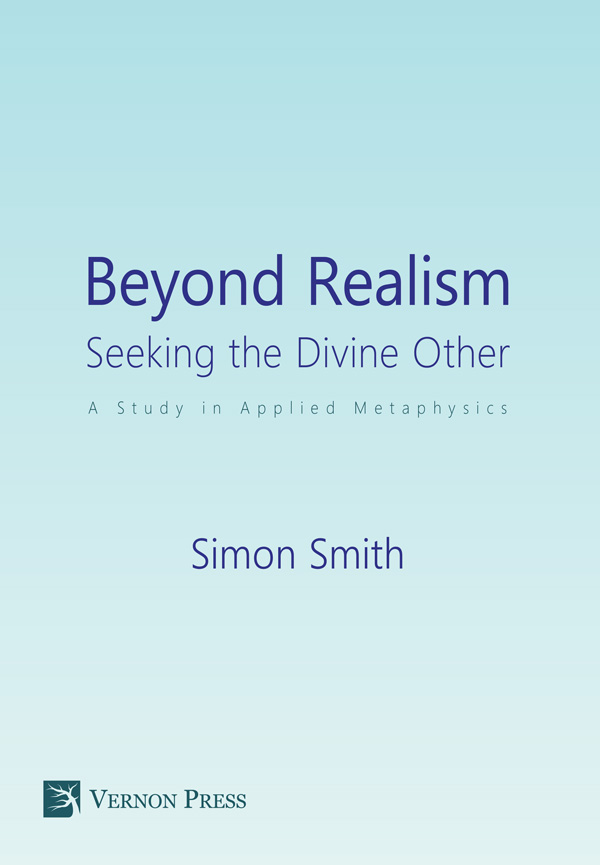
"This is a very interesting book. Its strength lies in articulating a non-realist (I hesitate to say ‘anti-realist’, since this has different connotations) theory of God. It does this first by attacking realist theology, then by critiquing the process philosophy of Whitehead, then by articulating an alternative reading of Austin Farrer to that proposed by Edward Hugh Henderson, and finally by interpreting Feuerbach’s The Essence of Christianity as a personalist theological ethics. Throughout, the argument is very close, immanent and detailed. The point-by-point demolition of Byrne is completely convincing. The subtle weaving through Whitehead’s philosophy shows how its logical terminus is in atheism. The engagement with Henderson establishes a contested hermeneutic, whereby the author successfully rescues Farrer from the clutches of orthodoxy. The interpretation of Feuerbach is something of a tour de force. The approach taken throughout is to argue for a non-realist theology by critiquing proponents of opposing views, with constant reference to Austin Farrer (and to his literary executor, Charles Conti). The result is a very rich text, which both proposes a new theory of the religiosity of consciousness per se, as well as shedding new light on Farrer, reinstating him as a major thinker of the twentieth century."
Dr. Karl Simms,
University of Liverpool, UK
"In seeking to recover Austin Farrer’s metaphysical personalism, Beyond Realism is the natural successor of Charles Conti’s Metaphysical Personalism (1995). Its style and form of argument is uncompromising, but repays close study. It is not a work for students unless very well prepared. But I celebrate its search to recover the deep connections between philosophy and theology – its careful unpicking of the ‘realism’ of Peter Byrne, its appreciation of the limits of process theology and its argument for the consequences of Edward Henderson’s argument for ‘prior actuality’. This is an energetic recovery of an anthropology of theology in Farrer that has its (unlikely) roots in the thought of Feuerbach and understands religion as a natural state of consciousness. It properly places Farrer at the very centre of religious thought in the century of Wittgenstein and in company with other, now sadly neglected philosophers like D Z Phillips. At the same time, it clearly establishes Farrer as a philosopher and theologian in the context of Farrer as a preacher in a unity of theoria and praxis. We need tough and intelligent books like this in both philosophy and religion. Whether it will attract a wide readership in our time of sad theological decline is another matter. It should."
The Revd Canon Professor David Jasper DD FRSA FRSE
Professor Emeritus, University of Glasgow, UK
Discover books that expand on the themes explored in this work—titles that engage with similar questions, intersecting disciplines, and complementary perspectives to deepen understanding and broaden the conversation.
Browse all titles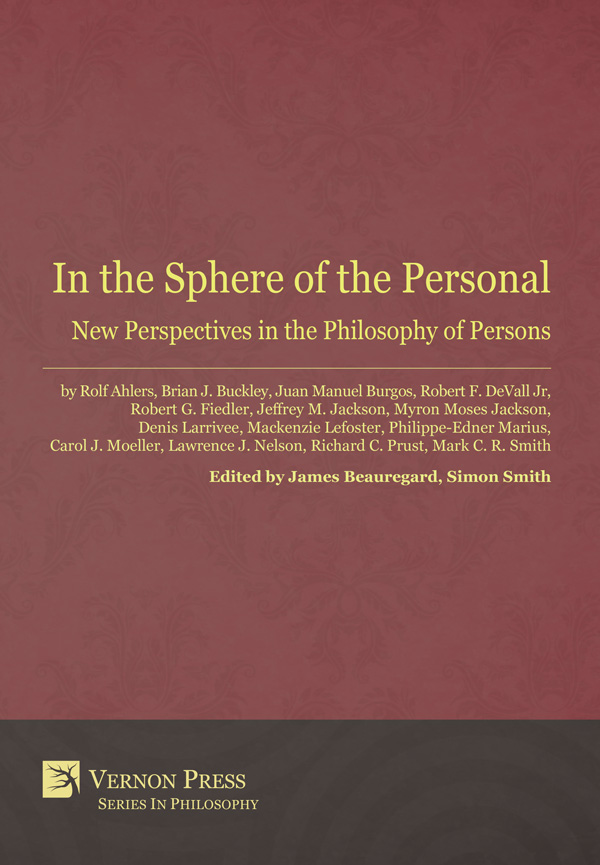
Simon Smith and James Beauregard (Eds.)
View more