Loading...
Please wait while we load the content...

Loading...
Please wait while we load the content...
Stay informed about our latest publications, calls for proposals, and special announcements. As a subscriber, you'll also enjoy exclusive member discounts of 10%-20% on all orders. Join our community of scholars, librarians, and readers today.


Availability
In stock
ISBN
9781648890383
Edition
1
Publication Date
September 7, 2021
Physical Size
236mm x 160mm
Number of Pages
182
Currency
Quantity
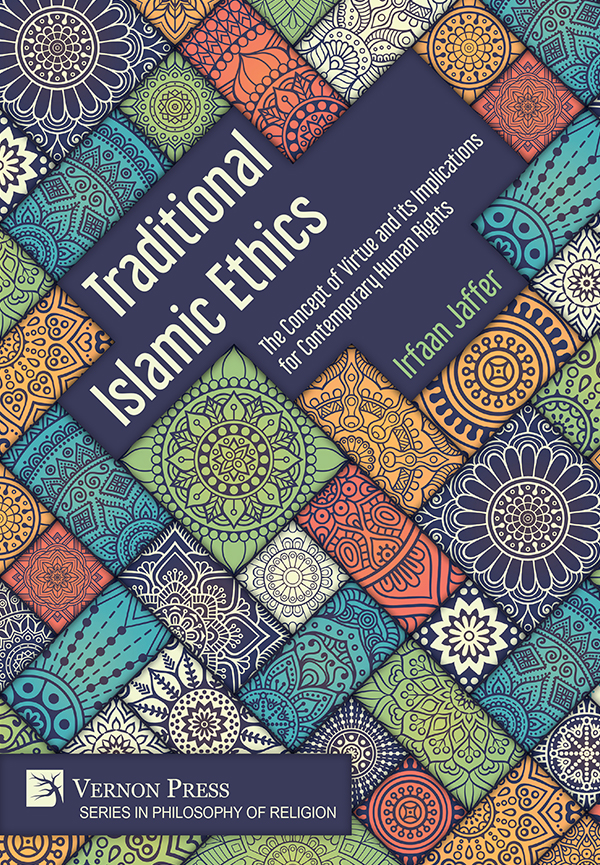
The revival and power of religious feelings and expressions among Muslims present a complicated and at times perplexing picture of the Islamic arguments related to human rights in the modern era. What are the beliefs and ideas which have influenced the policies regarding justice and equality and gained prominence among Muslim societies in general and Muslim intellectuals in particular? Muslim response to the challenges of policies and ideologies influenced by non-Muslim states increased the validity of some generally accepted issues such as human rights, in fact, the laws and conventions regarding human rights prompted the Muslims to pass the Cairo Declaration of Human Rights on 5 August 1990. It was approved by the 45-member states of the Organization of Islamic Cooperation.
Although Article 25 of the Declaration states that "The Islamic Shari'ah is the only source of reference for the explanation and clarification of the Declaration," the tension and implementation between this and the Universal Declaration of Human Rights ratified in Paris on 10 December 1948 continues. Muslim countries still argue that the underlying values and ethics of this United Nations’ document does not take into consideration of religious and some social ethics that Muslims deem essential.
As this discussion often intensifies even today, this book by Dr. Irfaan Jaffer is an opportunity to help understand and clarify this tension. The author, based on carefully selected relevant verses of the Quran and analyzing them, and based on the report of saying of the Prophet Muhammad (hadith), argues that: "Freedom is one of the virtues that need to be cultivated in order to serve God on Earth. In this light, it is necessary for any Islamic human rights theory to place certain religious restraints on individual liberties." Hence, due attention must be paid to religion and the well-established customs of the society based on their own ethical values if the human rights laws are to be applied successfully in the Muslim societies.
Dr. Jaffer suggests that according to Muslims today, "the modern liberal understanding of equality ignores the 'Divine balance' created by God, and it has a tendency to reduce things to their lowest common denominator." Clearly, this book goes beyond the indications of its title and attempts to explain the hesitation of some Muslim states in accepting the totality of the human rights laws as advocated by organizations such as the United Nations. The book explores the broad dimensions of Islam and its essential beliefs and values.
This book will generate considerable discussion between Muslim and non-Muslim scholars of human rights, philosophy, religion, and sociology. The questions of whether there could be cultural-religious specific human rights laws and still protect people against all injustices or is cultural diversity an ethical imperative would be debated at length. Particularly those scholars who are dealing with the ideas of John Stuart Mill, David Hume and John Locke, in fact perhaps the proponents of great thinkers such as these, will not be able to stay away from making comments if they have a chance to read the book.
This work undoubtedly will make a significant contribution to one of the most pressing issues today--Human Rights, particularly in reference to Muslim countries.
Dr. Minoo Derayeh
Professor, Department of Equity Studies
York University
A welcome addition to a small but growing body of literature on the intersection of virtue ethics, law and human rights in Islam. In the process, Irfaan Jaffer thoughtfully explores some of the weaknesses in modern Western conceptions of ethics and human rights, rooted in the absence of a transcendent principle on which to ground them.
Atif Khalil
Professor, Department of Religious Studies
University of Lethbridge
Irfaan Jaffer’s book is a timely and important attempt to delineate a traditional Islamic ethics derived from foundational Islamic sources, such as The Quran and the thought and sayings of Ali ibn Abi Talib, on the one hand, and writings from the contemporary Traditionalist School connected to the work of S. H. Nasr, William Chittick, Frithjof Schuon, Martin Lings, among others, on the other hand. The Perennialist School is becoming widely recognized and discussed in academic writings, and Jaffer does well to draw on their perspective. A dialogical approach, which has been developed and adopted successfully by previous scholars to examine Islam’s place in the modern world, is employed fruitfully here by Jaffer to compare and contrast a traditional Islamic ethics with secular, liberal human rights theory. This dialogical approach enables Jaffer to glean insights into the foundational assumptions underlying each intellectual current. As such, Jaffer’s text is a helpful addition to this important and broad topic and will be a useful introduction for scholars and graduate students alike.
Dr. Ali Hassan Zaidi
Wilfrid Laurier University
Discover books that expand on the themes explored in this work—titles that engage with similar questions, intersecting disciplines, and complementary perspectives to deepen understanding and broaden the conversation.
Browse all titles