Loading...
Please wait while we load the content...
Loading...
Please wait while we load the content...

Explore peer - reviewed titles across the humanities and social sciences - rigorous research, fresh perspectives, and scholarship that inspires dialogue across disciplines.
Stay informed about our latest publications, calls for proposals, and special announcements. As a subscriber, you'll also enjoy exclusive member discounts of 10%-20% on all orders. Join our community of scholars, librarians, and readers today.

From special discounts and global distribution partners to downloadable catalogs, flyers, and high-resolution covers, we make it easy to enrich your library’s collection. Access bibliographic data, explore subject-specific listings, and stay updated on forthcoming titles.
Become part of our librarian network and access dedicated tools, discounts, and resources to support collection development and promote new titles to your patrons.

Partner with Vernon Press to provide your customers with high-quality, peer-reviewed scholarship. We offer flexible ordering options, reseller agreements, and promotional materials to support your sales and outreach.

Vernon Press provides dedicated resources to help instructors adopt our books for courses and to support students with affordable access to high-quality scholarship. From desk and examination copies to tailored student editions, we aim to make our titles accessible in the classroom.
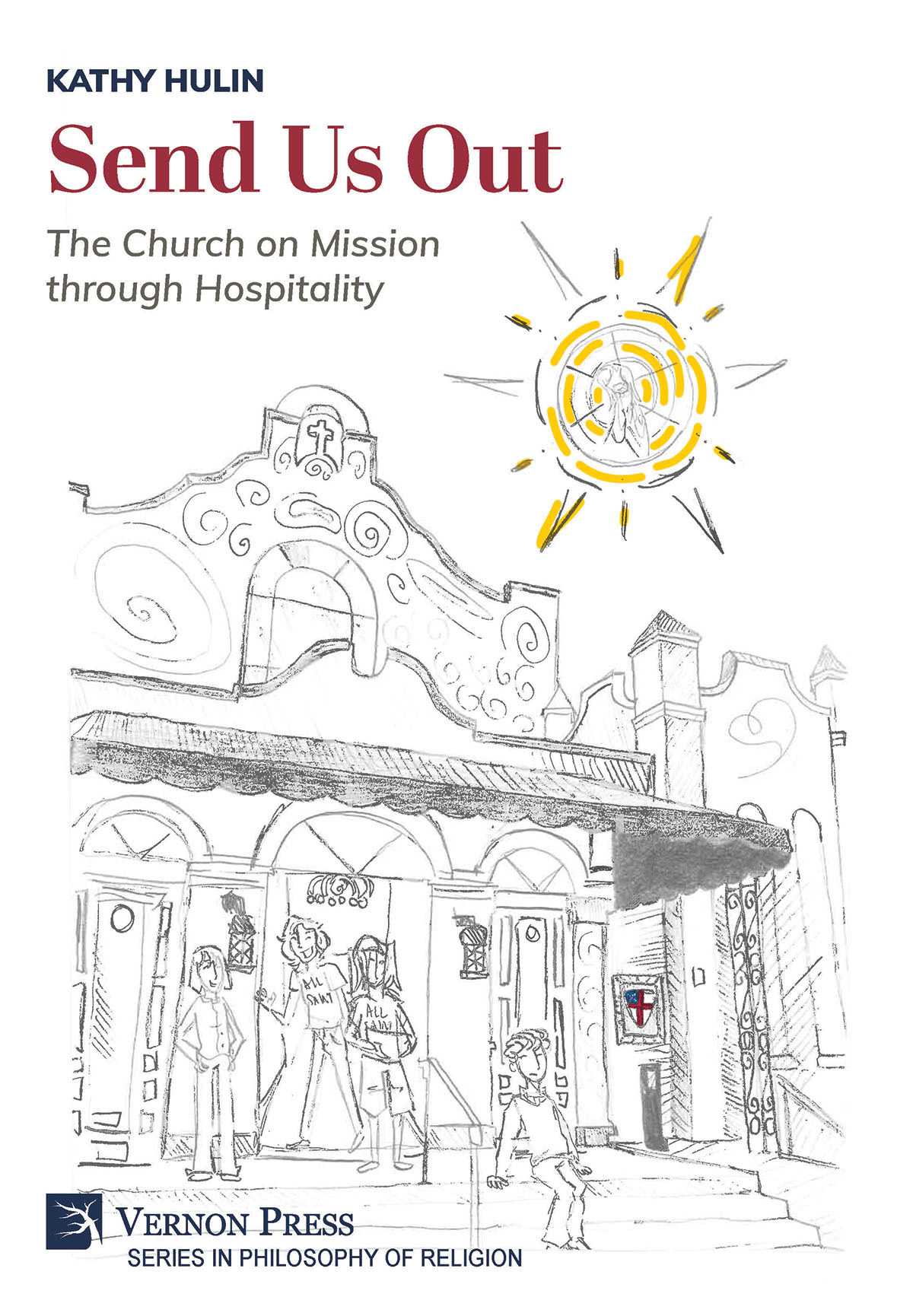
The Church on Mission through Hospitality
Kathy Hulin
People who are faithful and committed to their church often have a longing for others to feel the same way. They have a palpable hope for the church to be full and a desire for others to be spiritually enriched by God. 'Send Us Out: The Church on Mission through Hospitality' connects the reader with that desire for the church to be a vibrant, hospitable, and growing body of believers in Christ. The reader will be taken on a journey to consider those who have not fallen in love with the church and to grow awareness and compassion for connecting with them as God does with humankind. Inspired by texts such as 'Incarnational Ministry' by Samuel Wells and 'Surprise the World' by Michael Frost, 'Send Us Out' stirs passions for mission and evangelism through presence and intentionality, learning how to be with strangers. The journey includes a practical theology that clergy and laity alike can incorporate into daily living. The practical nature of 'Send Us Out' teaches a spiritual understanding of Christian hospitality through language, biblical study, ministry examples and models, reflection, and action. Readers may wish to form study groups for sharing in the end-of-chapter activities and discussions. The church will be strengthened in a call for each member to be sent out, revealing God as Host to a world learning to be reconciled as guests.
Aage Rydstrøm-Poulsen, F. Tyler Sergent, Daniel Marcel La Corte, Rose Marie Tillisch, María Gonzalo-García, Carmen-Angela Cvetković, Delphine Conzelmann, Philip F. O’Mara, and James Kroemer
Since mysticism deals with the ultimate ideals and purposes of human existence, it is one of the most significant phenomena in Western cultural history. Mysticism had a significant role in the medieval monastic environment and, along with many other things, had a profound impact on Western intellectual culture. The history of mysticism in the West, is a history of the greatest and most significant aspirations and potentialities of the individual regarding the understanding of oneself and the divine. 'Cistercian Mysticism' is an outstanding example. The anthology’s chapters explore key aspects of Cistercian spirituality, including William of Saint-Thierry’s 'visio Dei' (the vision of God), a transformative encounter with the divine that is central to his mysticism, as well as the concept of 'sensus amoris.' 'Cistercian Mysticism' also explores Bernard of Clairvaux’s writings on the Song of Songs and the relation between contemplation and action, demonstrating how action service and contemplative love can coexist. Tradition is further enhanced by Aelred of Rievaulx’s thoughts on spiritual friendship, which highlight how human relationships based on love and introspection mirror the soul’s path toward divine union. By examining the writings of these influential figures, this volume offers a way to comprehend the close connection between the divine and the human soul, highlighting the importance of their contributions to the mystical and theological landscape of the Middle Ages. A book which will undoubtedly be highly enjoyed by scholars and students of all ages and religious communities.
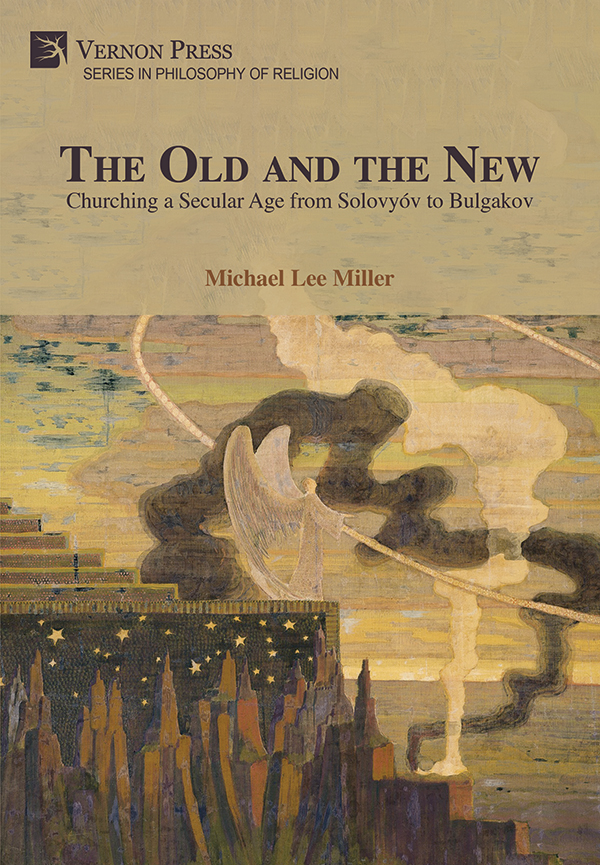
Michael Lee Miller
In the midst of exile from his native Russia in the mid-1930s, Fr Sergii Bulgakov identified his basic aspiration as an Orthodox theologian to be a ‘positive overcoming of Modernity’ - in fact, a continuation of the efforts of his great 19th-century inspiration, Vladimir Solovyóv, to reconstruct Christian thought and culture in the face of the unprecedented challenges posed by the Enlightenment and the era of revolutionary upheaval. But Bulgakov’s theological vision also involves a distinctive revision of Solovyóv’s programme, whose ‘residual Hegelianism’ continually threatens to level out speculative reason and mystagogical faith, progress in history and ‘the Kingdom not of this World’. Bulgakov refuses any such levelling: instead, he consummates the ‘apocalyptic turn’ Solovyóv had already commenced in the years immediately preceding his premature death in 1900. The resulting preference for the paradox of ‘antinomy’ over the closure of ‘dialectic’ comes to light in relation to four themes running through Bulgakov’s thinking in the decades falling between his rejection of Marxism and the commencement of his mature systematic-theological work in the 1930s: history, work, knowledge, and power.
Anupama A. P., Amar Ramesh Wayal, Pitshou Moleka, Yury Tikhonravov, Steven D. West, Anil Singh Matoo, Eric Michael Mazur, Sergey V. Sychov, Steven J. Firth, Konrad Szocik, Rakhat Abylkasymova, Oscar Blanco, Ebua Jarvis Ebua, Tyler Dalton McNabb, C. A. McIntosh, Andrew M. Davis, and J. Brian Huffling
Space is infinitely interesting! Space has both scientific and cultural currency because it has captured the imagination of human beings from ancient times until today. What seemed like science fiction centuries and only decades ago, is now science fact. Technological developments present and on the cusp are putting more and more of space into our hands. That is both exciting and frightening at the same time (think Lovecraft)! This book attempts to speak to the philosophical and ethical issues raised by space. Who owns space? Who should pay for space exploration and what is the impact on human beings on earth today? What happens if we’re not alone in the universe? What is the value and meaning of space exploration? What are the ethical implications of AI and Technology in relation to space exploration (what if they get away from us?!)? Questions! Questions! Questions! The Call for Chapters for this book Space, Philosophy and Ethics read: “For space science people, this conference is a platform to discuss the subconscious philosophical and ethical implications of their research that have been in the back of their minds while researching. For philosophers and non-specialists, it is an opportunity to learn together and struggle to find solutions for the philosophical and ethical quandaries that space science, exploration and technology present to humanity”. The approaches to space seem endless. Physics, as Aristotle discovered, inevitably leads to metaphysics, and metaphysics always have ethical concerns. The book loosely follows this outline. It begins and ends with the metaphysical implications of space, the spiritual, if you will. It leads with poetry. That seems appropriate since while we may ask many questions regarding space, we are likely to find very few answers. Then the book briefly looks at the ethical implications of AI and Technology for space exploration. There are chapters that deal with the material ethics of space commerce and ontology. Telos and Axiology (Value) are also explored. This book hopes to facilitate human struggle with the ethical implications of space rather than presuming to solve all its problems.
Molly Clark, Paul Edmondson, Joseph Simmons, Bárbara Mujica, Michael J. Collins, Michael Scott, Clare Asquith, Rowan Williams, Elizabeth Schafer, John Drakakis, Timothy Radcliffe, Jasmine Jones, Rachel Cresswell, Julia Lamm, Francis J. Ambrosio, John Hirsh, Peter Davidson, Bridget Keegan, Clare Broome Saunders, John Pfordresher, Graham Ward, Jane Stevenson, Hester Jones, and Mark Bosco
What is the Christian literary imagination? That question was put to the writers who have contributed to this collection of essays. They were asked, in answering it, to choose and write about a work of literature that seemed to them to illustrate one of the varied ways in which the Christian imagination sees the world, to define by example the meaning of the term. A variety of beliefs (or indeed unbeliefs) are expressed by the contributors and authors they selected to discuss. But what the essays have in common is an inquiry into the nature of belief and the means by which the reader’s imagination can itself be stirred through the work of the author under discussion. The book is structured chronologically, with essays on literature ranging from Anglo-Saxon England to 21st-Century America, but the contributors show a freedom of movement and reference across the centuries in their essays, sometimes deliberately juxtaposing the historical with the contemporary. What emerges from the collection is a shared inquiry into the enduring Christian vision of God’s engagement with the world.
Andrew Newberg and Mary Clare Smith
The topic of “neurotheology” has garnered increasing attention in the academic, religious, scientific, and popular worlds. It is the field of study that explores the intersection between the brain and religious and spiritual phenomena. However, there have been no extensive attempts at exploring specifically how Catholic religious thought and experience may intersect with neurotheology. The purpose of 'Catholic Neurotheology' is to fully engage this groundbreaking area. Topics are related to a neurotheological approach to the foundational Catholic beliefs derived from Scripture and Tradition, an exploration of the various elements of Catholicism and of Catholic rituals and practices, and a review of Catholic spiritualities and mysticism. Specific Catholic scholars are considered in terms of the relationships among their ideas/teachings and different brain processes. 'Catholic Neurotheology' engages these topics in an easy-to-read style and incorporates scientific, religious, philosophical, and theological aspects of the emerging field of neurotheology. By reviewing the concepts in a stepwise, simple, yet thorough discussion, readers regardless of their background will be able to understand the complexities and breadth of neurotheology from a Catholic perspective. More broadly, issues include a review of the neurosciences and neuroscientific techniques; religious and spiritual experiences; theological development and analysis; liturgy and ritual; philosophy, epistemology, and ethics; and social implications, all from a Catholic perspective.
Andrew Root
This original monograph presents a comprehensive theory regarding the economy of the kingdom of God. The theory and associated model will help individuals make better choices. The research integrates fundamentals of the temporal real economy, and the permanent economy of the kingdom of God, to present a unified model of human agency. According to the model, effective agents are salt and light in the real economy, arresting corruption and revealing the truth. Effective agency produces life, peace, and growth. Individual and organizational practices that arrest corruption and reveal truth can resolve longstanding economic grievances. The list of spiritual credence goods is extensive and includes commonly known virtues such as humility, patience, and hope. Spiritual goods are allocated based on the owner-agent relationship. The quantity of goods the owner supplies is in proportion to an individual’s sacrificial offering of time and money. Spiritual goods are stored as heart capital. In a process analogous to the real economy, heart labor applied to heart capital produces desirable outputs. The owner relates to his agents through a heart-inscribed behavioral contract. The owner generally intervenes in the real economy by communicating with agents rather than by restricting choice. Prior studies across economics, finance, and sociology prove the efficiency of behavioral contracts and communication over restricted choice. Herein researchers will find new testable propositions, and practitioners will find new ideas and practices to live better, more consequential lives. Examples of practical applications include methods of resolving group-level bias and understanding the purpose of life’s difficulties.
William H. U. Anderson, Anik Sarkar, Kaz Hayashi, Steven Foertsch, Anupama A. P., Barışkan Ünal, Christopher Smith, Michelle Chan, Tara Etherington, Graham Lee, Martin Lepage, Devon P. Levesque, Alberto Oya, Drew Richardson, Issei Takehara, D. Y. Turner, and Amar Ramesh Wayal
Anime is exploding on the worldwide stage! Anime has been a staple in Japan for decades, strongly connected to manga. So why has anime become a worldwide sensation? A cursory explanation is the explosion of online streaming services specializing in anime, like Funimation and Crunchyroll. Even more general streaming services like Netflix and Amazon have gotten in on the game. Anime is exotic to Western eyes and culture. That is one of the reasons anime has gained worldwide popularity. This strange aesthetic draws the audience in only to find it is deeper and more sophisticated than its surface appearance. Japan is an honor and shame culture. Anime provides a platform to discuss “universal” problems facing human beings. It does so in an amazing variety of ways and subgenres, and often with a sense of humor. The themes, characters, stories, plotlines, and development are often complex. This makes anime a deep well of philosophical, metaphysical, and religious ideas for analysis. International scholars are represented in this book. There is a diversity of perspectives on a diversity of anime, themes, content, and analysis. It hopes to delve deeper into the complex world of anime and demonstrate why it deserves the respect of scholars and the public alike.
Anthony Walsh
'Miracles and the Concept of Impossibility' takes a fresh look at the miracle of the resurrection of Jesus. A miracle is inexplicable by the methods of science and thus deemed impossible. I examine the concept of impossibility with primary reference to David Hume’s notion that there is a boundary of probability beyond which the improbable becomes the impossible, calculated at 10150. Physicists have declared that the universe is inevitable and, at the same time, impossible. Its inevitability is obvious, but the mind-boggling improbability that a biocentric universe exists vastly exceeds the probability boundary. If a miracle is defined as an impossibility, the universe is a miracle. The origin of life is just as miraculously impossible because the probability of dead organic molecules evolving into the organic molecules of life is even less than it is for the existence of the universe. This book also looks at what the Resurrection means in terms of the atonement and the concepts of hell and universal salvation. This is followed by an examination of the evidence for the Resurrection and historical and archaeological reasons for trusting the New Testament. Secular explanations of the Resurrection are examined and pitted against the Christian account in terms of their explanatory scope and power. The last two chapters look at the “silent witness” to the resurrection, the Shroud of Turin bearing the image of a terribly tortured and crucified man. For 125 years, scientists have been unable to discover how the image was imprinted on the cloth; thus, I conclude that it is the “silent witness” to the Resurrection—the authentic Shroud of Jesus Christ.