Loading...
Please wait while we load the content...

Loading...
Please wait while we load the content...
Stay informed about our latest publications, calls for proposals, and special announcements. As a subscriber, you'll also enjoy exclusive member discounts of 10%-20% on all orders. Join our community of scholars, librarians, and readers today.


Availability
In stock
ISBN
9781648891731
Edition
1
Publication Date
January 31, 2023
Physical Size
236mm x 160mm
Illustrations
22 Color
Number of Pages
298
Currency
Quantity
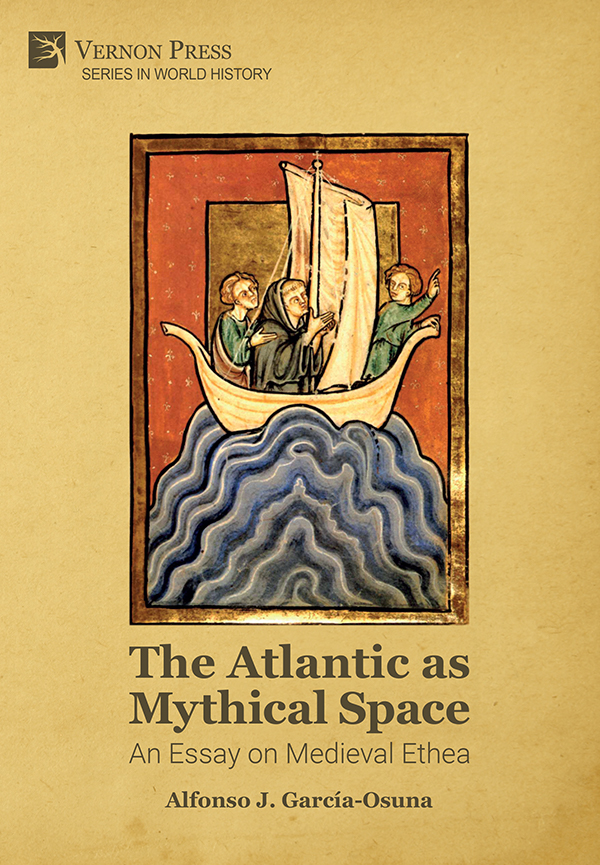
Ever since Johan Huizinga‘s reassessment of the medieval mind (‘Herfstij der Middeleeuwen’, 1919) as a passionate intensity, scholars have sought to understand pre-scientific perceptions of nature. Garcia-Osuna’s medieval Ethea captures this point; the hero's moral fiamework and perception strategies reflected their assimilation of society’s communal codes for perceiving, judging, and acting: ‘Those codes are the source of the hero’s supply of implicit knowledge’ (p. 222). At the centre of this study is a reconsideration of the rote of myth in the medieval view of the Atlantic Ocean. Garcia-Osuna proposes that an explanation of reality offered by myth ‘is just as valid as that offered by science in the sense that, as a human social construct, “reality” is effectively intertwined with human experience. ...The legitimacy of myth, then, flows from its ability to supply human beings with a coherent, qualitative method of interpreting reality through metaphorical patterns and symbolic archetypes’ […]
[Extract from book review at 'Irish Historical Studies', Volume 47 Issue 172, pp. 337-354. Reviewer: John B. Roney (Sacred Heart University) https://doi.org/10.1017/ihs.2023.28]
Discover books that expand on the themes explored in this work—titles that engage with similar questions, intersecting disciplines, and complementary perspectives to deepen understanding and broaden the conversation.
Browse all titles
André Dodeman and Nancy Pedri (Eds.)
View more