Loading...
Please wait while we load the content...

Loading...
Please wait while we load the content...
Stay informed about our latest publications, calls for proposals, and special announcements. As a subscriber, you'll also enjoy exclusive member discounts of 10%-20% on all orders. Join our community of scholars, librarians, and readers today.


Availability
In stock
ISBN
9781622733293
Edition
1
Publication Date
April 30, 2018
Physical Size
236mm x 160mm
Illustrations
8 Color
Number of Pages
216
Currency
Quantity
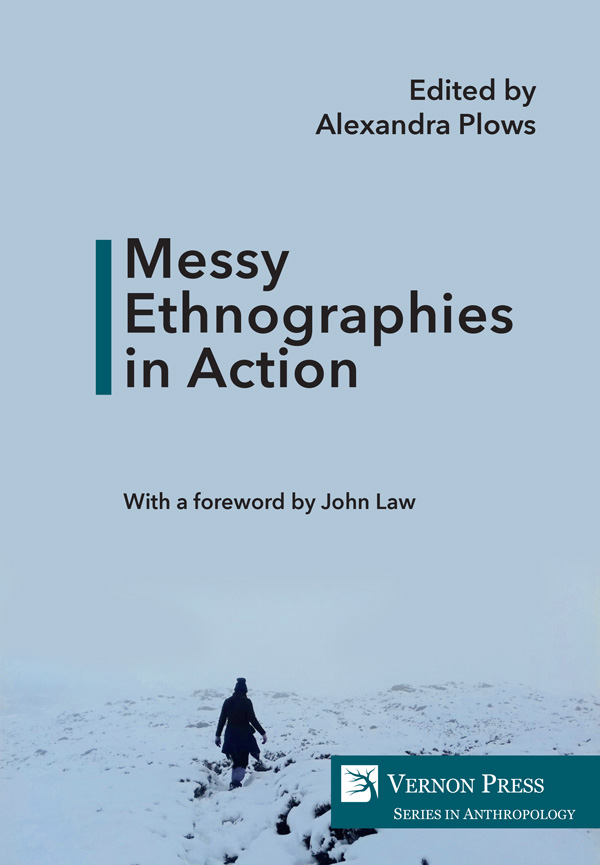
Taking John Law’s notion of ‘method assemblage’ as its basis, this edited volume describes, in honest terms, experiences of ethnographic research across a variety of disciplines and fields of study from Geography to Nursing. The result is a rare insight into the inevitably ‘messy’ processes involved: the blurring of the professional self with personal biography; the conflicts inherent in different conceptions of what is, and is not, ethical research practice; the challenges in encouraging participation; the fluidity of what we might understand as the field/site or space in which we conduct research. The book as a whole, however, is not simply an account of the ‘mess’; importantly, the chapters also explore what accounting for the mess allows us to see that would otherwise be hidden, tidied away, or cleaned up. In this sense, the volume encourages us not just to be bolder, as Plows nicely puts it, about ‘showing our workings out’, but also about allowing that mess, the ‘webby and uncertain character’ (Law, Foreword) of research to take us down different paths. As such it is a valuable resource for academics across the social sciences, and not just ethnographers who are perhaps the social scientists most at ease with mess in the first place. The book is also a vital, and reassuring, read for any PhD student struggling with why what actually happens during their fieldwork often bears no resemblance to any research design, or indeed what eventually gets written ‘up’ in a conventional social science thesis.
Dr. Shari Shabeti
The University of Edinburgh, UK
William James talked of the 'blooming buzzing confusion' of life, in the context of how a baby might experience the world. Following Law (2004), the multiple authors in this wonderful book all ruminate on how these qualities never really left ethnography, however, tidied up the final product of ethnographic research might be. Instead, they provide multiple examples of the messiness of the everyday, whether this be the multiple perspectives and meaning-making of different actors in the ethnographic endeavour, their enmeshment with the multiple realities of the human and the nonhuman, or some of the many moral, ethical and practical questions posed by ethnographers refusing to ‘tidy’ the world either analytically or through their actions in it. Embracing diversity in this way – both in their individual accounts and across the book as a whole – is essentially a political act, and the contributors do not shy away from making these connections manifest. As case studies in ethnographic meaning-making and reportage, these accessible chapters will not only be a worthwhile teaching aid – both for their individual topics and the approaches to messiness to which they speak – but will be relevant and engaging to all students of the contemporary. They are pieces that can either be skimmed through (and the abstract and keywords for each chapter, and final index, help the reader in this task no end) or their wisdom savoured slowly, like a messy cream cake! It makes one wonder what, if anything, a ‘clean’ ethnography might look like - my guess is it would certainly not be as uniquely absorbing as the collection assembled here.
Prof. Dr. Andrew Russell
Department of Anthropology, Durham University, UK
This edited collection takes its starting point from John Law’s (2004) work After Method: Mess in Social Science Research. The aim is to clearly demonstrate the ways that messiness is an active and crucial part of the ethnographic research process, whether during data collection, negotiating ethical clearance or in the process of writing up and reflecting on research journeys. Mess, it is argued, is an ever-present and often overlooked actor in constructing ethnographic realities. Spanning an impressive array of fieldsite locations and important questions (from the Amazonian jungle to participatory action research with women offenders, to questions about who the research is for and how to best represent that ethically and politically), this volume takes ideas around mess seriously and tries to unpack these through a range of ethnographic encounters. The book’s key strength lies in the rich descriptive ethnographic data presented and the largely accessible and engaging writing style of its authors.
Overall, this volume tackles the issue of mess and its connection to ethnography concisely, whilst also reaffirming the importance of ethnography to capture diverse social realities and worlds.
Prof. Dr. Miriam Snellgrove
School of Sociology, Politics and International Studies, University of Bristol, UK
Discover books that expand on the themes explored in this work—titles that engage with similar questions, intersecting disciplines, and complementary perspectives to deepen understanding and broaden the conversation.
Browse all titles