Loading...
Please wait while we load the content...
Loading...
Please wait while we load the content...

Explore peer - reviewed titles across the humanities and social sciences - rigorous research, fresh perspectives, and scholarship that inspires dialogue across disciplines.
Stay informed about our latest publications, calls for proposals, and special announcements. As a subscriber, you'll also enjoy exclusive member discounts of 10%-20% on all orders. Join our community of scholars, librarians, and readers today.

From special discounts and global distribution partners to downloadable catalogs, flyers, and high-resolution covers, we make it easy to enrich your library’s collection. Access bibliographic data, explore subject-specific listings, and stay updated on forthcoming titles.
Become part of our librarian network and access dedicated tools, discounts, and resources to support collection development and promote new titles to your patrons.

Partner with Vernon Press to provide your customers with high-quality, peer-reviewed scholarship. We offer flexible ordering options, reseller agreements, and promotional materials to support your sales and outreach.

Vernon Press provides dedicated resources to help instructors adopt our books for courses and to support students with affordable access to high-quality scholarship. From desk and examination copies to tailored student editions, we aim to make our titles accessible in the classroom.
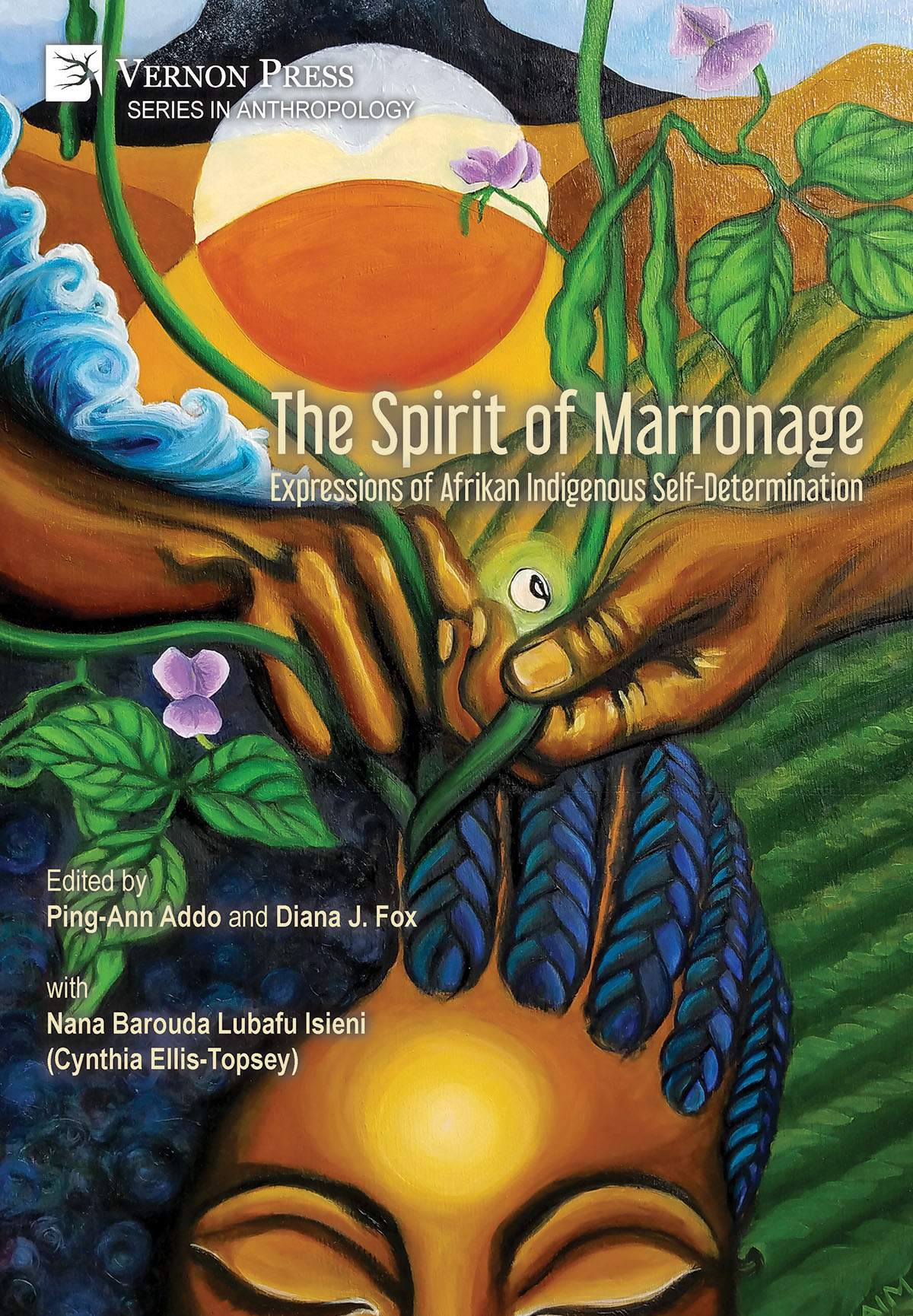
Expressions of Afrikan Indigenous Self-Determination
Author information not available
'The Spirit of Marronage: Expressions of Afrikan Indigenous Self-Determination' chronicles the rise of the United Maroon Indigenous Peoples (UMIP), a global movement rooted in the spiritual and political legacies of Afrikan-descended Indigenous communities. Interweaving scholarly discussions, critical personal narrative, poetry, visual art, and Indigenous curricula, the book explores sovereignty through land-based relations, communal governance, and sacred practices. It documents pivotal Maroon gatherings and outlines UMIP’s six founding pillars: Kpaale (Diasporic Citizenship and Spirituality), Mbongi (Learning Together), Uhuru (Freedom and Reparations), Gayap (Sovereignty through Food, Land, and Water), Ujima (Collective Responsibility), and Livity (Living Maroon Values). Serving as both an archive for Maroons and a guide for Indigenous Peoples reclaiming culture, it calls for shifts in academic engagement toward authentic allyship—centering Indigenous knowledges to transform relationships from transactional to reciprocal, and analyses from removed to restorative. A vital resource for educators, researchers, and activists pursuing ecological and social justice.
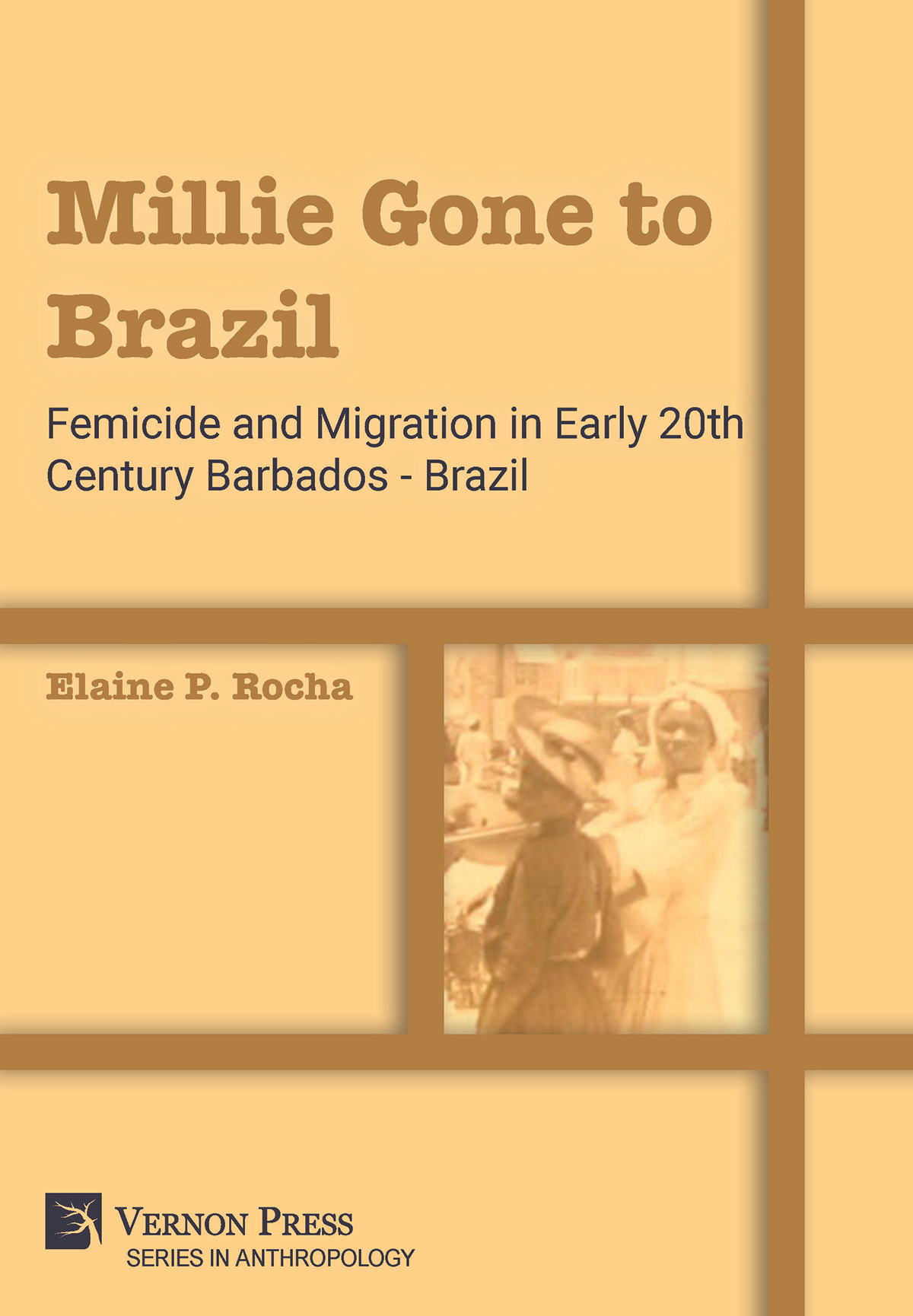
Femicide and migration in early 20th century Barbados - Brazil
Elaine P. Rocha
'Millie Gone to Brazil' is the title of one of the most popular folk songs in Barbados. Written in the early 20th century by an unknown author, the song has travelled with Barbadian migrants to Cuba, the United States of America, Canada and England. It tells the story of a young woman – Millie – killed by her lover, who claimed that she had left Barbados to go to Brazil. This book focuses on the killings of Millicent Gittens, murdered in Barbados in 1916 and of Christine Minggs, a Barbadian immigrant murdered in Brazil in 1924. As a backdrop to those crimes, it depicts the poverty and marginality among Black populations during the post-abolition period in Barbados and Brazil, emphasizing the low status of black women and their vulnerabilities. To understand the vulnerability of Black Barbadian women. At the turn of the 20th century, economic, social and political exclusion drove thousands of people to emigrate from the small islands of the Caribbean in search of a better life. Black immigrants, although much necessary labor force, faced discrimination and limited opportunities to improve their lives, for women, life was harder. Who speaks on behalf of the dead women? In criminal processes, they are the victim, the corpse, not a person. 'Millie Gone to Brazil' sheds some light on the anonymous lives of Black people from lower classes in Barbados and examines a not well-known migration path of West Indians to the rainforest region of Brazil. Women and men struggled to make a life in Barbados and in Brazil, working, loving, building families, facing conflicts. Some survived, some perished. Scraps of their stories were registered in the pages of newspapers, in police reports, in criminal processes, and in popular songs. Some of those stories are narrated in this book.
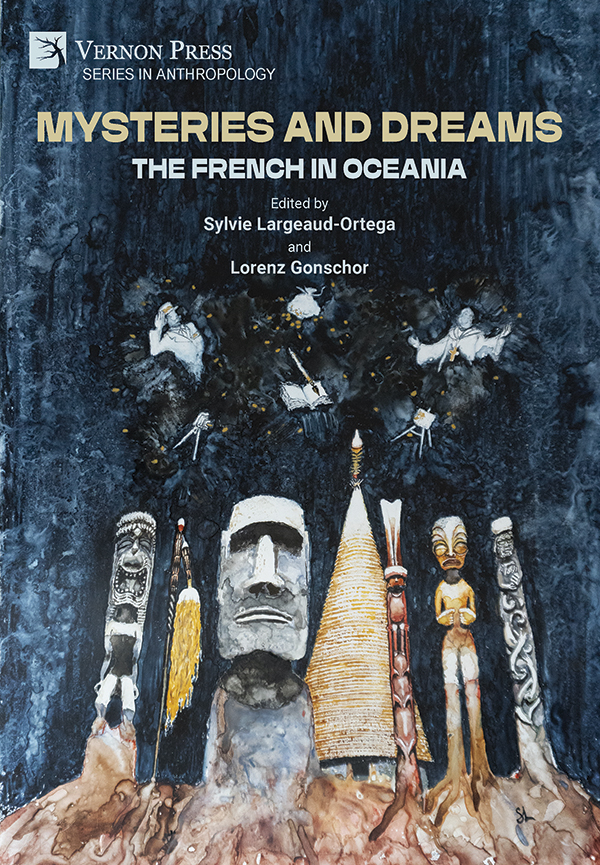
Claire Hansen, Lorenz Gonschor, Vlad Solomon, Anna Paini, Jean Anderson, Louis Bousquet, Florence Boulard, and Angela Giovanangeli
Oceania has been the source of mysteries and dreams from the first contact with Europe onwards, both for Indigenous Oceanians and outsiders. 'Mysteries and Dreams: The French in Oceania' is a collection of cross-disciplinary essays that explore the mysteries, allures and questionings raised by Indigenous Oceanians and French people about their mutually different worldviews, as well as their dreams, aspirations or disillusions as they navigate their relationships. With a strong focus on reciprocity, this original project analyzes diverse forms of French association with Oceania and the responses engendered by Indigenous communities, authors and artists as they reshape French narratives. Organized along three lines – history, literature and arts – this innovative lens offers unprecedented examinations of hitherto unexplored Oceanian and French figures involved in Oceania, bringing to the fore Marist missionary Xavier Montrouzier, influential politicians Charles de Varigny and Auguste Marques, playwrights and artists Pierre Gope and Greg Semu, and filmmakers Sima Urale and Édouard Deluc. It also offers fresh postcolonial approaches to better-known figures such as Paris Communard convicts Louis Michel and Henri Rochefort, prominent authors like Titaua Peu, Selina Tusitala Marsh, Teresia Teaiwa, Vilsoni Hereniko and Édouard Glissant, and widely-discussed artists like Yuki Kihara. It also critically engages individuals representing the colonial gaze, such as Pierre Loti, Allan Hughan and Paul Gauguin. Spanning across Oceania, from the Solomon Islands to Rapa Nui, Hawai‘i to Aotearoa-New Zealand, Tahiti and Kanaky-New Caledonia, it shows the wide impacts of the French on this vast region. Bridging together Anglophone and Francophone Oceania, this volume is an authoritative and enlightening reference to scholars and students in postcolonial Pacific Island studies, to Indigenous and non-Indigenous Oceanians wishing to discover interactive processes of change in their region’s past and present, and, more generally, to all outsiders who might, some day, have felt inclined to fall under the spell of an imaginary Oceania.
Erik Stanley, Sarah Snyder, Rory O’Dea, Adith K. Suresh, Kayla Kruse West, Chak-kwan Ng, Sony Jalarajan Raj, Keitaro Morita, Kumar Sawan, Will Anderson, and Mayank Kejriwal
'Entangled and Empowered: Agency in Multispecies Communities' is a collection that approaches the inevitable reality of entanglement between humans and other beings from a perspective of action and wonder. It argues that actors as diverse as bacteria, snakes, butterflies, ducks, and cacao trees can help us enact joy in fields as different as art, cinema, literature, and anthropology. While acknowledging the imminent reality of climate change, the sixth extinction, and other overwhelming threats to the Earth, this book argues that humans continue to live, and so do the beings whose lives are entwined with ours, for whom we can acknowledge and work to improve their existence. The nine essays in this volume trace that acknowledgment and work through three sections centered on visual media, queer and feminist readings of empowerment, and movements beyond the boundaries enacted by anthropocentric Western society. Drawing on theories such as new materialism, posthumanism, and ecofeminism, and with an international perspective from authors working at American, South Asian, and East Asian universities, 'Entangled and Empowered' finds hope in the shadow of despair. It engages with work by Anna Lowenhaupt Tsing on entanglement, Donna Haraway on kin-making and multispecies communities, and Karen Barad on intra-actions, among others, while also showing how critiques of these ideas can make the world both more promising and more endangered. This collection will be useful for scholars working in all subfields of environmental humanities, especially those intersecting with the theories described above and as an archive of examples analyzing practical aspects of agency in diverse multispecies communities. Scholars studying texts as well-known as 'The Handmaid’s Tale' and as obscure as the codices of the Mopan Maya will find value in having both under one cover.
Abdul Karim Bangura and Leonid A. Zhigun
This book is the first comprehensive work on Russian Fractals in indigenous artifacts. While existing works focus on universal phenomena, such as liquid crystal or finance, none explore the intersection between Fractals and Russia. 'Russian Fractals in Indigenous Artifacts' therefore investigates how indigenous Russian cultures have a wonderful Fractal heritage that was originally tied to socially just and ecologically sustainable social practices, including those of indigenous northern groups such as the Yakut. Fractal designs originally allowed unalienated value, both human and nonhuman, to be visible, thereby enabling just and sustainable living. This book also examines how the tsarist elite encouraged the creation of unique creative masterpieces, developing and strengthening traditional crafts and art of indigenous people—hence, Fabergé, or imperial architecture. Today, the challenge for contemporary Russia is to reestablish the relationship between the social and ecological sustainability of indigenous cultures and practices, for which we can now provide modeling and analysis. Lay attempts at this have only limited success, as they have based the attempts on a purely religious basis, which recognizes the ecological aspects but often succumbs to authoritarian nationalism. However, the freely accession of indigenous peoples to Russia for the sake of national liberation has had a positive effect on enriching them with spirituality and creativity by Fractal artifacts through friendly exchanges with one another. In 'Russian Fractals in Indigenous Artifacts,' Bangura and Zhigun express why there is a need for a forward-thinking Fractal renaissance in Russia, bringing together contemporary computational and scientific analyses with these ecologically and socially sustainable traditions.
Knowledge, Collaboration, and Representation in the Digital Age
Sean Heath, Henrike Neuhaus, Ben Hildred, Thomas F. Carter, Francesco Fanoli, Arthur Gaillard, Julia Haß, Jasmin Seijbel, and Gwyneth Talley
To do anthropology in a sporting world, one must reckon with the digital. As digital technologies become more widespread and increasingly sophisticated, people develop new ways to use them when playing, watching, and learning sport. This volume adds to the growing literature in the Anthropology of Sport by framing key debates in the light of this digital context. More importantly, the authors articulate how apparently trivial contexts such as sport are crucial for exploring the ways human beings incorporate digital technologies in their everyday lives. From taekwondo in Argentina to horse-riding in Morocco, the contributors to this volume explore a diverse range of sports across a variety of global locales. Through insightful ethnography, they show how fundamental elements of sport, including movement, competition, and values are increasingly mediated by digital technologies. Whether it is Sri Lankan cricketers analysing their practice frame-by-frame, English youth swimmers curating their Instagram feeds, or women footballers navigating urban spaces safely in Brazil, such examples indicate the diverse relationships that exist between sport and the digital. Throughout, the authors reflect on issues around knowledge, collaboration, and representation and consider their implications for undertaking anthropological work. This reveals how the fundamental relationship between anthropologist and interlocutor continues to change in the digital age. This book will be of interest to both students and scholars in anthropology and the social sciences, including sociology, sports sciences, cultural studies, geography, and history. The nuanced yet accessible discussion of method will be useful for students preparing to undertake ethnographic work, while the contribution to theoretical debates will aid researchers exploring sport and/or the digital. The international scope of this volume, combined with the broad scope of the arguments therein, ensure a wide appeal for many readers.
Manosh Chowdhury
This book aims to illustrate how the 'popular' is not an arbitrary outcome as it is claimed to be, and how the project of constructing the popular functions as a web composed of different agents - governmental and state agencies, the media, corporate groups, development agencies, and the military with subtle nuances. Different agencies overlap in many aspects but work as a pact for making a national-popular. With specific references to Bangladesh, this book tends to illuminate how these agencies share similar missions and objectives, create spaces to collaborate with each other, and, regardless of specific disputes among them, maintain and manifest an oligarchic relationship. This is the flexible, yet definitive, location of the popularizing project - a 'cultural mission' of the ruling systems. It would deny a simplistic understanding of popular culture and posit the question of the popular within a complex web of social agencies in a particular space, at a specific historical juncture. Making popular here is integral to claiming populist credibility both as a cultural and political mission. It is cultural in the way the projects are launched and manifested and seek to reveal certain meanings. It is political in terms of configuring indoctrination over its subjects, mostly in the form of nationalist exhibitions. The project is becoming even more important for the corporate groups as it does not necessarily contest the state machinery but rather takes it as a 'de facto' ally.
Research and Dialogues over Contemporary Social Transformations
Carlos Eduardo Henning, Guita Grin Debert, Julio Assis Simões, Andrea Lacombe, Carolina Parreiras, Lorena Hellen Oliveira, Maria Filomena Gregori, and Ricardo Iacub
Based on ethnographic research carried out in diverse Latin American contexts, "Gender, Sexuality and Life Course: Research and Dialogues over Contemporary Social Transformations" offers a complex picture of the intersection of life stages and the social markers of class, gender and sexuality; a topic that has garnered much attention in Brazil, Argentina and Mexico over recent years. This volume successfully interweaves investigations into these themes in various contexts. Concentrating on Brazil, topics include the premature aging of Brazilian women, how situations of sexual violence against adolescents are constructed and named in the favelas of Rio de Janeiro, and how Brazilian gerontology deals with sexuality in old age and how patients react to this treatment. In terms of the Argentine context, chapters examine how the process of the constitution of “LGBTIQ elders” creates an idea of shared meaning in terms of aging, and the suffering experienced by Argentine heterosexual men with the marks of aging. Finally, chapters also concerned with the conditions in which Mexican men begin their sexual life, as well as social support networks that are woven by travestis of different generations and their narratives on aging. The interdisciplinary nature of this volume results in a wide range of interest for graduate students of social and cultural studies, sexuality studies, LGBT and queer studies, gerontology, life course, and Latin American studies. It would also hold appeal for social activists of LGBTI issues, social workers, psychologists, social and cultural anthropologists, and public health professionals.
Allan E.C. Wright, Heather Macumber, Gregory E. Lamb, Helena L. Martin, Dunja Jelesijevic, Laura Nuffer, and Kevin Bond
Over the past decades, monster studies has expanded from a little-known niche to a lively interdisciplinary field. However, modern conceptions of monstrosity continue to receive a disproportionate share of scholarly attention. This volume contributes to the ongoing diversification of monster studies by examining an array of premodern monsters in both Western Judeo-Christian and East Asian Buddhist contexts. Specific topics include dragon-slaying imagery in the Hebrew Bible; dehumanization of non-Christians in the Pauline Epistles; monsterizing portrayals of the early Christian heretic Nestorius; monstrous births in Reformation England; the construction of the demonic feminine in the Japanese Noh play "Dōjōji"; Japanese lore about cannibalistic “mountain hags”; and supposed relics from supernatural creatures in Edo-period Japan. Building on and challenging existing scholarship, the essays in this volume illuminate the many ways in which monsters simultaneously reinforce and subvert normative values, reflecting and refracting the anxieties of the humans who create them.