Loading...
Please wait while we load the content...
Loading...
Please wait while we load the content...

Explore peer - reviewed titles across the humanities and social sciences - rigorous research, fresh perspectives, and scholarship that inspires dialogue across disciplines.
Stay informed about our latest publications, calls for proposals, and special announcements. As a subscriber, you'll also enjoy exclusive member discounts of 10%-20% on all orders. Join our community of scholars, librarians, and readers today.

From special discounts and global distribution partners to downloadable catalogs, flyers, and high-resolution covers, we make it easy to enrich your library’s collection. Access bibliographic data, explore subject-specific listings, and stay updated on forthcoming titles.
Become part of our librarian network and access dedicated tools, discounts, and resources to support collection development and promote new titles to your patrons.

Partner with Vernon Press to provide your customers with high-quality, peer-reviewed scholarship. We offer flexible ordering options, reseller agreements, and promotional materials to support your sales and outreach.

Vernon Press provides dedicated resources to help instructors adopt our books for courses and to support students with affordable access to high-quality scholarship. From desk and examination copies to tailored student editions, we aim to make our titles accessible in the classroom.
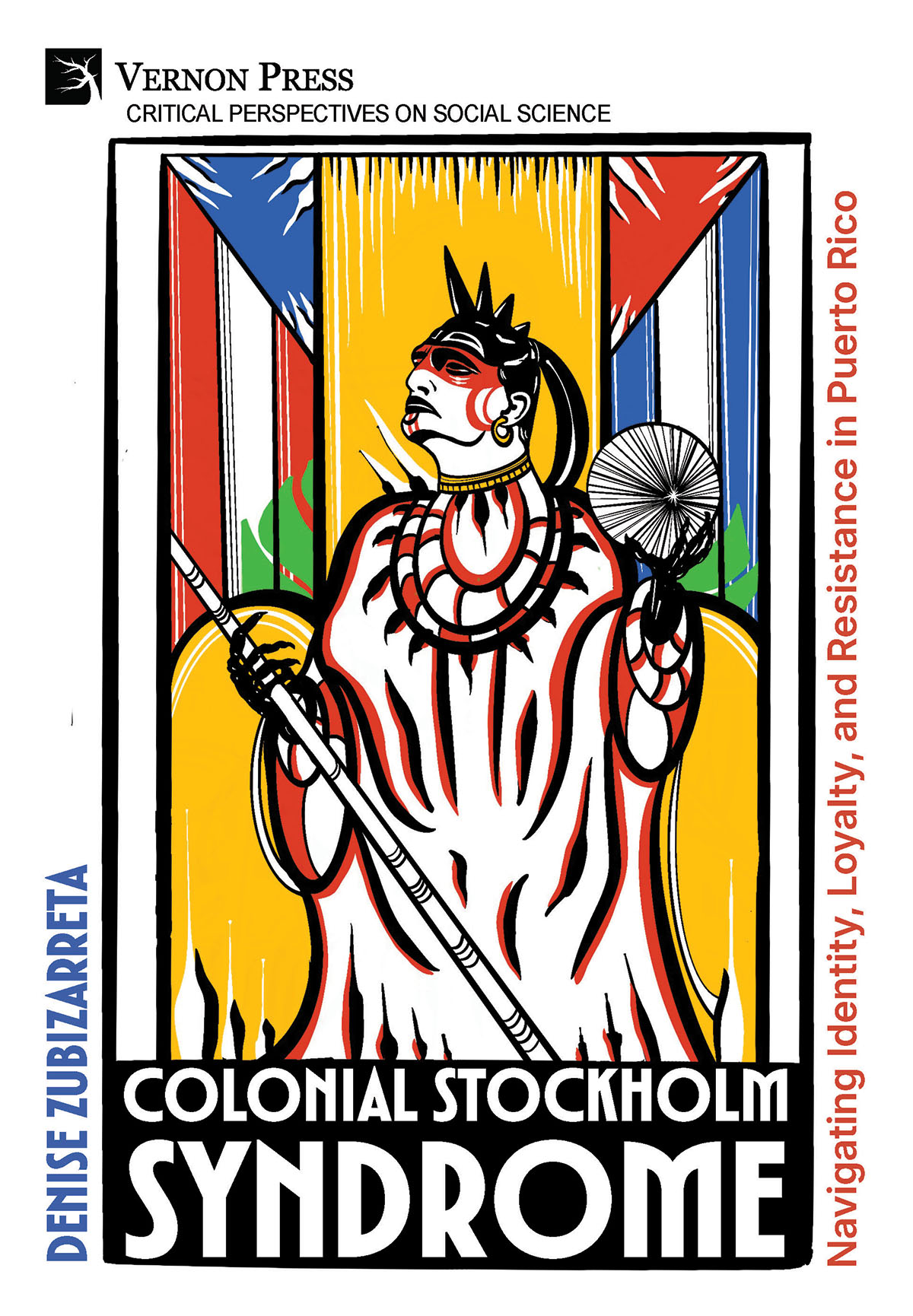
Navigating Identity, Loyalty, and Resistance in Puerto Rico
Denise Zubizarreta
'Colonial Stockholm Syndrome: Navigating Identity, Loyalty, and Resistance in Puerto Rico” by Denise Zubizarreta offers a critical examination of Puerto Rico’s enduring colonial legacy under both Spanish and American rule. This book explores the profound psychological and sociopolitical effects of centuries of colonization on Puerto Rican identity, illuminating how the island’s people have been conditioned to navigate complex loyalties and resistances in the face of systemic oppression. Through the innovative framework of Colonial Stockholm Syndrome, Zubizarreta analyzes how Puerto Ricans have historically reconciled their dual loyalties—first to the Spanish Empire and later to the United States—while confronting the ongoing challenges of inequality and dependency. The narrative delves into pivotal moments in Puerto Rican history, from the Spanish colonial era and the struggle for autonomy, to the American occupation beginning in 1898, and the current debates surrounding statehood and independence. Positioned within the broader discourse on colonialism and postcolonial studies, this work stands out for its unique approach to understanding Puerto Rico’s complex colonial history. By integrating historical analysis, personal narratives, and critical theory, Zubizarreta provides a comprehensive and accessible exploration of how colonial power dynamics continue to shape Puerto Rico’s national identity and political future. This book is an invaluable resource for scholars, students, and professionals in Latin American and Caribbean studies, political science, history, and cultural studies. It serves as a key reference for understanding the psychological and cultural dimensions of colonization, making it suitable for classroom adoption, academic research, and broader discussions on decolonization, identity, and resistance. 'Colonial Stockholm Syndrome: Navigating Identity, Loyalty, and Resistance in Puerto Rico' is an essential contribution to the literature on colonialism and its enduring impacts, offering new insights into one of the oldest colonies in the modern world.
Clara Shu-Chun Chang, Kathryn Yalan Chang, Annie Gladys PV, Kotti Sree Ramesh, Mallipudi Sirisha, Kübra Baysal, Shruti Das, Fazıla Derya Agiş, and Sriyanka Basak
The book 'An Earth of One’s Own: Eco-cognizance and Environmental Justice' would take the reader into an ecocritical odyssey, a transformative journey through the myriad challenges plaguing the earth today, along with the desire for a fundamental shift in ways humans associate their relationship with multiple species of the earth. It proposes the idea of eco-cognizance of complex relationships among various species within the ecosystem and broaches the idea of interspecies justice, not merely as an ethical or legal framework, but as a holistic and organic paradigm taking into consideration ecological integrity, social integrity, and intergenerational responsibility. Eco-cognizance entails recognizing the profound impact of our actions on the environment and acknowledging our responsibility to preserve and protect it for future generations. This concept goes hand in hand with environmental justice, which seeks to address the disproportionate burden of environmental degradation and harm experienced by marginalized communities. It emphasizes the need for equitable access to clean air, water, and a healthy environment for all people, irrespective of their race, socioeconomic status, or geographical location. By embracing eco-cognizance and striving for environmental justice, we foster a sense of interconnectedness and harmony with the Earth. It prompts us to reevaluate our lifestyles, consumption patterns, and systems of production, in order to create a more sustainable and just world. It inspires us to engage in collective action, amplifying the voices of the unheard, and working towards a future where both human beings and the environment can thrive harmoniously. Taken together, this volume would urge the readers to inquire, introspect, and invite them to confront those perceptions, assumptions and biases that were complicit in perpetuating the ecological crisis. Through a synthesis of scientific reasoning, philosophical insights, and real-world case studies, this volume looks forward to exploring questions about human existence in a multispecies world and the impact of their choices on the planet they call home.
Federico Gravino, Adelaide Madera, Montserrat Gas-Aixendri, Paola Cavaliere, Rejina M. Selvam, Gabriela Irrazábal, Ana Lucía Olmos Álvarez, Mariangela Galluccio, Caterina Gagliardi, Matteo Corsalini, Marc Grau-Grau, and Belén Zárate-Rivero
Looking at COVID-19 infection through a gendered lens reveals its deep impact on individuals in vulnerable positions, especially women. It raised new concerns about gender equity and inclusion, particularly when gender intersects with other identity markers such as religious affiliation. This intersection creates a “double vulnerability,” heightening the risk of discrimination, violence, hate speech, and harassment against women. In various legal contexts, women bear multiple roles and responsibilities. The interaction between gender, law, religion, and the pandemic has often resulted in disempowerment in shaping female identity. This is evident both in Western countries—where migrant women struggle for full integration—and in their countries of origin, where they often face the consequences of normative pluralism and insufficient state legal responses. The pandemic has generated not only a health crisis but also exacerbated social and economic issues, including increased gender-based violence in family settings and growing inequalities in access to fundamental rights such as healthcare, education, employment, and justice. In this complex framework, religious leaders face new challenges and must provide effective responses. Female leadership within religious contexts can play a crucial role in advocating for new paradigms that address evolving social, cultural, and legal needs. Religious actors are thus called upon to offer both guidance and support to vulnerable and marginalized members of their communities and to collaborate with governments in shaping a future where religious freedom, gender equality, gender justice, and freedom from discrimination are upheld. This volume aims to investigate the pandemic’s impact on women within faith communities, examine emerging balances between female religious/cultural claims and public welfare imperatives, and develop gendered, intersectional perspectives that promote women’s full integration, equality, and participation in civil society.
Paolo Diana
'The Digital Shift and the Social Research: Methods and Practices' offers a comprehensive exploration of how the digital era, particularly in the wake of the COVID-19 pandemic, has transformed the field of social research. Drawing on both theoretical discussions and empirical studies, the book provides an in-depth analysis of the impact of digital tools on research methods, behaviour, and interactions, while addressing the ethical challenges that arise in online contexts. The first part of the book examines the expansion of traditional research methods through digital platforms, with a focus on how these innovations shape social norms and practices. The second part shifts attention to education, presenting strategies to improve student engagement and foster collaborative learning in the virtual classroom. The third part highlights groundbreaking case studies from the University of Salerno, illustrating innovative pedagogical approaches in teaching social research methodology. By integrating insights from across the fields of digital research, pedagogy, and ethics, this work challenges researchers and educators alike to rethink conventional approaches and adapt to the rapidly changing digital environment. Ideal for students, educators, and professionals, it serves as both a reference and a practical guide for navigating the evolving landscape of social research. Original and timely, this book will appeal to academics, practitioners, and researchers in social sciences, providing not only theoretical perspectives but also hands-on solutions for digital research and learning environments.
Judy Watts, Alison Novak, Trevor Kauer, Haley Kranstuber Horstman, Kimberly A. Parker, Bobi Ivanov, Tyana Ellis, Alyse Keller Johnson, Maria Brann, Alaina Leverenz, Jennifer J. Bute, Amanda Holman, Maria Leonora G. Comello, Diane B. Francis, Jasmine Gray, Rebecca Ricardi, Christine McWhorter, Sarah A. Geegan, and Cassidy Taladay-Carter
'Innovative Approaches to Narratives in Health Communication' provides in-depth research studies, literature reviews, and step-by-step instructions for a variety of health communication contexts to help improve overall satisfaction and the empowerment of others. 'Innovative Approaches to Narratives in Health Communication' is intended to be used in many health-related contexts including, but not limited to, the classroom, further research, and health care professionals. While some texts focus on narratives in public communication or on a specific population (such as women’s health), this volume applies narratives in a variety of health communication contexts. 'Innovative Approaches to Narratives in Health Communication' opens with a chapter about the different types of narrative research, entertainment education, and narrative persuasion. Next, the first section includes chapters on the “human experience” and narratives. These chapters include powerful and emotional topics relating to the use of narratives in critical care, reproductive loss, video gaming and cancer narratives, and the impacts of the infant formula shortages. The second section highlights how narratives can be used in university/college-aged participants. The two chapters analyze how narratives can be applied to both the mental health of college students and those partaking in risky behaviors. The third and final section comprises chapters discussing the impacts of the COVID-19 pandemic and the use of narratives. The section begins with a chapter highlighting the “Coming age” during the pandemic and relevant research relating to narratives. The following chapters will include a discussion of the impacts of COVID-19 on black communities, and the importance of narratives with frontline workers. All of these chapters provide unique applications and examples that use narratives in current and important research. Overall, 'Innovative Approaches to Narratives in Health Communication' aims to provide a diverse audience with unique tools and perspectives to broaden our understanding and applicability of narratives in health communication contexts.
Tamanna M. Shah, Kazım Tolga Gürel, Nalan Ova, Merve Hickok, Mustafa Yetim, Nurbanu Kesgin, Neela Hassan, Luna Chung, Sandra Castro, Özen Kurtulus, and Shahid Minhas
This study explores the intricate arrangements that serve the power and profit interests of the ruling classes. It examines how capital-driven approaches and life-colonizing construction goals form the backdrop to the events and analyses presented in these articles. Each contribution, regardless of its conclusion, begins with real-life experiences, interpreting specific theories and data through the lens of historical context. At the heart of the book lies the notion that all practices and elements of life are subject to colonization. Whether in the form of a nation-state or a party-state, the state functions as a power center shaping migration policies to serve ruling-class interests. The articles included were carefully selected by the editor. While some emphasize the concept of identity—an approach the editor may not fully endorse—these pieces were chosen to reflect a diversity of thought and to model the kind of genuine democracy that remains absent in today’s world. It is important to note that the book rejects any ideologies that violate human rights, such as fascism, racism, homophobia, misogyny, and xenophobia. This collection offers a compelling examination of themes including immigration, capitalism, and the media.
Kathryn Hummel
'Udbhēda: Details of Bangladesh Life & Adda' recounts the lived experiences of three diverse individuals—Sampurna, Afreen and Nusrat—as related in conversation with the author. Framed by the methodology and methods of narrative ethnography, 'Udbhēda' describes the details that comment on or even challenge broad definitions and portrayals of Bangladesh and its people, particularly women and hijra. Beneath these narratives runs the author’s subjective account as a researcher, writer, cisgender woman and foreign visitor to Bangladesh. Evoking the everchanging scenes and moods of Dhaka, this multi-genre work combines prose, prose poetry and critical reflection to explore themes including gender, sexuality, class, family, education, work and postcolonial identity. This innovative approach to ethnographic writing embraces the cultural practice of adda—unbounded, often revelatory conversation—as both subject and method. 'Udbhēda' employs a considered, intersectional approach, relating perspectives frequently marginalised in discipline- and industry-specific discourse on Bangladesh, adding depth to the exploration of culture and identity beyond binaries. Balancing vivid storytelling with contemplative academic analysis, this book offers valuable insights for anthropologists, gender studies scholars and development practitioners. Hummel’s self-reflexive stance and exploration of the ‘illegitimate’ side of ethnography, in the tradition of Ruth Behar’s 'Translated Woman', make 'Udbhēda' an exemplary text for teaching qualitative research methods. The accompanying exegesis provides a transparent account of the author’s research process, engaging with crucial concepts in postcolonial theory, feminist ethnography and ethnographic representation. Accessible to both academic and general readers interested in innovative approaches to cross-cultural research and writing, 'Udbhēda: Details of Bangladesh Life & Adda' offers a layered interpretation of the testimonies of three remarkable people. It is a vital text for anyone seeking to look deeper at the complexities of gender, identity, culture and everyday life in contemporary Bangladesh.
Kurt Warner
The ancient Roman poet and satirist Juvenal stated that people were distracted by “bread and circuses” rather than engaged in their civic duty. Juvenal argued these bread and circuses, or basic needs and entertainment, consumed the thoughts and lives of the average Roman no matter what was happening in the Republic around them. The powerful political forces in society used many different forms of distraction to enable them to do what they wanted unimpeded by the masses. 'False Idols: How Diversion Is Destroying Democracy' picks up where Juvenal left off. The book is a journey through contemporary America and it illustrates how the concept of “bread and circuses” is as powerful and as relevant now as it was in the days of ancient Rome. It examines the deliberate distractions that are created by the cultivation of false idols. The distractions include the adoration of celebrities and parasocial interactions, the economic culture and the implicit belief systems contained within it, sports and the adoration of athletes, the political system and structure, the art, music, and literature we spend our time listening to and watching, the internet and social media that occupies so much of our time, and the video games that occupy the minds and much of the lives of so many people. As long as everybody is chasing and distracted by these bread and circuses, they are willfully negligent to the goings-on in the very fabric of the social network that is of our society, government, and country. The more negligent they become, the more the democracy continues withering and dying. This book systemically deconstructs a modern society that seems designed to consistently pull us away from rather than draw us toward the creation of a better existence for all.
Tiantian Chen
This book provides the first sustained account of intense debates in China over the ban on single women’s access to assisted reproductive technologies (ARTs). Drawing on the author’s fieldwork in clinics and government agencies in Beijing, it mainly explains Chinese policymakers’ and clinicians’ rationale for restricting single women’s use of ARTs even if they celebrate ARTs as a success of Chinese modernization strategies. The main concept explored in this book is uncertainty. ARTs become a source of discomfort for the Chinese government and clinics because they reveal the uncontrollability of human destiny; they introduce ambiguities into genetic and legal paternity; and they undermine clinical and bureaucratic authority. This book uses ARTs as a lens on broader social changes in China. The uncertainty of ARTs reflects the limits of Chairman Deng Xiaoping’s reform. It also informs that the Chinese government has reversed policies by repackaging tradition and tightening party control. The book’s interpretation of uncertainty challenges the linear and progressive paradigm of modernization. China’s development path is distinct from the sequential logic of Western, modernist conceptions of history.