Loading...
Please wait while we load the content...

Loading...
Please wait while we load the content...
Stay informed about our latest publications, calls for proposals, and special announcements. As a subscriber, you'll also enjoy exclusive member discounts of 10%-20% on all orders. Join our community of scholars, librarians, and readers today.


Availability
In stock
ISBN
9798881900779
Edition
1
Publication Date
July 8, 2025
Physical Size
236mm x 160mm
Illustrations
10 Color
Number of Pages
146
Currency
Quantity
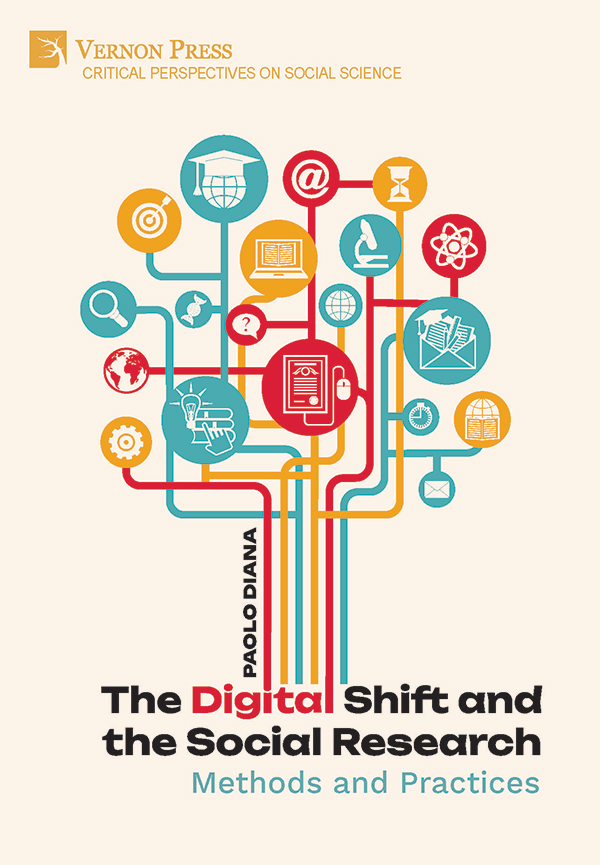
This book offers a timely and insightful exploration of how digital technologies are reshaping social research methodologies. It bridges theoretical depth with practical application, making it a valuable resource for both scholars and educators.
Dr. Giovannipaolo Ferrari
Department of Human, Philosophic and Education Sciences - DISUFF; DiSoSWLab - Digital Society, Sport & Well-being Social Research Lab, University of Salerno, Italy;
CeRIES, Centre de Recherches « Individus, Épreuves, Sociétés »; Laboratoire de Recherche en Sociologie - ULR 3589; Universitè de Lille, France
Paolo Diana succeeds in outlining, with clarity and simplicity, the key transformations affecting university teaching and research practices. The book offers insightful openings on topics such as narrative in social research and the emerging role of AI, always combining pedagogical innovation with methodological awareness.
Dr. Alessandro Porrovecchio
Sociology of Health
University of the Littoral Opal Coast, France
The book “The Digital Shift and the Social Research: Methods and Practices” by Paolo Diana offers an in-depth analysis of the impact of digital technologies on research methods and pedagogical practices in the social sciences. Drawing on several years of teaching and research at the University of Salerno, it combines theoretical reflection, practical feedback, and empirical studies to examine contemporary transformations in methodological knowledge. The volume is aimed at researchers, educators, and trainers seeking to integrate digital tools into both their investigations and teaching practices. By exploring, among other topics, the role of digital narratives, it provides a valuable resource for rethinking sociology in an increasingly datafied world, without abandoning the critical rigor at the core of the discipline.
Dr. Lucie Forté,
Sports Sociologist
University of Toulouse, France
Discover books that expand on the themes explored in this work—titles that engage with similar questions, intersecting disciplines, and complementary perspectives to deepen understanding and broaden the conversation.
Browse all titles
Laura M. Pipe and Jennifer T. Stephens (Eds.)
View more
Mitchell B. Mackinem, Lacey J. Ritter, and Anisah Bagasra (Eds.)
View more