Loading...
Please wait while we load the content...

Loading...
Please wait while we load the content...
Stay informed about our latest publications, calls for proposals, and special announcements. As a subscriber, you'll also enjoy exclusive member discounts of 10%-20% on all orders. Join our community of scholars, librarians, and readers today.


Availability
In stock
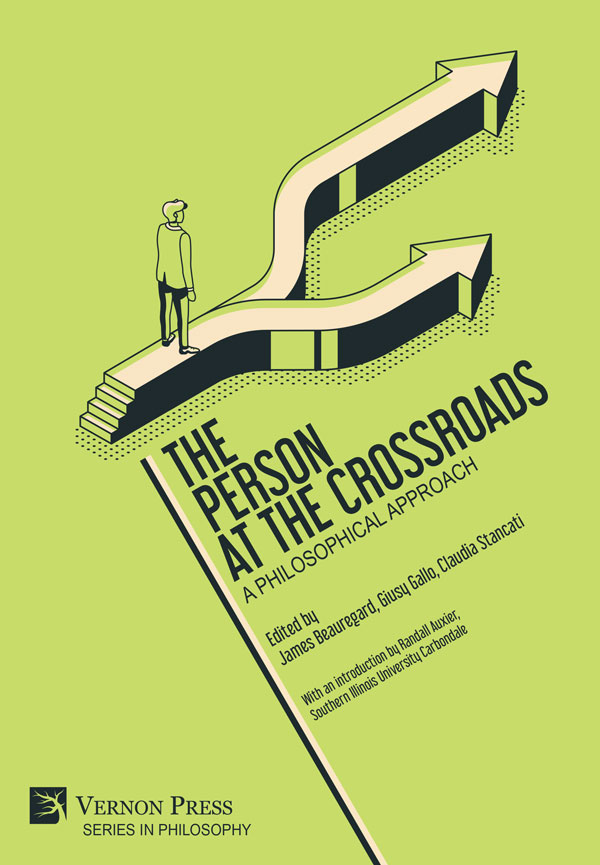
ISBN
9781622738885
Edition
1
Publication Date
September 1, 2020
Physical Size
236mm x 160mm
Number of Pages
312
Currency
Quantity
In the Introduction to the book, The Person at the Crossroads A Philosophical Approach, the editors describe the philosophical notion of the person as “a problem.” This idea surely is a problem, especially within the context of our culture, which looks at the world through the cultural lens of a materialistic, deterministic and reductionistic worldview … an exhausted point of view.
The exhaustion can be seen in the academy. Philosophy and literature classes are today a walking, talking disaster zone. Students sense it and vote with their feet. Why take bewildering and depressing classes. Skepticism and nihilism rules. We are, after all, mere animals in a meaningless world. Instinct rules.
The notion of person is surely a problem in this cultural wasteland as it challenges this assumption. Herein lies an opportunity. The field is deserted, the rats have fled the ship. Contemporary philosophy is toxic, but flowers like the dung. Something new is in town: personalism, a flowering of classical/perennial philosophy. It is still small and tender, but there is lots of manure around and sunlight remains.
People excited and energized. You see it in this book. Hope, beauty, truth, goodness, knowledge warm our black, little hearts, and they too are part of the unique fabric of persons, found nowhere else.
This book is nothing less than exciting. The notion of person re-energizes everything, as this book shows. But it also points to a new direction of philosophy: the terrain is perfect. Existential nihilism is so twentieth century.
Dr. James Harold
Franciscan University of Steubenville
This absorbing collection brings together a diverse set of historical and contemporary philosophical perspectives on the person, ranging from Augustine to Merleau-Ponty, from Hume to Confucius, from language to embodiment, and from resisting racism to depression and suicide. Yet in all this diversity, common themes and connecting threads give the volume real coherence as an expression of the scope and possibilities of contemporary personalist philosophy. In assembling this collection, the editors have demonstrated the breadth, and vitality of the personalist tradition. There are rich resources here for ongoing philosophical, theological and ethical reflection on the human person. Scholars and students from diverse philosophical and theological traditions, and those working on both theoretical and practical problems in ethics and related fields (including a range of issues in bioethics and health care ethics, to name just one area), should find contributions in this volume that will be of interest and inform their work.
Dr. Neil Messer
University of Winchester, UK
This book is definitively an innovative and fresh contribution to the theme of ‘person’ which has always been at the center of the philosophical debate. The major asset of this collective work lays in the variety of approaches taken when discussing the idea of ‘person’. The result is an original work that displays different approaches, interpretative models and theories. Therefore, the strength of the book is its variety which can appeal and catch the interest of a multi-faced audience. I am thinking in particular of chapter 1, chapter 8 and chapter 10; those chapters, in particular, offer interesting points of reflection and instigate to further explorative research in the themes treated. Another point in favor is that this is a book that seems to privilege the international and continental philosophical approach as shown by the selection of the book contributors. This is a very important point that together with another relevant asset of the book, namely, the attention to the Christian understanding of the concept of ‘person’, could eventually pave the way to a wider audience and in particular, a Christian- Catholic audience where the theme of ‘person’ especially under this current pontificate, has been oftentimes at the center of the theological and social doctrine of Pope Francis.
Anna Castriota
St. Clare's, Oxford
Discover books that expand on the themes explored in this work—titles that engage with similar questions, intersecting disciplines, and complementary perspectives to deepen understanding and broaden the conversation.
Browse all titles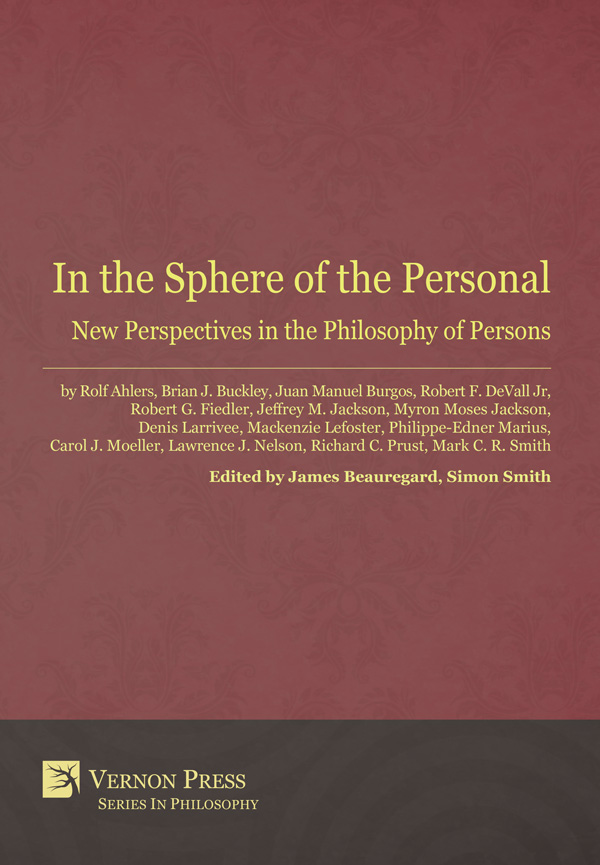
Simon Smith and James Beauregard (Eds.)
View more
Simon Smith and Anna Castriota (Eds.)
View more