Loading...
Please wait while we load the content...

Loading...
Please wait while we load the content...
Stay informed about our latest publications, calls for proposals, and special announcements. As a subscriber, you'll also enjoy exclusive member discounts of 10%-20% on all orders. Join our community of scholars, librarians, and readers today.


Availability
In stock
ISBN
9781622737536
Edition
1
Publication Date
September 7, 2021
Physical Size
236mm x 160mm
Number of Pages
169
Currency
Quantity
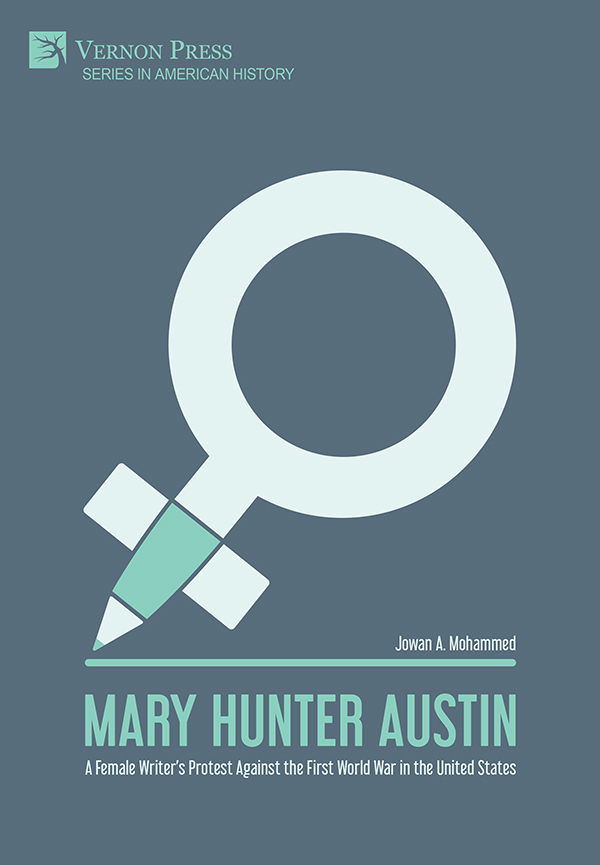
Memory is not history, Jowan A. Mohammed insists in her "Mary Hunter Austin: A Female Writer’s Protest Against the First World War in the United States", and Mary Hunter Austin, while a fierce believer in women’s independence and civic responsibility, was not a feminist; instead, she was made so by later feminists for whom the construction of a feminist history included space for Austin Hunter’s regionalist, naturalist, overtly political writings. Where history had erased her voice, her-story renditions of the 20th century women’s suffrage movement brought her – back, they felt – into the story. In this way, Mohammed’s book is both an exploration of the legacy of an extraordinary chronicler of life in the early 20th century American West, but also a contribution to the study of collective memory studies, to feminist historiographical studies, and more broadly to history itself.
Best known for "The Land of Little Rain" (1903), Hunter Austin was a novelist, poet, essayist, journalist, and eventual memoirist, as well as a climate and anti-war activist who championed the rights of women. Mohammed focuses, here, on Hunter Austin’s WWI-era work as well as its contemporaneous reception, in order to understand the ways in which later feminists made use of these works and of Hunter Austin’s legacy to create a foundational origin story to which WWI-era suffrage debates were critical.
Dr. Rashi Rohatgi
Nord universitet, Norway
Discover books that expand on the themes explored in this work—titles that engage with similar questions, intersecting disciplines, and complementary perspectives to deepen understanding and broaden the conversation.
Browse all titles
Eulalia Pérez Sedeño, Lola S. Almendros, S. García Dauder, and Esther Ortega Arjonilla (Eds.)
View more