Loading...
Please wait while we load the content...

Loading...
Please wait while we load the content...
Stay informed about our latest publications, calls for proposals, and special announcements. As a subscriber, you'll also enjoy exclusive member discounts of 10%-20% on all orders. Join our community of scholars, librarians, and readers today.


Availability
In stock
ISBN
9781622733644
Edition
1
Publication Date
February 12, 2018
Physical Size
236mm x 160mm
Illustrations
1 Color
Number of Pages
312
Currency
Quantity
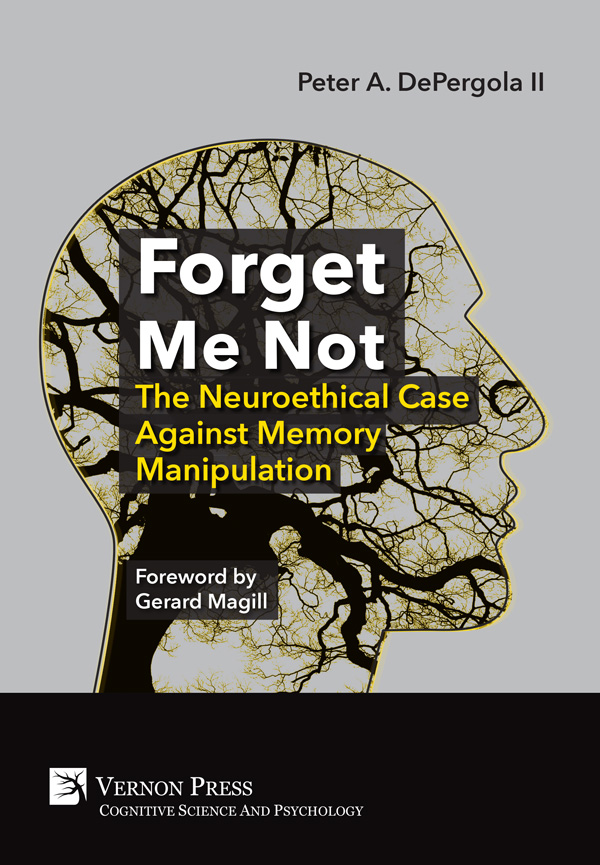
Treats a timely topic in a compelling inter-disciplinary manner, bridging a robust account of moral personhood with a treatment of the complex issues of treatment of PTSD, addiction, etc. by pharmacological memory manipulation. DePergola’s presentation is exceptionally well-informed both in science and moral philosophy and articulated elegantly in ways that both experts and non-experts alike can grasp and follow. The book helps expand our understanding of moral identity and personal autonomy.
James T. Bretzke, S.J., S.T.D.
Professor of Moral Theology, Boston College
A bold stance that challenges received wisdom is a difficult endeavor for the best of writers. DePergola sets out on an exciting pathway to write an imaginative and original analysis of the relation between memory, emotion, identity, and ethical decision making. In this breathtaking view of over fifty years of memory research, the reader not only evidences brinkmanship on the cutting edge of neuroscience, but also a tour de force on moral normativity. The creativity and perspicacity of the analysis is woven together with a treasure trove of classical writers, whose time-tested insights shed light on this topic in a way that most could never have imagined. The list of giants is extensive, including Plato and Aristotle, Hume and Descartes, Dostoyevsky and Shakespeare, Freud and Heidegger, Husserl and James, Kant and Locke, Nietzsche and Nussbaum, Pascal and Rawls, Ricoeur and Rorty, Sartre and Scheler, Taylor and Wittgenstein, MacIntyre and McCormick. Here is a master ethicist at work, balancing each side, presenting fair and accurate perspectives of the debate, perceptively seeing difficulties that have gone unnoticed, and pivoting to a conclusion that was as startling to the author as it may be to the reader.
Gerard Magill, Ph.D.
Vernon F. Gallagher Chair & Professor of Healthcare Ethics, Duquesne University
An impressive and timely contribution to the study of ethical questions surrounding memory manipulation, Peter DePergola’s rich insights into narrative identity and its relationship to moral agency provide an invaluable framework within which to evaluate clinical practice. DePergola’s work offers pertinent insights for clinicians and scholars alike.
Mark S. Stelzer, S.T.D.
Associate Professor of Humanities, Elms College
In this highly original book, Peter DePergola offers an insightful new way of looking at memory manipulation. His final assessment that memory manipulation is unethical is based on a careful critical evaluation of the pros and the cons of the practice, integrating an assessment of its use for substance addiction and post-traumatic stress disorder. In essence, this work is an ethical analysis that revolves around the role of memory towards moral behavior. However, the interdisciplinary nature of this study guarantees that it will appeal to a very diverse readership: philosophers, ethicists, neuroscientists, as well as healthcare professionals caring for people suffering from post-traumatic stress disorder and substance abuse will find this work a fascinating read.
Joris Gielen, S.T.D.
Director, Center for Healthcare Ethics, Duquesne University
Discover books that expand on the themes explored in this work—titles that engage with similar questions, intersecting disciplines, and complementary perspectives to deepen understanding and broaden the conversation.
Browse all titles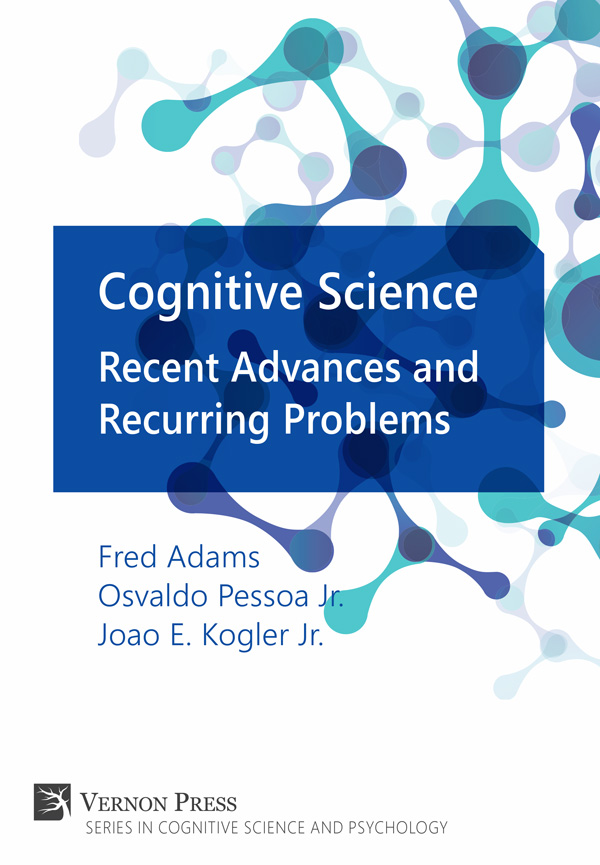
Joao Eduardo Kogler Jr., Frederick Adams, and Osvaldo Pessoa Jr. (Eds.)
View more
Leonard A. Steverson
View more
João G. Pereira, Jorge Gonçalves, and Valeria Bizzari (Eds.)
View more