Loading...
Please wait while we load the content...

Loading...
Please wait while we load the content...
University of Massachusetts Medical School; College of Our Lady of the Elms
Mariana Chinellato Ferreira, Federico Pistono, Frederic Gilbert, Txetxu Ausin, Eray Özkural, Vernon Vinge, Hasse Hämäläinen, Federico Piston, Natasha Vita-More, Stephen Rainey, Ricardo M. Ferrer, Aníbal M. Astobiza, Tomislav Miletic, Kulvinder Panesar, René Mogensen, Caterina Moruzzi, Nicole A. Hall, Cody Turner, Ben Goertzel, Gabriel Axel Montes, David Pearce, Daniel Dennett, Stevan Harnad, Roman V. Yampolskiy, Soenke Ziesche, Peter A. DePergola II, and Steven S. Gouveia
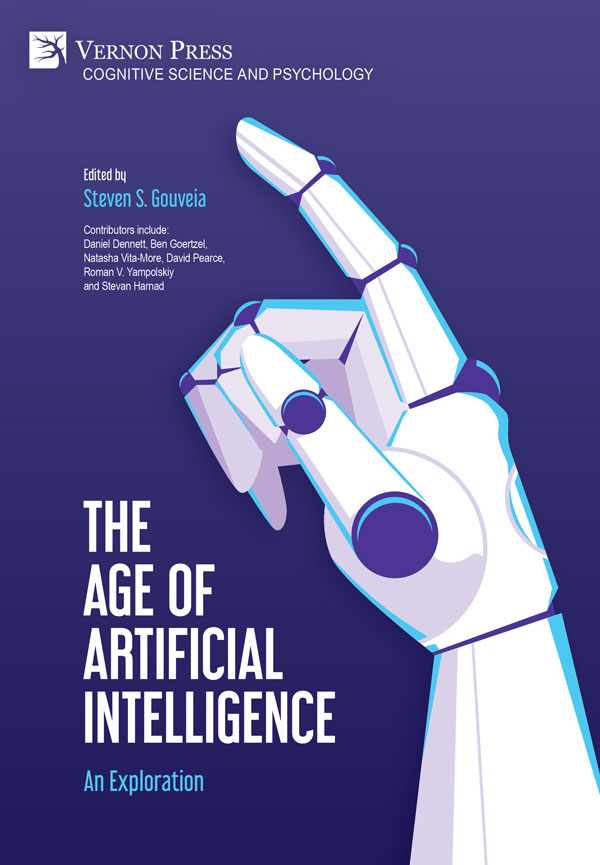
With worldwide spending estimates of over $97 billion by 2023, it is no surprise that Artificial Intelligence (A.I.) is one of the hottest topics at present in both the private and public spheres. Comprising of vital contributions from the most influential researchers in the field, including Daniel Dennett, Roman V. Yampolskiy, Frederic Gilbert, Stevan Harnad, David Pearce, Natasha Vita-More, Vernon Vinge and Ben Goertzel, ‘The Age of Artificial Intelligence: An Exploration’ discusses a variety of topics ranging from the various ethical issues associated with A.I. based technologies in terms of morality and law to subjects related to artificial consciousness, artistic creativity and intelligence. The volume is organized as follows: Section I is dedicated to reflections on the Intelligence of A.I., with chapters by Soenke Ziesche and Roman V. Yampolskiy, Stevan Harnad, Daniel Dennett and David Pearce. Next, Section II discusses the relationship between consciousness, simulation and artificial intelligence, with chapters by Gabriel Axel Montes and Ben Goertzel, Cody Turner, Nicole Hall and Steven S. Gouveia. Section III, dedicated to aesthetical creativity and language in artificial intelligence, includes chapters by Caterina Moruzzi, René Mogensen, Mariana Chinellato Ferreira and Kulvinder Panesar. The subsequent Section IV is on the Ethics of the Bionic Brain with the participation of Peter A. DePergola II, Tomislav Miletić and Frederic Gilbert, Aníbal M. Astobiza, Txetxu Ausin, Ricardo M. Ferrer and Stephen Rainey and Natasha Vita-More. Finally, Section V follows on the Ethics of Artificial Intelligence with chapters by Federico Pistono and Roman V. Yamploskiy, Hasse Hämäläinen, Vernon Vinge and Eray Özkural. The Age of Artificial Intelligence is imminent, if not here already. We should ensure that we invest in the right people and the right ideas to create the best possible solutions to the problems of the present and prepare for those of the future. This edited volume will be of particular interest to researchers in the field of A.I. as well of those in Cognitive Science (Philosophy of the Mind, Neuroscience, and Linguistics), Aesthetics and Arts, Applied Ethics and Political Philosophy / Law. Students studying the aforementioned topics can also benefit from its contents.
Peter A. DePergola II
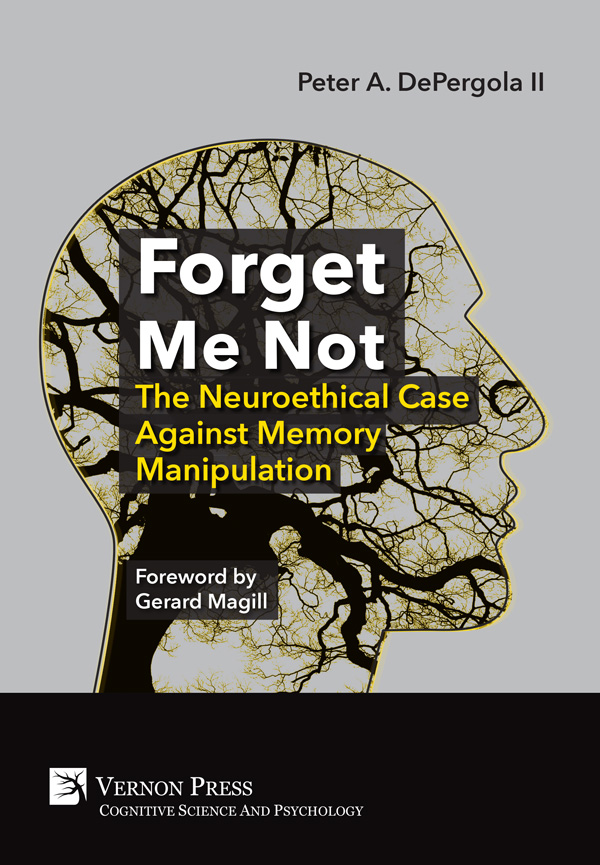
The first philosophical monograph on the ethics of memory manipulation (MM), "Forget Me Not: The Neuroethical Case Against Memory Manipulation" contends that any attempt to directly and intentionally erase episodic memories poses a grave threat to the human condition that cannot be justified within a normative moral calculus. Grounding its thesis in four evidential effects – namely, (i) MM disintegrates autobiographical memory, (ii) the disintegration of autobiographical memory degenerates emotional rationality, (iii) the degeneration of emotional rationality decays narrative identity, and (iv) the decay of narrative identity disables one to seek, identify, and act on the good – DePergola argues that MM cannot be justified as a morally licit practice insofar as it disables one to seek, identify, and act on the good. A landmark achievement in the field of neuroethics, this book is a welcome addition to both the scholarly and professional community in philosophical and clinical bioethics.