Loading...
Please wait while we load the content...

Loading...
Please wait while we load the content...
Stay informed about our latest publications, calls for proposals, and special announcements. As a subscriber, you'll also enjoy exclusive member discounts of 10%-20% on all orders. Join our community of scholars, librarians, and readers today.


Availability
In stock
ISBN
9798881903695
Edition
1
Publication Date
February 10, 2026
Physical Size
236mm x 160mm
Number of Pages
238
Currency
Quantity
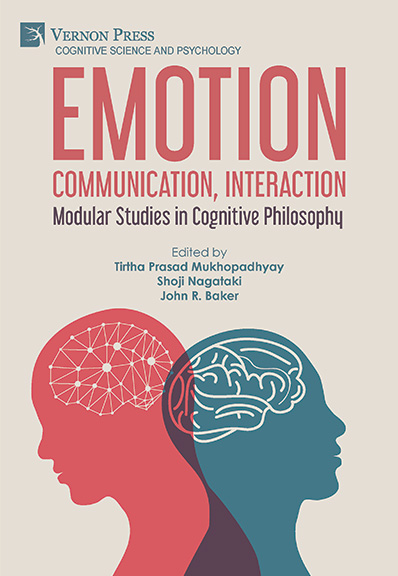
'Emotion, Communication, Interaction: Modular Studies in Cognitive Philosophy' consists of reflective and analytical essays on the nature and function of human emotions and communicative strategies based on the most recent advances in Cognitive Science. Broadly based on the cognitive architecture of emotions, this volume of essays suggests fresh methods of evaluating emotional behavior. As such, they create theoretical and, in some cases, qualitatively valid pathways for understanding what emotions mean and represent in the scale of human evolution and how emotional communication can potentially benefit human life and well-being. The authors suggest how aesthetic emotions constitute a significantly new area of research on fine-tuned and less understood expressions. Fresh insights into the intersubjective nature of emotional communication, and strategic interactions among humans and between humans and machines, redefine the limits of human interactivity and the extent to which emotions are underwritten in the Anthropocene. Furthermore, such an important faculty as that of emotion, when studied in contexts of competitive sports philosophy, prosocial behaviour, altruism or collective nostalgia, opens up different possibilities for the achievement of mental health and well-being. This book will stand as an excellent reference for research on the efficacy of emotional life and its impact on the grand objectives of acquiring freedom and happiness. Though epistemological variations mark the methods of discourse, the essays in this volume tout emotional cognition and communications as viable tools of research for a post-Enlightenment academy.
Discover books that expand on the themes explored in this work—titles that engage with similar questions, intersecting disciplines, and complementary perspectives to deepen understanding and broaden the conversation.
Browse all titles
R. T. Allen, Angela Botez, and Henrieta Anișoara Șerban (Eds.)
View more
Manuel Curado and Steven S. Gouveia (Eds.)
View more