Loading...
Please wait while we load the content...

Loading...
Please wait while we load the content...
Stay informed about our latest publications, calls for proposals, and special announcements. As a subscriber, you'll also enjoy exclusive member discounts of 10%-20% on all orders. Join our community of scholars, librarians, and readers today.
Availability
In stock
ISBN
9798881901288
Edition
1
Publication Date
March 18, 2025
Physical Size
236mm x 160mm
Illustrations
57 Color
Number of Pages
406
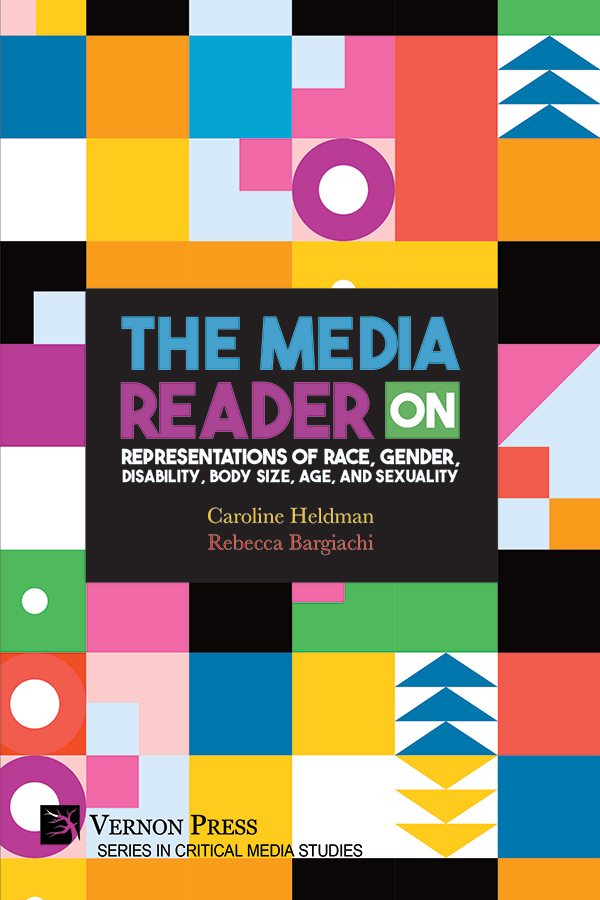
In this meticulously researched volume, Heldman and Bargiachi deliver a comprehensive and uniquely-useful compendium of the available quantitative and qualitative findings on underrepresented groups in film and television. Including chapters on race, gender, ability, body size, age, and sexuality, the reader documents the recent historical quantitative records of representation, including the percentages of individuals appearing on screen, awards received, and screen time when available. The book also offers insightful qualitative analyses of the portrayals of these groups. Anyone with an interest in representation—including students, teachers, scholars, and those working in the industries—will find this reader to be an incredibly useful and well-organized tool.
Dr. Martha Lauzen
San Diego State University
In jargon-free and accessible prose, Heldman and Bargiachi provide a comprehensive and astute analysis of the quantity and quality of media representations of six intersectional identity locations. The book promises to be a powerful pedagogical tool, including chapter summaries, discussion questions, and “apply your knowledge” prompts for classroom use. The authors take a deep dive into representations in film, television, and advertising via six chapters that contain methodical presentations of data subtended by in-depth qualitative textual readings. They draw on decades of scholarship in media and cultural studies, as well as on technical reports, surveys, news stories, and archival data, to make a compelling argument for the ongoing mis- and underrepresentation of marginalized people, as well as the impact of advocacy efforts to turn the tide. The book concludes with, as the authors note, “a nifty chart” that summarizes the preceding analyses and emphasizes the significance of inclusive, diverse and authentic portrayals to advance social justice and mobilize progressive change.
Prof. Dr. Meenakshi Gigi Durham
School of Journalism and Mass Communication
Department of Gender, Women’s and Sexuality Studies
Department of English
University of Iowa
In this reader, Heldman and Bargiachi bring an intersectional approach to their examination of how entertainment media shapes power and values in the U.S. They ask why media entertainment struggles to create socially just content that is inclusive and representative of difference, including race, gender, disability, body size, age, and sexuality. They examine the role of media entertainment in marginalizing already marginalized people in the U.S. through a comprehensive analysis of intersectional difference and embodied positionality. This book is a must-read for anyone interested in the connection between social values, justice, difference, and entertainment media. The book’s cross-disciplinary approach speaks to a range of readers, from students who are new to the subject to activists and media insiders who seek to create more inclusive media content.
Prof. Dr. Natasha Behl
School of Social and Behavioral Sciences
Arizona State University
Discover books that expand on the themes explored in this work—titles that engage with similar questions, intersecting disciplines, and complementary perspectives to deepen understanding and broaden the conversation.
Browse all titles
Frank Jacob and Verena Bernardi (Eds.)
View more
Oliver Bock and Isabel Vila-Cabanes (Eds.)
View more
Jolene Mairs Dyer, Conor McCafferty, and Cahal McLaughlin (Eds.)
View more


