Loading...
Please wait while we load the content...
Loading...
Please wait while we load the content...

Explore peer - reviewed titles across the humanities and social sciences - rigorous research, fresh perspectives, and scholarship that inspires dialogue across disciplines.
Stay informed about our latest publications, calls for proposals, and special announcements. As a subscriber, you'll also enjoy exclusive member discounts of 10%-20% on all orders. Join our community of scholars, librarians, and readers today.

From special discounts and global distribution partners to downloadable catalogs, flyers, and high-resolution covers, we make it easy to enrich your library’s collection. Access bibliographic data, explore subject-specific listings, and stay updated on forthcoming titles.
Become part of our librarian network and access dedicated tools, discounts, and resources to support collection development and promote new titles to your patrons.

Partner with Vernon Press to provide your customers with high-quality, peer-reviewed scholarship. We offer flexible ordering options, reseller agreements, and promotional materials to support your sales and outreach.

Vernon Press provides dedicated resources to help instructors adopt our books for courses and to support students with affordable access to high-quality scholarship. From desk and examination copies to tailored student editions, we aim to make our titles accessible in the classroom.
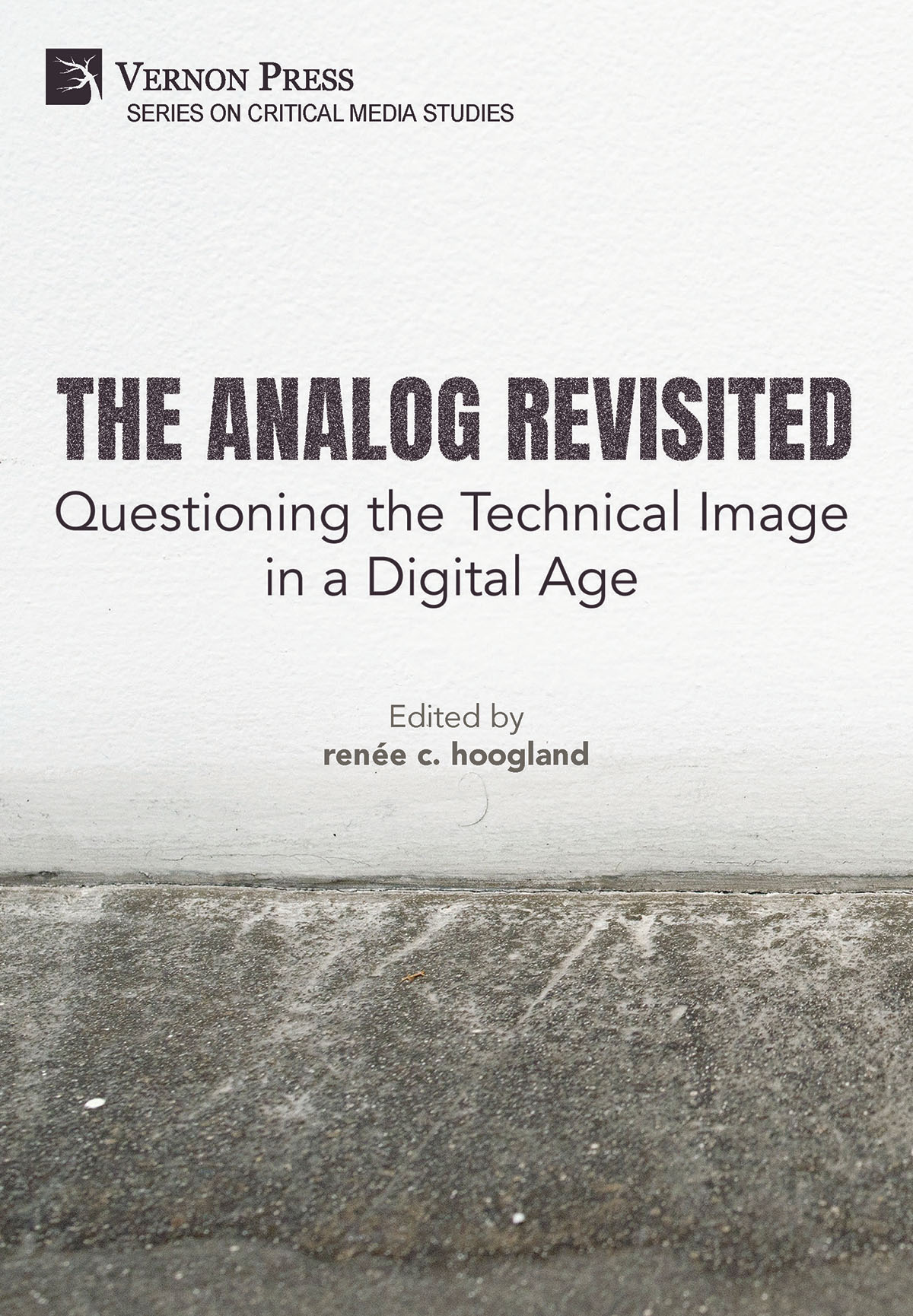
Questioning the Technical Image in a Digital Age
Ted Hiebert, Paula J. Massood, renée c. hoogland, Colin Gardner, Elena Past, Judith Roof, Aaron Jaffe, and Alina Cherry
This collection of essays explores the complexities of the photographic image in the wake of the digital turn. While the digital image has, in effect, effaced the necessity for a pre-existing “reality,” the presumed indexical function of the photographic image has by no means disappeared—technical images continue to organize, if not generate, our shifting modes of perception. How do we reconsider analog photographs, given that they can and are likely to show up on a variety of digital platforms? How do we re-view technical images that make the invisible visible, given that current imaging technologies generate new visualities as such? How does the digital force us to reconceptualize the analog? Individual chapters engage with a range of technical images approached from various critical and/or theoretical perspectives. One focuses on composite photographic portraits in eugenics and in contemporary art through Deleuze and Guattari’s notion of facility. Another assumes a pedagogical approach that pursues the photographic as a metaphor for knowledge practices through staging embodied encounters with digital living. Another explores the work of the artwork through a study of contemporary art photography by means of object-oriented ontology and new aesthetic realism. Yet another presents an infographic genealogy that tracks the technical image across a modernist telematic media-verse. One chapter offers a critical exploration of a silent film hero through her various analog and digital incarnations. Another explores a Lacanian-inspired perspective on the consequences of the shift from analog to digital for the subjects in front of the camera, the posers. One chapter focuses on the analog Anthropocene through an investigation of an Italian film factory and its material and human legacies. A final contribution investigates the relationship between photography and disaster through a discussion of a triple disaster—the earthquake, tsunami, and nuclear accident that occurred in Japan in 2011.
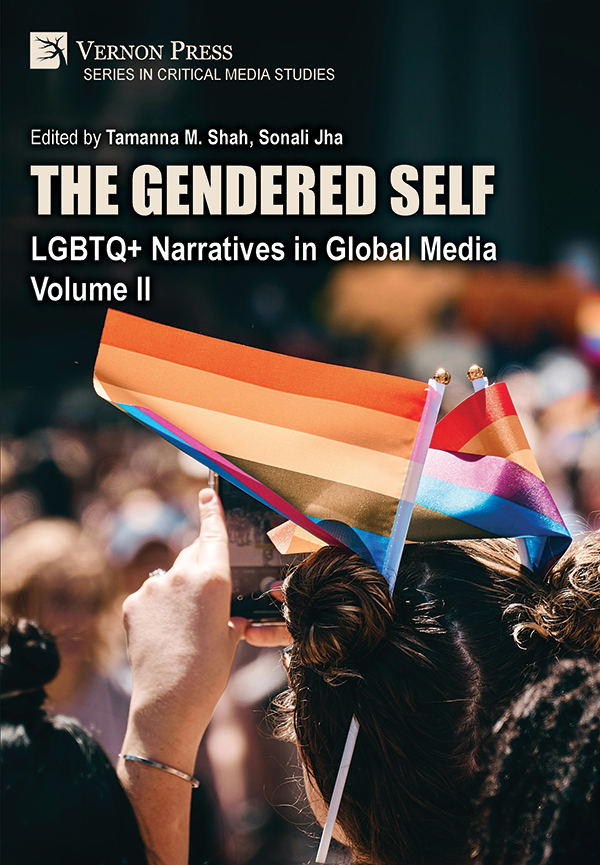
Kazım Tolga Gürel, Sonali Jha, Sarah E. Page, Yang Yang, Yuxuan Mu, Niveditha Jayaraj, G. Sadhana, and Mabel Gardner
'The Gendered Self: LGBTQ+ Narratives in Global Media, Volume II' challenges the restrictive frameworks that have long defined gender and sexuality. Moving beyond simplistic dichotomies, this volume explores how LGBTQ+ identities are shaped, represented, and contested across diverse cultural, historical, and political contexts. Through case studies from Turkey, the United States, China, and India, contributors reveal the lived complexities of queer experience. Chapters trace transgender journeys of identity transformation, dissect the weaponization of queer bodies in moral panics, and analyze the digital self-representations of Chinese gay men. Others investigate how Indian OTT platforms and Malayalam cinema expand space for queer narratives, while historical accounts of activists like Paula Grossman illustrate the fraught relationship between representation, activism, and backlash. Across these explorations, the volume highlights how media, politics, and cultural traditions simultaneously affirm and erase queer lives. It uncovers the deep roots of erasure in mythology and religion, while also showing how digital platforms and popular culture create new opportunities for resistance and recognition. This collection insists that the “gendered self” must be understood as fluid, intersectional, and culturally situated, pushing readers to reimagine identity beyond binaries and toward broader visions of inclusion and justice.
Author information not available
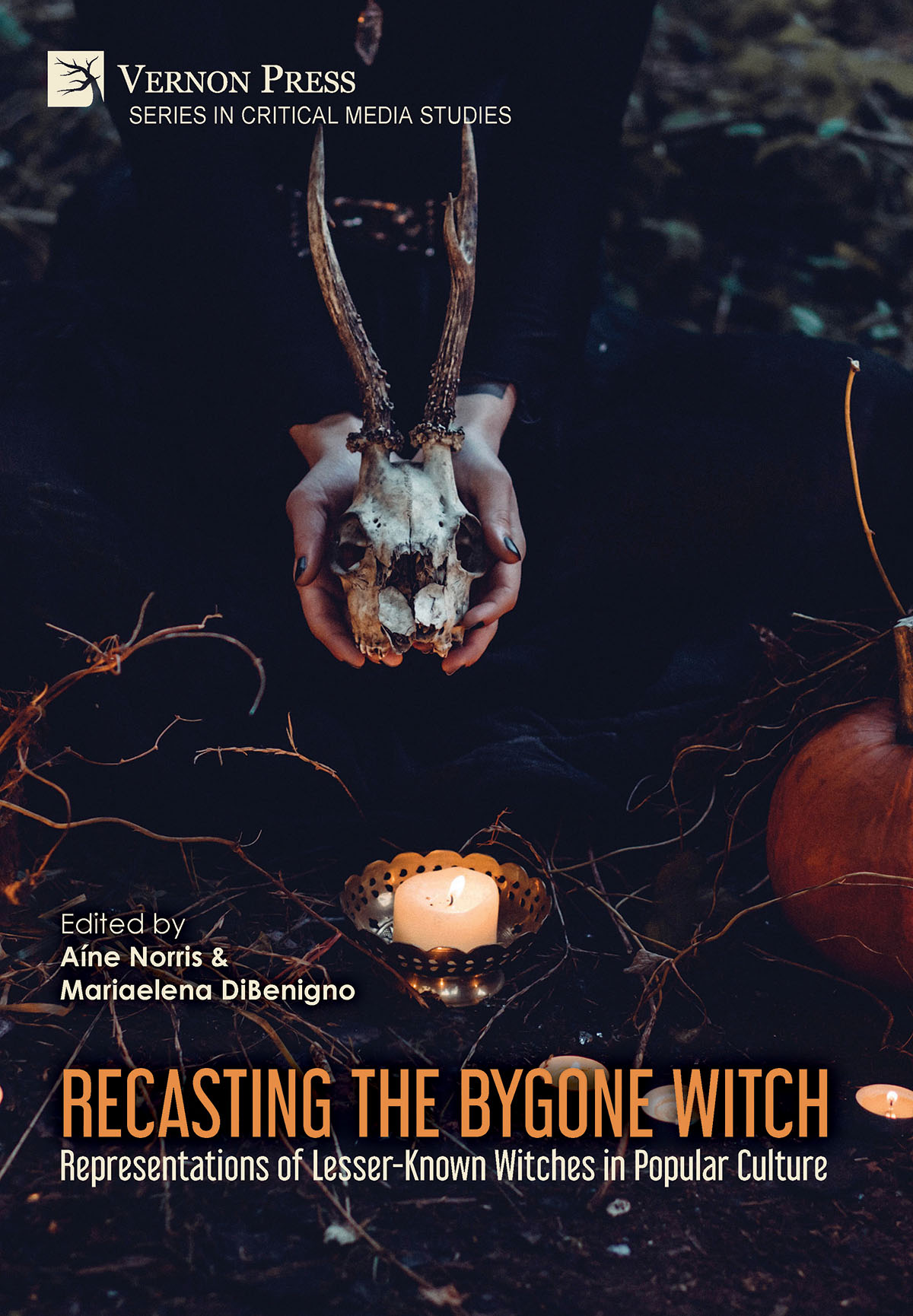
'Recasting the Bygone Witch: Representations of Lesser-Known Witches in Popular Culture' is an interdisciplinary collection that explores witches across time, culture, and scholarly space. It brings together voices and perspectives from literature, game studies, political science, history, and more to examine the overlooked or misrepresented. Timely and profoundly relevant, the collection asks readers to participate in conversations about the bygone witch as a historical, cultural, and political figure while examining who gets remembered or labeled as a witch, and why. 'Recasting the Bygone Witch' features scholarship from an interdisciplinary, international cohort of scholars using a variety of methods to analyze and contextualize bygone witches in discussions of power, identity, and resistance. From biographical examinations of Pamela Colman Smith, Marjorie Cameron, Sybil Leek, and Urška Klakočar Zupančič, to art and literary analyses of The Fires of Bride, Thomas Middleton, and William Hogarth, and reimagining the witch’s presence in college classrooms, scholars place the bygone witch in conversation across disciplines. The collection also examines how witches manifest in popular culture, specifically the depiction of witches in (and on) social media, video games, and film. With a blend of rigorous research and accessible examples of bygone witches across socio-cultural spaces, 'Recasting the Bygone Witch: Representations of Lesser-Known Witches in Popular Culture' is an act of reclamation and preservation.
Cassandra Hayes, Bruce E. Drushel, Taylor Orcutt, Sarah Liese, Victoria L. LaPoe, Enakshi Roy, Terrell Robinson, and Sheyla Finkelshteyn
'The Gendered Self: LGBTQ+ Narratives in Global Media, Volume I' explores how media serves as a powerful arena for visibility, identity formation, and social change. Across global contexts, the chapters uncover how LGBTQ+ lives are framed, celebrated, silenced, or contested in television, film, news, advertising, and digital platforms. Contributors examine themes such as queer infrastructures in cinema, televised celebrations that disrupt tradition, the erasure and recovery of queer histories, and the lived experiences of Indigenous Two-Spirit and Māhū identities. Other chapters address the role of international law in shaping sexual rights, the tensions of representation in Muslim-majority societies, and the ways advertising and talk shows negotiate inclusivity. The volume concludes with a critique of how sitcoms both challenge and reassert patriarchal masculinity. The collection highlights that representation is never neutral. Media can validate identities, expand imaginaries, and amplify marginalized voices, yet it can also perpetuate stereotypes, erase histories, and reinforce exclusion. This volume brings these tensions into focus, revealing how the gendered self emerges at the intersection of culture, politics, and storytelling, and why media remains central to the global struggle for equality.
Sandra Jacobo, Dhishna Pannikot, Tanupriya, Sanjana Chakraborty, Dhananjay Tripathi, Ayse Irem Karabag, Avijit Pramanik, Iraboty Kazi, Kayla Reed, Abigail Waldron, and Ashmita Biswas
'Queer Representation in Literature and Culture' offers a timely and critical exploration of how queerness is depicted, negotiated, and resisted across diverse literary and cultural texts. Bringing together interdisciplinary perspectives, the volume examines queer identities, desires, and politics through the lenses of decoloniality, and intersectionality. With contributions that span literature, cinema, digital media, and popular culture, this book foregrounds voices and narratives that challenge heteronormative, and patriarchal frameworks. Accessible yet scholarly, it is an essential resource for those interested in the intersections of gender, sexuality, culture, and power in contemporary discourse.
Eric Msughter Aondover and Nosa Owens-Ibie
The twenty-first century is increasingly shaped by communications and media innovations. Societies and economies are now highly mediatised and digitised, like never before. There are phenomena changes in the ways global citizens communicate and interact. The era is one in which the mass media industries are highly disrupted. With mediatisation, digitalisation and audience participation in public sphere, old theories, concepts, curricula and pedagogy of communication and media studies are increasingly put to the test. Within this context, there is a paradigm shift from Mass Communication as a discipline to Communication and Media Studies, along with other highly specialised yet interrelated disciplines, taking into consideration the ongoing digital revolution harbingered by globalisation and contemporary Information Communication Technologies (ICTs). This has created the need for new instructional and reading materials relevant for use by stakeholders in tertiary educational system in Nigeria. Accordingly, 'Issues in Contemporary Journalism Education and Practice in Nigeria' is a timely and most adequate response to address the felt needs of teachers and learners in universities and colleges globally.
Brandon West
The extant scholarship of the rape-revenge narrative has frequently either upheld this narrative form’s feminist bonafides (Clover) or condemned it as misogynistic (Creed). In this volume, West argues that these competing camps of thought have largely elided rape-revenge’s inherent ambivalence, which stems from the paradoxical role disgust plays in rape-revenge texts. That is, disgust is essential for portraying rape as the horrific act it is, but employing disgust in a rape-revenge text risks alienating audiences. To explore this issue, Brandon West first shows the strengths and pitfalls of different methods rape-revenge auteurs have used to approach this disturbing narrative form. Showing rape and revenge in graphic detail has well-documented issues in the scholarship, but the author shows how texts that eschew such graphic portrayals also have their own consequent weaknesses. Thereafter, West articulates the paradox of disgust so he can isolate this key issue hounding these texts and analyses thereof. Then, West shows how disgust plays multiple roles in these texts, roles that make the paradox more challenging to resolve. To this end, the book shows disgust not only risks alienating audiences but also forms part of the pleasure these texts offer audiences. And so, West enumerates the possible pleasures of disgust. Finally, this book pulls these threads together to examine a couple of final rape-revenge texts, one of which, 2017’s 'Revenge', West argues, is the most successful anti-rape narrative discussed in this volume because of the balance it strikes between evoking disgust and avoiding alienating audiences.
Author information not available
This reader is the first comprehensive look at representations of race, gender, disability, body size, age, and sexuality in US entertainment media. The “bible” of media representation, it weaves contemporary media examples together with quantitative data and qualitative case studies in a way that is accessible to students, industry insiders, and media advocates. Using over twenty publicly available reports and datasets, the authors provide the most detailed picture to date of how different groups have historically been erased and misrepresented in film and television. This book should be on the shelf of every person who seeks to understand the significance of media inclusion for the advancement of traditionally marginalized groups in the US.
Alison Posey, Renee Congdon, Marc Gràcia Garcia, Marilén Loyola, Marina Cuzovic-Severn, José Dominicci Buzó, Mary Hartson, Arturo Florentino Ruiz Mautino, and Olatz Sanchez-Txabarri
In a country where the richness of diverse cultures is often overshadowed by historical conflicts, this book delves into the complex relationship between the so-called “center” and “periphery” within Spain’s borders. Traditionally, the center has symbolized Castilian identity, while the periphery encompassed other regional cultures. But in today’s rapidly evolving social landscape, what do these terms really mean? This groundbreaking work reexamines the “center vs. periphery” paradigm through the lens of contemporary Spanish literature, cinema, and media. It poses critical questions about the existence and nature of a unified Spanish identity and investigates whether the tension between these cultural spheres persists. The book also challenges readers to consider which aspects—linguistic, gender, or other forms of identity—play the most significant role in this dynamic. Furthermore, it scrutinizes whether marginalized groups such as BIPOC, LGBTQ+, and differently-abled communities are relegated to the periphery in modern Spain. With no other published work focusing on these issues in 21st-century Spain, this book offers a fresh and nuanced perspective on cultural tensions that have shaped and continue to shape the nation. Its innovative approach makes it an indispensable reference for researchers and students in gender and women’s studies, Queer studies, media studies, Spanish literature, and language, as well as those exploring nationalism, separatism, race, and Blackness.