Loading...
Please wait while we load the content...

Loading...
Please wait while we load the content...
Stay informed about our latest publications, calls for proposals, and special announcements. As a subscriber, you'll also enjoy exclusive member discounts of 10%-20% on all orders. Join our community of scholars, librarians, and readers today.
Availability
In stock
ISBN
9798881901714
Edition
1
Publication Date
April 30, 2025
Physical Size
236mm x 160mm
Number of Pages
248
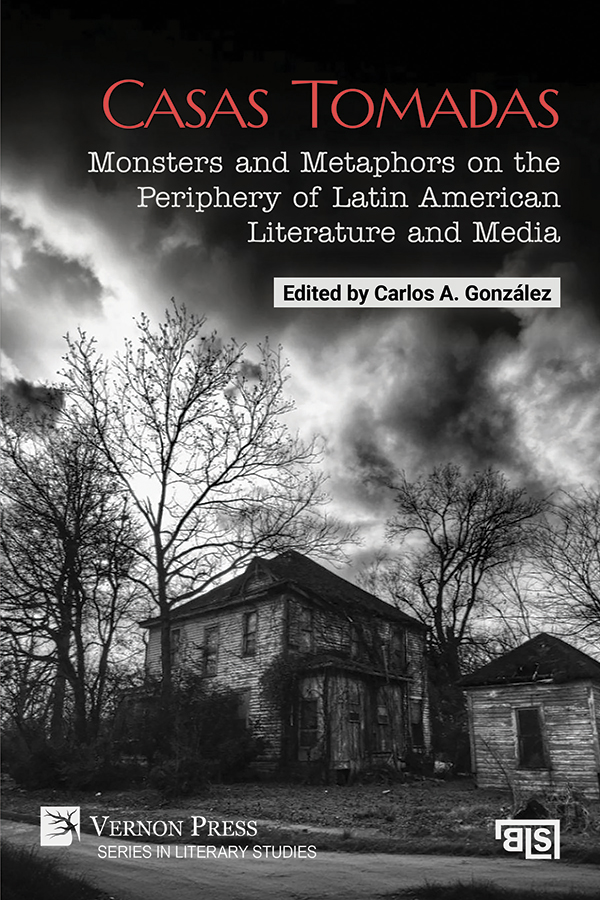
Carlos González makes a brilliant contribution to humanistic studies of Latin America by soliciting and collecting the inspired essays in "Casas Tomadas: Monsters and Metaphors on the Periphery of Latin American Literature and Media." To confront current challenges to understanding our natural and political environment, the register of the monstrous as more strange than horrifying will capture readers' attention and stimulate urgent reflections about ways to interpret and to coexist with the planet and with one another.
Dr. Doris Sommer
Ira and Jewell Williams Professor of Romance Languages & Literatures
African and African American Studies
Harvard University
Uneven, disproportionate, abnormal: monsters are all that resist clear definitions and depictions. And yet, we cannot help but stare at them, albeit fearful that they might stare back at us. This volume is a rebel gaze at the eyes of those monsters, in a quest to understand their role in contemporary Latin American fiction. Reader, beware!
Caio Esteves de Souza
Harvard University
This book is an immersion into the nooks and crannies of contemporary Latin American cultural products, allowing the reader to transit in a variety of ways where old figures of terror have been reinvented, and others have emerged: from the vampire as a pestilential entity to the carnal revenants who evoke the disappeared. At the same time, "Casas Tomadas" installs a new canon based on the predominance of women artists, who disrupt government/patriarchal structures to reveal alternative forms of understanding monstrosity and shed light on a perpetual violence. In this sense, all the contributors address the grip of the unreal to show that horror houses reality in its most abject and pure sense.
Helen Flor Garnica Brocos
Romance Languages and Literatures,
Harvard University
Discover books that expand on the themes explored in this work—titles that engage with similar questions, intersecting disciplines, and complementary perspectives to deepen understanding and broaden the conversation.
Browse all titles
Eulalia Piñero Gil and María Laura Arce Álvarez (Eds.)
View more
Carlos Varon, Cristina Pérez, David Yagüe González, and Ana Yáñez Rodríguez (Eds.)
View more
Ivo Ganchev (Ed.)
View more
Luis A. Medina Cordova and Andrea Espinoza Carvajal (Eds.)
View more


