Loading...
Please wait while we load the content...

Loading...
Please wait while we load the content...
Stay informed about our latest publications, calls for proposals, and special announcements. As a subscriber, you'll also enjoy exclusive member discounts of 10%-20% on all orders. Join our community of scholars, librarians, and readers today.


Availability
In stock
ISBN
9781622734641
Edition
1
Publication Date
July 7, 2020
Physical Size
236mm x 160mm
Number of Pages
179
Currency
Quantity
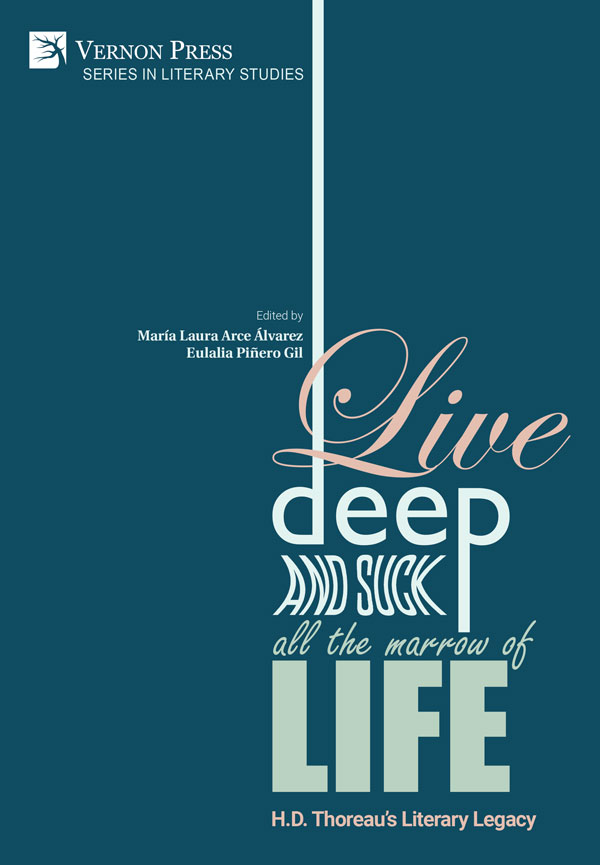
This wide-ranging collection of essays on Henry David Thoreau is another demonstration of the validity of the saying: “Classics will never die.” In effect, these eight scholarly and perceptive essays -- that deal with various aspects of this major nineteenth-century American writer’s works -- show what a source of inspiration for contemporary artists he remains. A close friend and a student of Ralph Waldo Emerson, Thoreau was not only a literary writer, but also a philosopher, an ecologist, a critic of capitalism, an early champion of the rights of the individual vis-a-vis the government. For this reason, from movie directors to playwrights, from post-modern writers to female beat poets, from transnational authors to Freemasonry and pacifism, these essays allow us to explore the many facets of an intellectual who set his seal deeply on the culture of his country and has taught the world to respect the dignity of every human being.
Dr. Maria Cristina Giorcelli
Professor Emeritus
Roma Tre University, Italy
The timing of the publication of this book on Henry David Thoreau’s legacy could not be more pertinent, as Thoreau’s ethical, moral, and political imagination, in the mid-nineteenth century, is more necessary than ever, both for individual reflection and for debates on the social, after the CV-19 pandemics of 2020. Thoreau’s Walden gives us the tools to rethink our relationship with our houses, as well as our resources to live in solitude while preserving our concern for the common and the communitarian. And his “Civil Disobedience” enables us to think politically and to generate new praxes based on altruism even if those exercises of generosity entail important personal sacrifices. The eight essays collected in this volume, written by a combination of consolidated and emerging European scholars, join an important number of academic studies on Thoreau recently published around the occasion of his bicentennial in 2017. The uniqueness of this new book resides in its specific focus on the legacy of Thoreau’s political thinking and on its echoes in cultural movements and movements of social and political activism, in twentieth-century and contemporary America. In that sense, the book responds and lives up to one of the most important potentialities of the humanities: to make us examine alternative voices from the past that audaciously dared to imagine other futures so that, by being inspired by those voices, we can stretch our imagination of the possible and turn those alternative visions from the past into better versions of our present.
Rodrigo Andrés
University of Barcelona, Spain
Discover books that expand on the themes explored in this work—titles that engage with similar questions, intersecting disciplines, and complementary perspectives to deepen understanding and broaden the conversation.
Browse all titles
Valerie Derbyshire
View more
Ailsa Cox, James Hewison, Michelle Man, and Roger Shannon (Eds.)
View more