Loading...
Please wait while we load the content...

Loading...
Please wait while we load the content...
Stay informed about our latest publications, calls for proposals, and special announcements. As a subscriber, you'll also enjoy exclusive member discounts of 10%-20% on all orders. Join our community of scholars, librarians, and readers today.
Availability
In stock
ISBN
9781648895067
Edition
1
Publication Date
September 25, 2024
Physical Size
236mm x 160mm
Number of Pages
280
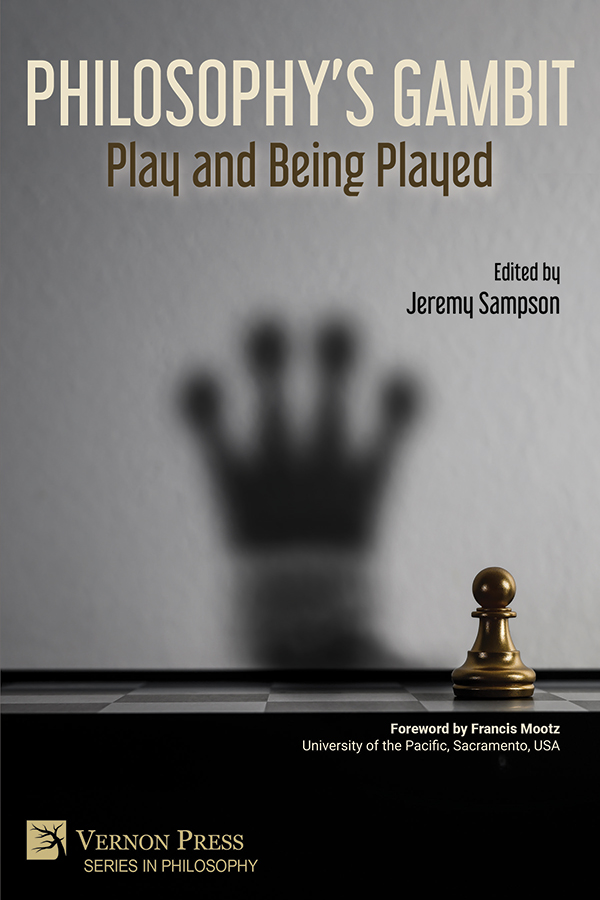
In “Philosophy’s Gambit” Jeremy Sampson has brought together an original and thought-provoking collection of essays on the relationship between play and philosophy. All importantly, this is not simply an exploration of what philosophers have written about play. It is also an exploration of the playfulness that can, and perhaps should, exist within philosophy. Contributors are both themselves playful, not least in a practice of reading together seemingly diverse philosophers, so that Hegel, for example, is placed in the context of the Eastern Patristic Christian Tradition (and the notion of the play of the infinite). Playfulness is uncovered in philosophical texts, and not merely in text by authors one might expect to be playful (say Derrida or Rorty), but also in surprising places, not least the writings of Kant. At this level the essays often serve to highlight the somewhat straight-faced approach that is currently taken, not just in doing philosophy, but in addressing its past. The potential to read philosophical texts playfully and humorously is rarely recognised.
As a history of the philosophy of play, the collection is informative and at times surprising. Chapters on the Chinese Daoist Zhuangzi, and the sixteenth century Indian philosopher Rupa Gosvami challenge narrower Western perspectives. While certain key figures of Western philosophy predominate (not least Gadamer, but also Schiller, Wittgenstein, and Heidegger), a chapter on Eugen Fink is important in reminding the reader of an often unjustly neglected figure.
[…] a rich and surprising collection, that will act as a significant stimulant to further work on the philosophy of play and, it might be hoped, to a greater recognition of the creative power of play within philosophy itself.
Dr. Andrew Edgar
Cardiff University
Offering a series of original investigations into play as a concept and as a phenomenon, “Philosophy’s Gambit” is a refreshing anthology which will likely inspire, challenge, and provoke readers (mostly found within the academic world).
Dr. Jonas Holst Soerensen
Institute of Humanism and Society
San Jorge University, Zaragoza, Spain
Discover books that expand on the themes explored in this work—titles that engage with similar questions, intersecting disciplines, and complementary perspectives to deepen understanding and broaden the conversation.
Browse all titles


