Loading...
Please wait while we load the content...

Loading...
Please wait while we load the content...
Stay informed about our latest publications, calls for proposals, and special announcements. As a subscriber, you'll also enjoy exclusive member discounts of 10%-20% on all orders. Join our community of scholars, librarians, and readers today.
Availability
In stock
ISBN
9781648890499
Edition
1
Publication Date
January 16, 2024
Physical Size
236mm x 160mm
Illustrations
27 Color
Number of Pages
128
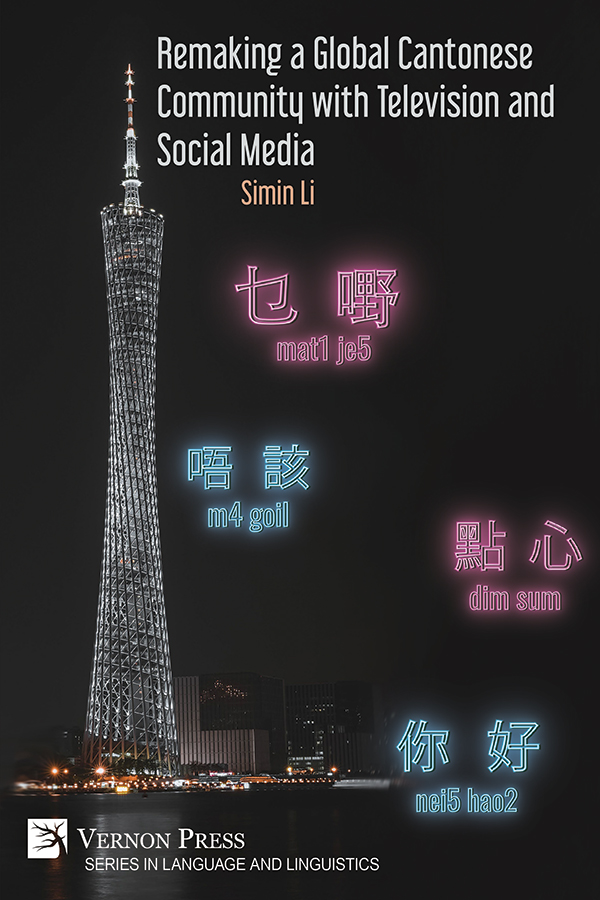
Simin Li’s new book is a fascinating study of Cantonese popular media and identity politics in the age of Xi Jinping. Ranging over a mix of broadcast television shows and online discussion forums dedicated to discussion of language and dialect, Li presents a portrait of a still-vibrant Cantonese media landscape under serious pressure from Beijing’s Mandarin-first policies. In addition to offering media-studies analysis of these media texts themselves, Li adds significant value by including candid interviews with a number of content creators who agreed to go on the record for this book. In addition to being a valuable snapshot of contemporary Cantonese identity, “Remaking a Global Cantonese Community with Television and Social Media” will also be of interest to a broad range of scholars interested in the interaction of media and language politics.
Dr. Daniel Fried
Department of East Asian Studies
University of Alberta
"Remaking a Global Cantonese Community with Television and Social Media," despite its short length, is definitely a landmark and timely scholarly work. It not only addresses the histories of the Cantonese-speaking communities and identity politics, but also draws our attention to the diversity and complexity of Chinese languages. Based on a wealth of case studies with nuanced and balanced analysis and arguments, the book inspires us to re-examine the contested domains of cultural politics in contemporary China. It serves as a critique of the dominance of official language and a reminder of the liveliness and agency of local languages.
Professor Iam-chong Ip
Institute of Social Research and Cultural Studies
National Yang Ming Chiao Tung University, Taiwan
Discover books that expand on the themes explored in this work—titles that engage with similar questions, intersecting disciplines, and complementary perspectives to deepen understanding and broaden the conversation.
Browse all titles
Esther Monzó-Nebot and Juan Jiménez Salcedo (Eds.)
View more
Oliver Bock and Isabel Vila-Cabanes (Eds.)
View more


