Loading...
Please wait while we load the content...

Loading...
Please wait while we load the content...
Stay informed about our latest publications, calls for proposals, and special announcements. As a subscriber, you'll also enjoy exclusive member discounts of 10%-20% on all orders. Join our community of scholars, librarians, and readers today.


Availability
In stock
ISBN
9798881900083
Edition
1
Publication Date
August 31, 2024
Physical Size
236mm x 160mm
Number of Pages
252
Currency
Quantity
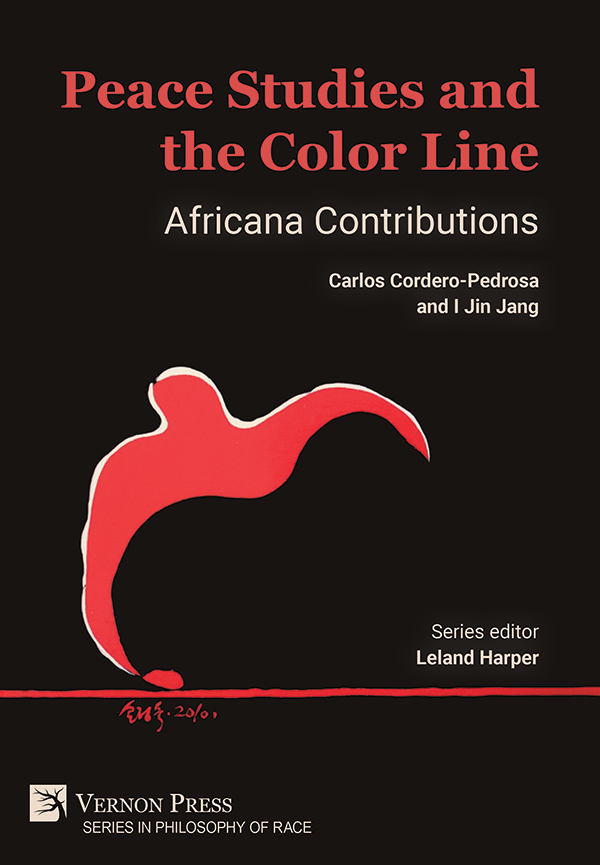
This book contributes to a much-needed critical engagement with peace scholarship, while addressing interconnections between racism and colonialism on one hand, and peace and conflict studies on the other. In so doing, Dr. Jang and Dr. Cordero reach fundamental insights into epistemic inequality and epistemic justice in the field of peace and conflict studies. This book is thus an invaluable contribution to this field and its place between social studies and the humanities.
Dr. Egidio Alcides De Bustamante Azevedo
Cátedra UNESCO de Filosofía para la Paz
Universitat Jaume I, Spain
With remarkable critical adeptness, artistry and adroitness, the authors of this intellectual feast, Carlos Cordero and I Jin Jang, unmask the epistemological blindness to race, racism and colonialism in peace studies and advocate the insights from Africana philosophy as its cure.
Alberto Gomes
Emeritus Professor
La Trobe University
Australia
Providing a genealogical excavation of the foundational narratives of peace studies, I Jin Jang and Carlos Cordero lay bare the epistemic and conceptual problems that arise when the discipline (and beyond) separates race from its colonial roots. Inspired by the Africana critical philosophical tradition, this dynamic duo puts race, racism and colonialism at the center of their disruptive inquiry for rethinking violence and reimagining freedom and notions of being human. An incredible journey into the humanization of the world, this work shows how the problem of the color line is ‘our’ problem, one where race becomes a “rallying site of resistance” for creating “new human relations.”
Dr. Jennifer Murphy
International Studies Department
University of San Francisco
Discover books that expand on the themes explored in this work—titles that engage with similar questions, intersecting disciplines, and complementary perspectives to deepen understanding and broaden the conversation.
Browse all titles