Loading...
Please wait while we load the content...

Loading...
Please wait while we load the content...
Stay informed about our latest publications, calls for proposals, and special announcements. As a subscriber, you'll also enjoy exclusive member discounts of 10%-20% on all orders. Join our community of scholars, librarians, and readers today.


Availability
In stock
ISBN
9781622738090
Edition
1
Publication Date
March 3, 2020
Physical Size
236mm x 160mm
Illustrations
6 Color
Number of Pages
296
Currency
Quantity
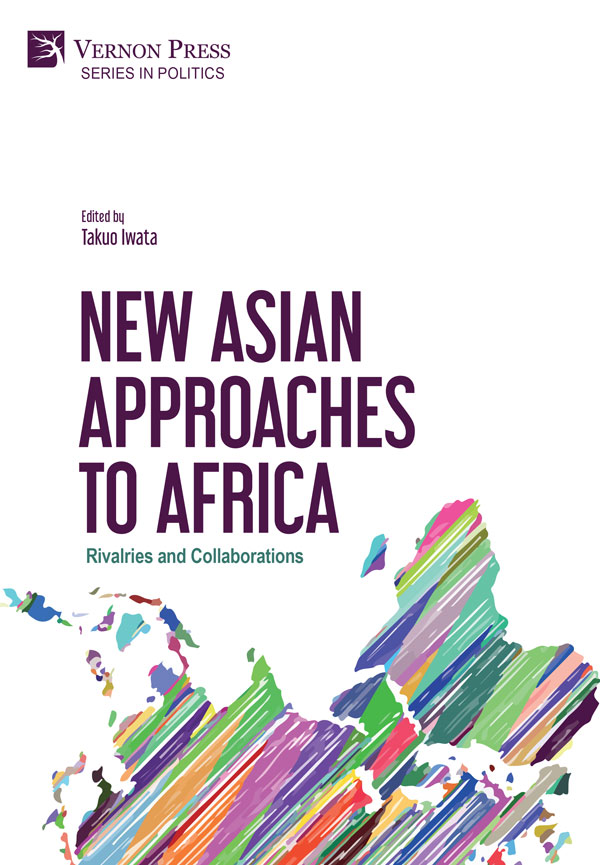
Offers a cutting edge introduction to the discussion of past and present Chinese, Indian, Japanese and South Korean (re)engagement across the continent. Professor Takuo Iwata and his team of co-authors have managed to put together in a concise manner a book that achieves far more than their initial ambition to promote mutual academic interests and understandings.
Daniel C. Bach
CNRS Director of research emeritus
University of Bordeaux
This is one of the most comprehensive and engaging volume on the scope and content of Asia-Africa economic and political relations. While recent scholarship in recent years has focused on the evolving China-Africa relations, the contributions of Japan, Korea, and India to Africa’s economic transformation has been neglected. The contributors in this volume present a comprehensive overview of the relationship by examining the TICAD process (Japan), KOAF (Korea), FOCAC (China) and IFAS (India). Through their respective bilateral cooperation platforms, the four highly industrialized Asian countries have been playing a catalytic role in supporting Africa’s development. Increased trade, high level of FDI inflow, technology and technology transfers from the Asian giants have help transform African economies. The book is a must read for researchers and policy makers who want to deepen their knowledge on the growing economic and political relations between Asia-Africa.
Professor Fantu Cheru (Emiritus)
American University & Senior Researcher, African Studies Centre, Leiden University
This work has chosen a new perspective on Asian states’ approaches towards Africa, an excellent angle to look at the new phenomenon of the co-existence of rivalry and collaboration in international relations. The selected counties include two OECD countries (Japan and South Korea) and two non-OECD countries (China and India). The framework of the book is reasonably set with three sections, e.g., the first, “Asian Forums on Africa’s Development”, the second, “Asian Soft Powers in Africa” and the third, “New Phase of Asian Approaches to Africa”. The authors treat respectively their own topics skillfully. They noticed that although there are different ways for the four countries to deal with Africa, yet they are all striving to build a constructive relationship with the continent. Most important, they realize that all four countries support Africa to adopt the principles of “ownership“ and “self-reliance”, which are vital for developing countries in their dealings with foreign countries. The argument of the book indicates a good lesson for the world, e.g. there is always a way for collaboration, either in development or international relations. Cooperation is better than confrontation.
Professor Li Anshan
School of International Studies, Peking University
Director of Institute of Afro-Asian Studies, SIS, Peking University
Vice-president of Chinese Society of African Historical Studies
This book is a comprehensive resource for everyone interested in African Studies and Cooperation with Asian countries. These in-depth case-studies provide information into the history of international relations and cooperation between the main Asian countries intervenientes in Africa, namely, Japan, China, India and South Korea. Of particular interest are the specific case studies on the politics of soft power, economic cooperation and the comparison between DAC-OECD and non-DAC cooperation. This collection is also a phenomenal way to introduce new scenarios of Asia-Africa relations in a classroom, and is enriched with a comprehensive introduction that is a must-read to everyone interested in international cooperation in Africa.
Professor Clara Carvalho
Centro de Estudos Internacionais (CEI-IUL)
Departamento de Antropologia, Instituto Universitário de Lisboa (ISCTE-IUL)
Former President of Africa-Europe Group for Interdisciplinary Studies (AEGIS)
Discover books that expand on the themes explored in this work—titles that engage with similar questions, intersecting disciplines, and complementary perspectives to deepen understanding and broaden the conversation.
Browse all titles
Suiven John Paul Tume and Vincent Itai Tanyanyiwa (Eds.)
View more
Jonathan O. Chimakonam and Edwin Etieyibo (Eds.)
View more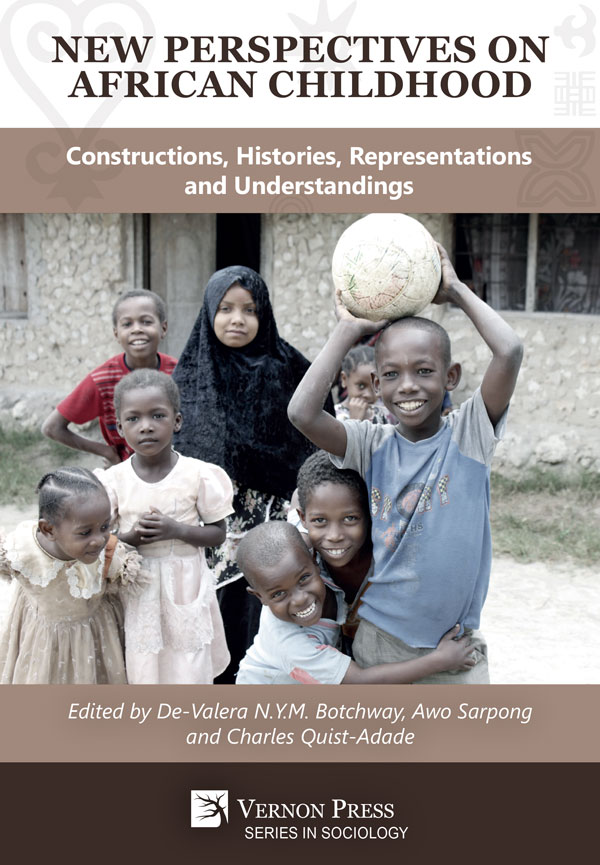
De-Valera NYM Botchway, Awo Sarpong, and Charles Quist-Adade (Eds.)
View more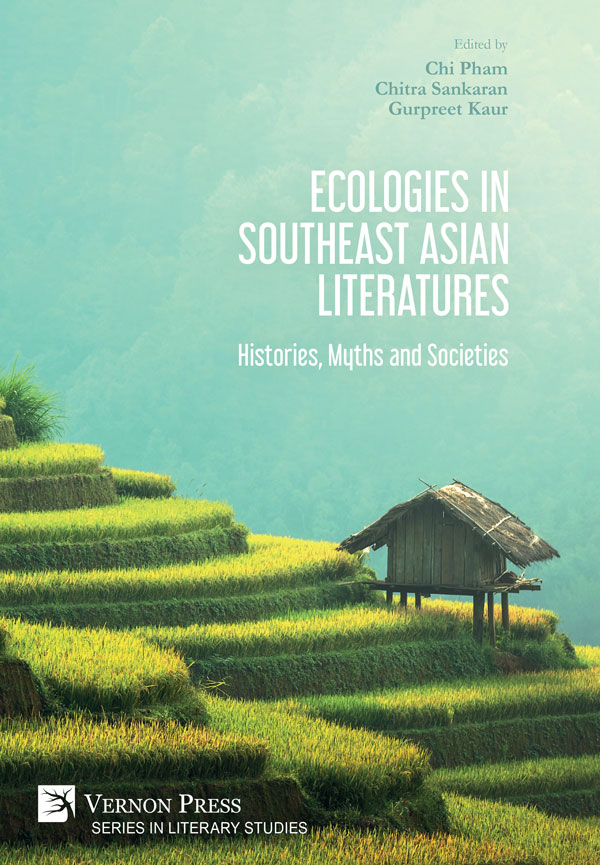
Chi P. Pham, Chitra Sankaran, and Gurpreet Kaur (Eds.)
View more