Loading...
Please wait while we load the content...

Loading...
Please wait while we load the content...
Stay informed about our latest publications, calls for proposals, and special announcements. As a subscriber, you'll also enjoy exclusive member discounts of 10%-20% on all orders. Join our community of scholars, librarians, and readers today.


Availability
In stock
ISBN
9781648897177
Edition
1
Publication Date
September 12, 2023
Physical Size
236mm x 160mm
Number of Pages
112
Currency
Quantity
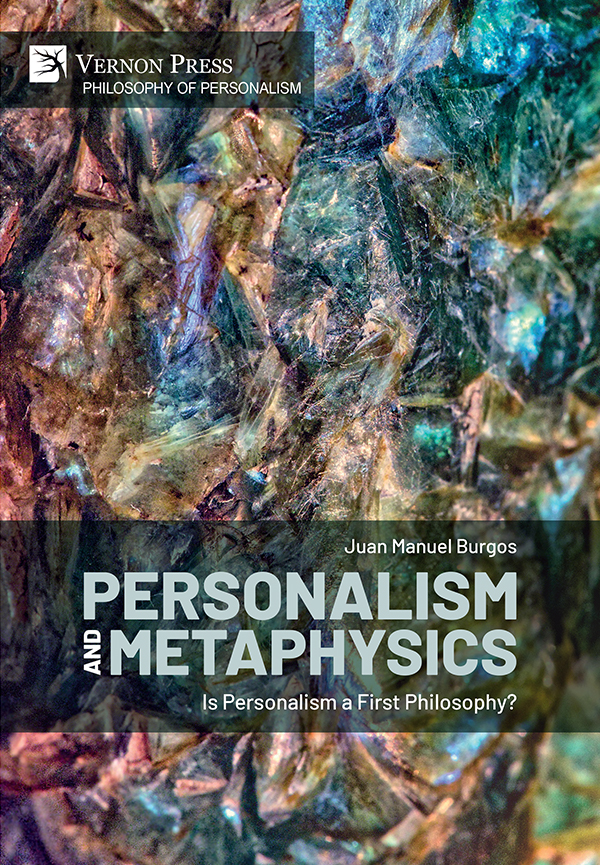
Juan Manuel Burgos presents his own version of personalism, which is nevertheless well rooted in the personalist tradition. He has been developing his project for years and is among a group of world-renowned personalists who study the complexity and mystery of the human person. His new book deals with the relationship between personalism and metaphysics. He poses the question of whether personalism can be considered a first philosophy. The answer is positive: it is indeed a sectorial first philosophy, which may or may not be supported by traditional metaphysical projects, especially Thomistic ones. Not every personalist has to agree with its final thesis, although its position is well-founded and deserves much scholarly attention. It provokes further questions and opens up new areas of personalist discussion. This book confirms that personalism is a dynamic and growing school of thought that goes beyond describing the mere phenomena of the person and seeks deeper reasons for his being. I highly recommend this book as a new step to help us better understand the reality of the human person.
Dr. Grzegorz Holub
Philosophy Professor
The Pontifical University of John Paul II
Cracow - Poland
The work “Personalism and Metaphysics” by Professor Juan Manuel Burgos offers an original confrontation between personalist thought and the metaphysical tradition, which can be summed up in one question: does personalism need a metaphysical foundation? To answer this question, Prof. Burgos analyzes the fundamental contents of what has historically been called the “metaphysics of being,” that of the Aristotelian-Thomist school. Three fundamental intuitions emerge from this presentation: the first, that the Aristotelian categorization is not acceptable due to its universality and its difficulty in representing what is specifically human; the second, the possible use of the Thomistic distinction between being and essence, at least intending to consider human life as a creation that bears multiple potentialities; and third, a new understanding of the relationship between the sciences that is more faithful to the experience of the human person. In short, the conclusion of Prof. Burgos is clear: personalism, at least in the version that he proposes (his “integral personalism”) does not need to rely on a specific metaphysics because it is already by itself, a metaphysics, or, said otherwise, a first philosophy capable of providing a coherent sense of reality.
Dr. Eduardo Pérez Pueyo
Centro Regional de Estudios Teológicos de Aragón, Zaragoza, Spain
Discover books that expand on the themes explored in this work—titles that engage with similar questions, intersecting disciplines, and complementary perspectives to deepen understanding and broaden the conversation.
Browse all titles
Simon Smith and James Beauregard (Eds.)
View more
James Beauregard, Claudia Stancati, and Giusy Gallo (Eds.)
View more