Loading...
Please wait while we load the content...

Loading...
Please wait while we load the content...
Stay informed about our latest publications, calls for proposals, and special announcements. As a subscriber, you'll also enjoy exclusive member discounts of 10%-20% on all orders. Join our community of scholars, librarians, and readers today.


Availability
In stock
ISBN
9781648895227
Edition
1
Publication Date
October 31, 2022
Physical Size
236mm x 160mm
Illustrations
16 Color
Number of Pages
204
Currency
Quantity
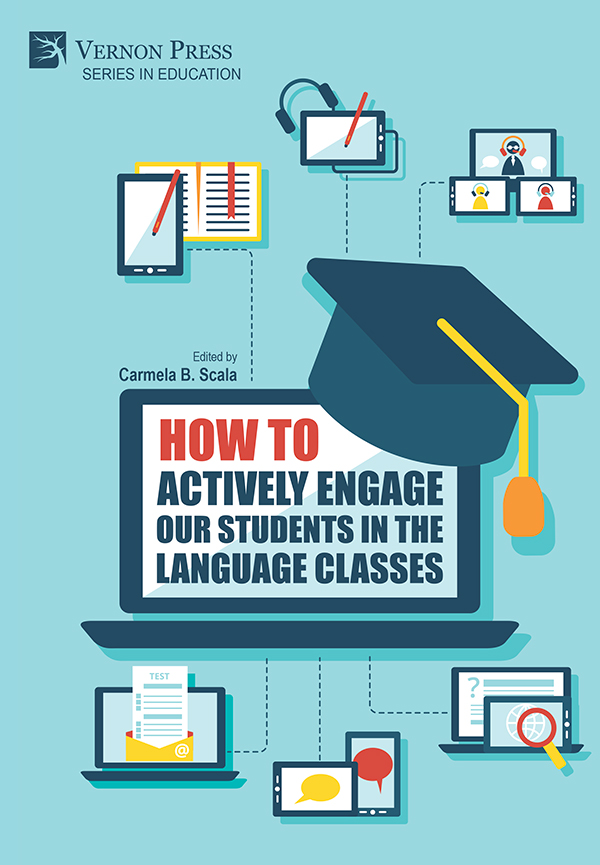
New technologies and emergency circumstances vigorously influence everyday lives and individuals. As a result, undeniable repercussions on the teaching/learning process of a foreign language as SL, require substantial planning and implementation of suitable activities by applying innovative instruments and environments to learners’ different levels and providing inclusive teaching and active learning. In this innovative contribution, powerful strategies of linguistic approaches are highlighted: from making or watching short videos and asynchronous lessons to creating 3D maps or puppet shows. Detaching themselves from canonical approaches, the authors emphasise that introducing impactful and challenging cross-curricular and cultural activities aim to strengthen linguistic skills, improve vocabulary and encourage oral production. Cooperative learning and interdisciplinary approaches overtake traditional classes and develop interaction and creativity in more globalized contexts. Moreover, relevant theories, sources and visual aids, through tables or graphs, provide substantial references to the thesis and important information and feedback on the results and future developments.
Every chapter presents innovative research, showing how the new integration of technology and Web 2.0 tools in West and East academic courses is an original resource to create a constructive environment for Second Language Acquisition. They clearly prove how authentic language learning experiences can effectively take place, using educational cartoons, ‘cortometrajes,’ short films, spaces such as Online Informal Learning of Language, Introducing new pedagogical models, like the ‘Kubo Project,’ inspired by the Content and Language Integrated Learning (CLIL) method.
Finally, the authors investigate the new technologies' benefits and limits, suggesting creative approaches related to real-world contexts and learners’ problems and projects, and offer an enjoyable interpretation of how humour positively affects students’ attitude towards learning languages.
Dr. Paolo Nitti
Professor of Cognitive Linguistics
Università degli Studi dell'Insubria, Italy
The pedagogical book, “How to actively engage our students in the language classes” edited by Carmela B. Scala, is very important for the field of teaching and learning […]
[…] [It] will contribute to the field, appealing to language instructors in K-12 and college and universities.
Dr. Chiara De Santi
Modern Languages
Farmingdale State College
Discover books that expand on the themes explored in this work—titles that engage with similar questions, intersecting disciplines, and complementary perspectives to deepen understanding and broaden the conversation.
Browse all titles
Nadezda Stojkovic (Ed.)
View more