Loading...
Please wait while we load the content...

Loading...
Please wait while we load the content...
Stay informed about our latest publications, calls for proposals, and special announcements. As a subscriber, you'll also enjoy exclusive member discounts of 10%-20% on all orders. Join our community of scholars, librarians, and readers today.


Availability
In stock
ISBN
9781648894206
Edition
1
Publication Date
August 2, 2022
Physical Size
236mm x 160mm
Number of Pages
243
Currency
Quantity
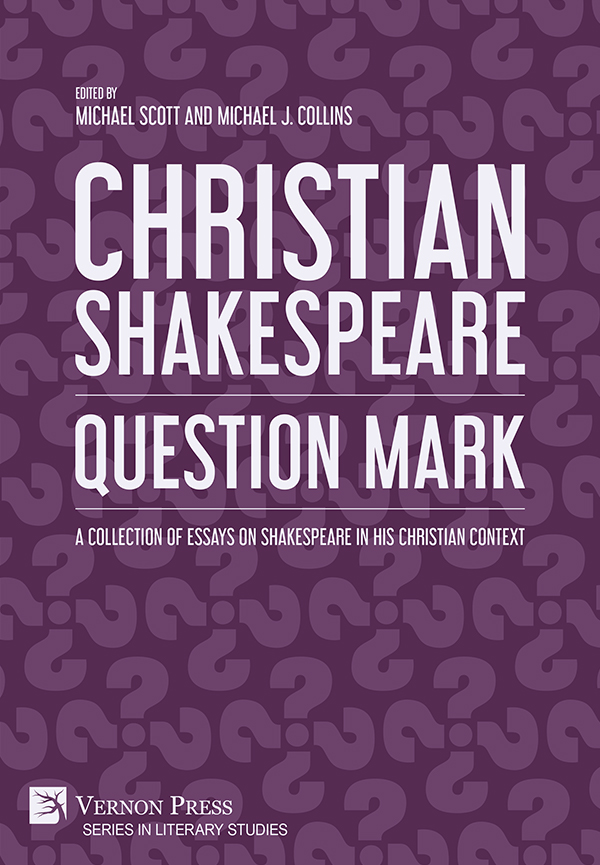
“Christian Shakespeare: Question Mark” is an extraordinarily perceptive and courageous book, perceptive for the thoughtful and wide variety of responses it offers to a question both perennial and neglected, courageous for having addressed that question itself, the nature and extent of Shakespeare's religious commitments.In six sections, the authors consider not only Shakespeare's religious indebtedness to Catholic and Protestant teachings and traditions, but also how these traditions informed his attitudes towards issues like death and politics, earlier Christian drama and private prayer, and also how they may have informed his own thinking and even his own spirituality, as they found expression, both directly and indirectly, throughout his canon. The authors are responsive to Shakespeare's language—particularly to his allusions to the Psalms, the book in the Bible to which he most often refers—and to the religious resonances revealed and encoded in specific works. Throughout, the book remains inquiring, thoughtful, and, as needs to be skeptical.
John C. Hirsh
Professor of English
Georgetown University
“Christian Shakespeare: Question Mark”, aptly titled, presents an engaging variety of essays that capture the predominately open-ended, enigmatic nature of Shakespeare’s works. In the Preface, Michael Scott and Michael Collins reveal their own open-mindedness regarding the topic: “The question was put to each of the contributors” who “received no further guidance about how they were to understand the question nor how they were to shape their responses” (p. 5). Such freedom for expression and exploration in current scholarly conversation is enviable. For example, Michael Scott does not view Shakespeare as a Christian polemicist, but authors who might are represented in this volume. As a result, this collection of fourteen essays presents refreshingly diverse perspectives on the impact that the Christian faith (Catholic and Protestant) and the religious controversies of the era had on the poems and plays of Shakespeare. In a succinctly lucid Preface, the authors provide a road map for the organization of this volume and its contents. Michael Scott’s Introduction responds admirably to four significant questions about Shakespeare’s Christianity and the influence of such belief in the works. Especially helpful for the reader is Scott’s summary of the importance of medieval drama (morality plays and mystery cycles) for understanding the dramatic soil in which Shakespeare’s plays take root.
Shakespeare wrote plays, not sermons; he wrote poetic drama, not autobiography. Therefore, we cannot know for certain what Shakespeare the man definitively believed, and during this period of religious debate and division, individuals could change their views, as did Shakespeare’s friend and rival Ben Jonson. However, Shakespeare did write for an ostensibly Christian audience that represented every level of society from the lowest to the highest (only the Queen did not come to the public playhouse). Given the eclectic nature of that audience, Shakespeare could employ both Catholic and Protestant elements for his own specifically ‘dramatic’ purposes.
I applaud the authors’ use of the question mark because it aligns with Shakespeare’s own preference in his art for tantalizing his audiences with questions, conundrums, perplexities, and paradoxes. Indeed, in Hamlet’s advice to the players, he cautions the clowns not to speak more than is set down for them because, in the distraction of provoked laughter, the audience may miss “some necessary ‘question’ of the play to be then considered” (3.2.42-43; my italics). Scott and Collins reward the reader with wide-ranging essays that imaginatively interrogate how and why Shakespeare’s plays and poems work within a culture of Christianity at the crossroads in English history, illuminating his era as well as ours.
Dr. Joan M. Holmer
Professor of English Emerita
Georgetown University
This collection of essays comprehensively examines the dramatic tension and uncertainty of the Christian culture in which Shakespeare lived. It explores how these fascinating contradictions are reflected in his work. Diverse and often opposing arguments are vital to students of Shakespeare’s drama. In particular they support the multiplicity of interpretations for directors and actors to bring to the stage.
Emma Lucia Hands
Director of Drama Studio London
Discover books that expand on the themes explored in this work—titles that engage with similar questions, intersecting disciplines, and complementary perspectives to deepen understanding and broaden the conversation.
Browse all titles
Eva Darias-Beautell (Ed.)
View more
Eulalia Piñero Gil and María Laura Arce Álvarez (Eds.)
View more