Loading...
Please wait while we load the content...

Loading...
Please wait while we load the content...
Stay informed about our latest publications, calls for proposals, and special announcements. As a subscriber, you'll also enjoy exclusive member discounts of 10%-20% on all orders. Join our community of scholars, librarians, and readers today.


Availability
In stock
ISBN
9781622739684
Edition
1
Publication Date
October 6, 2020
Physical Size
236mm x 160mm
Illustrations
8 Color
Number of Pages
246
Currency
Quantity
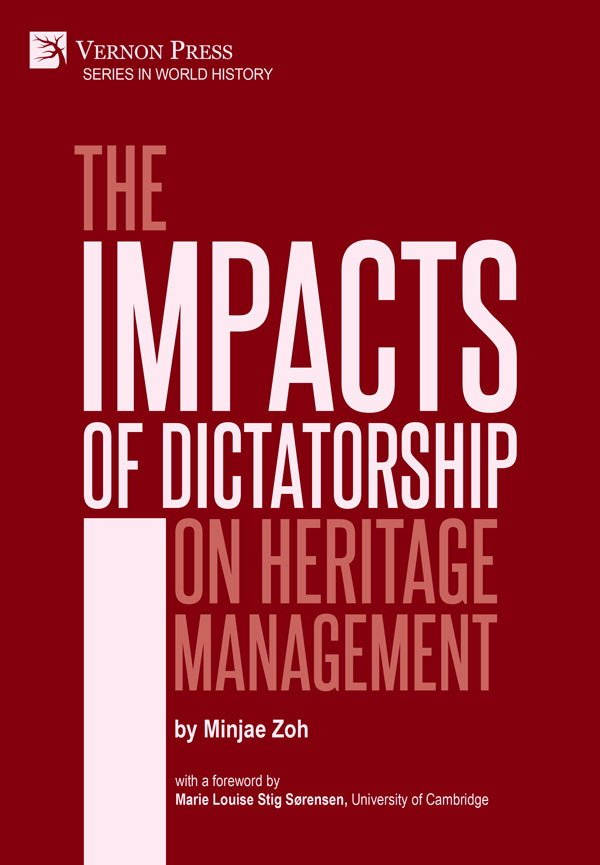
The work proposes a modified version of Smith’s ‘Authorised Heritage Discourse’ (AHD; Smith 2006) called the ‘Authorised Dictatorial Discourse (ADD)’ which is deemed to be more suitable for territories where dictatorial rule determined heritage policy. Arguing convincingly that since the AHD model was developed in the context of liberal Western democracies (especially the USA, Britain and Australia) the AHD model fails to take sufficiently into account the dominant role of a single all-powerful ruler in determining what should be considered heritage and its treatment. As a result some aspects of the AHD model – such as the capacity for alternative subaltern discourses to emerge –do not apply where dictatorship is the system of rule.
The book uses South Korea’s dictators in the post-second World War period as a case study to explore and develop this idea. It reveals the close personal interest of specific dictators in focusing upon and promoting certain sites as Korean national heritage which government agencies and the public at large were expected to accept. The argument is strong and convincing, drawing upon appropriate sources and analysing them effectively.
The author compares Korea to other states where dictatorships ruled such as Fascist Italy --and uses them usefully as a means of identifying the key aspects of a dictatorship system of rule while at the same time being aware of key differences. This also provides the basis for a valuable consideration of the ADD model and its application to other dictatorial contexts. The closing section offers the suggestion of a range of types of AHD for different political contexts – ‘softer’ AHDs in liberal states, ‘harder’ AHDs where more oppressive rule is in place.
Dr John Carman
University of Birmingham
Discover books that expand on the themes explored in this work—titles that engage with similar questions, intersecting disciplines, and complementary perspectives to deepen understanding and broaden the conversation.
Browse all titles
Lee Davidson and Leticia Pérez-Castellanos
View more
John K. M. Kuwornu (Ed.)
View more
Chi P. Pham, Chitra Sankaran, and Gurpreet Kaur (Eds.)
View more