Loading...
Please wait while we load the content...

Loading...
Please wait while we load the content...
University of Catania, Italy
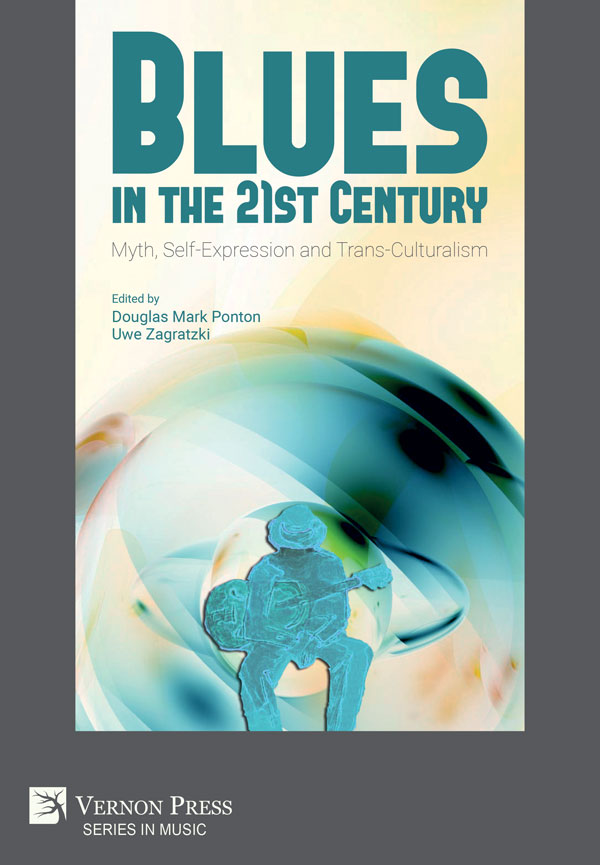
Douglas Mark Ponton, Emiliano Bonanomi, Jack Dandy, Diana Sfetlana Stoica, Irene Polimante, Patrizi Chiara, Diego Pani, Giulia Magazzù, Daniel Lieberfeld, Randolph Lewis, Yves Laberge, Jean Charles Khalifa, Iain Halliday, Adriano Elia, Valerio Massimo De Angelis, Uwe Zagratzki, and Thomas Claviez
The book is the fruit of Douglas Mark Ponton’s and co-editor Uwe Zagratzki’s enduring interest in the Blues as a musical and cultural phenomenon and source of personal inspiration. Continuing in the tradition of Blues studies established by the likes of Samuel Charters and Paul Oliver, the authors hope to contribute to the revitalisation of the field through a multi-disciplinary approach designed to explore this constantly evolving social phenomenon in all its heterogeneity. Focusing either on particular artists (Lightnin’ Hopkins, Robert Johnson), or specific texts (Langston Hughes’ Weary Blues and Backlash Blues, Jimi Hendrix’s Machine Gun), the book tackles issues ranging from authenticity and musicology in Blues performance to the Blues in diaspora, while also applying techniques of linguistic analysis to the corpora of Blues texts. While some chapters focus on the Blues as a quintessentially American phenomenon, linked to a specific social context, others see it in its current evolutions, as the bearer of vital cultural attitudes into the digital age. This multidisciplinary volume will appeal to a broad range of scholars operating in a number of different academic disciplines, including Musicology, Linguistics, Sociology, History, Ethnomusicology, Literature, Economics and Cultural Studies. It will also interest educators across the Humanities, and could be used to exemplify the application to data of specific analytical methodologies, and as a general introduction to the field of Blues studies.
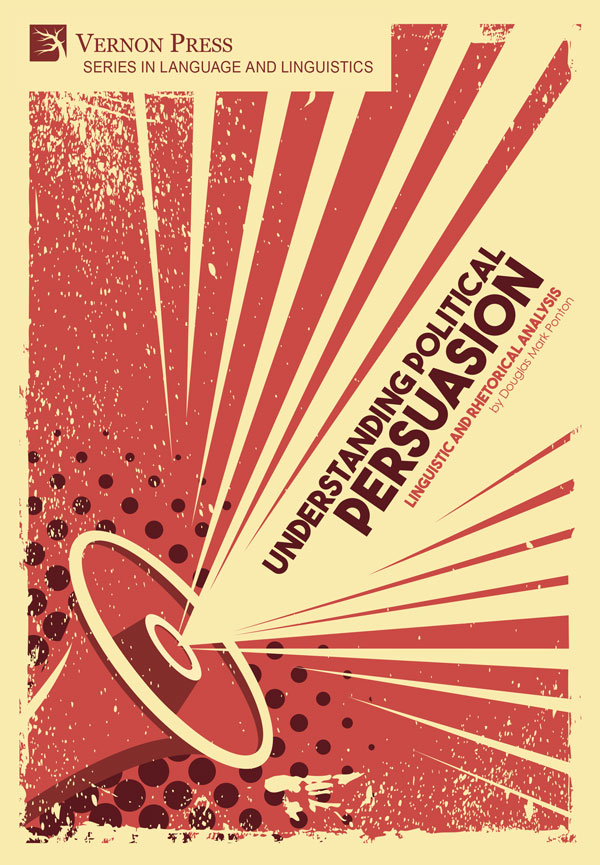
Douglas Mark Ponton
This book builds on the consolidated research field of Political Discourse Analysis and attempts to provide an introduction suitable for adoption amongst a readership wishing to understand some of the principles underlying such research, and above all to appreciate how the tools of discourse analysis might be applied to actual texts. It summarises some of the work that has been done in this field by authorities such as Halliday, Fairclough, Wodak, Chilton, Van Dijk, Martin, Van Leeuwen and others to provide the would-be analyst with practical ideas for their own research. Naturally, this would not be the first time that such a handbook or introductory reference book has been proposed. Fairclough himself recently produced one; however, his work, simply entitled Political Discourse Analysis, inevitably includes theoretical insights from his own research. The beginning analyst can, at times, experience a sense of bewilderment at the mass of theoretical writing in linguistics, in the search for some practical, usable tools. I explain a variety of such tools, demonstrating their usefulness in application to the analysis of a number of political speeches, from different historical periods and diverse social contexts. The author’s hope is that would-be students of political rhetoric, of whatever level and from a variety of research areas, will be able to pick up this book and find tools and techniques that will assist them in actual work on texts. Naturally, it is also hoped that they will be inspired to follow up the suggestions for further reading which they will find in the bibliography.