Loading...
Please wait while we load the content...
Loading...
Please wait while we load the content...

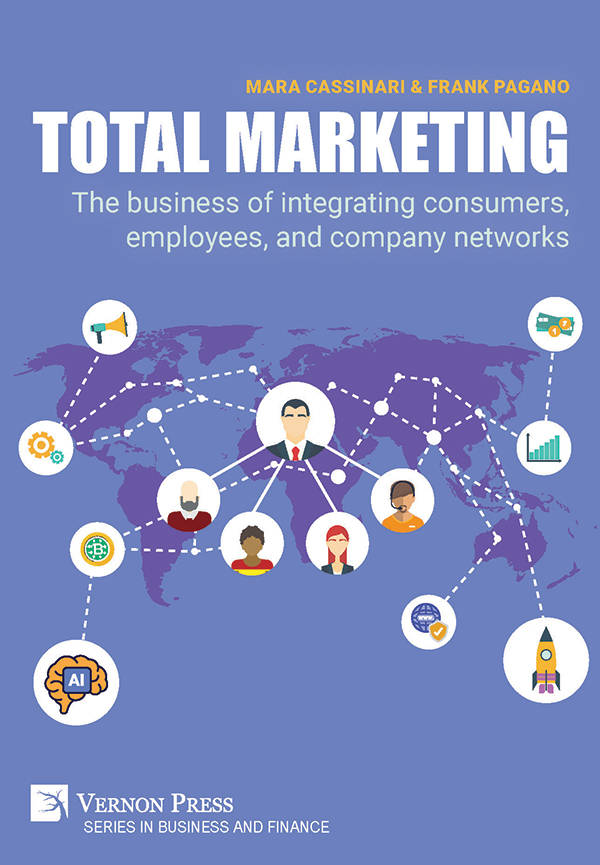
Frank Pagano and Mara Cassinari
Exponential technologies are giving superpowers to humans and data, unlocking tremendous value, with major efficiencies to be gained while running the planet. In today’s digital age, to use the marketing jargon, creating connections that are seamless, efficient, and technology-driven is not just an advantage; it’s a necessity for businesses of all sizes, public and private. Welcome to the world of Total Marketing, namely a comprehensive and holistic approach that brings together all stakeholders into a cohesive and interconnected ecosystem, powered by tech. A new marketing needs experiences that are heavily imbued with technology. To use Gartner’s terminology, it needs a Total Experience as its foundation. Total Marketing is created by an ever-changing layer of exponential technologies, among which AI, of course, and blockchains, and by the need for a culture change across the whole web of consumers, employees and suppliers. The truth is, we are all linked, and our goal should be to increase social capital for everyone and reach service excellence, with minimum impact on the outer community, and zero noise and negative externalities. Total Marketing means that our input, whoever we are in the food chain, is captured via a hybrid net of phygital interfaces and devices, and processed instantly and intelligently, with the final output being the result of the perfect allocation and use of available resources, served to anyone in a fair and ultra-personalized fashion, measured exactly against their needs and desires, present and future. There will be no other way to do business in the future.
Frank Pagano and Mara Cassinari
Exponential technologies are giving superpowers to humans and data, unlocking tremendous value, with major efficiencies to be gained while running the planet. In today’s digital age, to use the marketing jargon, creating connections that are seamless, efficient, and technology-driven is not just an advantage; it’s a necessity for businesses of all sizes, public and private. Welcome to the world of Total Marketing, namely a comprehensive and holistic approach that brings together all stakeholders into a cohesive and interconnected ecosystem, powered by tech. A new marketing needs experiences that are heavily imbued with technology. To use Gartner’s terminology, it needs a Total Experience as its foundation. Total Marketing is created by an ever-changing layer of exponential technologies, among which AI, of course, and blockchains, and by the need for a culture change across the whole web of consumers, employees and suppliers. The truth is, we are all linked, and our goal should be to increase social capital for everyone and reach service excellence, with minimum impact on the outer community, and zero noise and negative externalities. Total Marketing means that our input, whoever we are in the food chain, is captured via a hybrid net of phygital interfaces and devices, and processed instantly and intelligently, with the final output being the result of the perfect allocation and use of available resources, served to anyone in a fair and ultra-personalized fashion, measured exactly against their needs and desires, present and future. There will be no other way to do business in the future.

Frank Pagano and Mara Cassinari
Exponential technologies are giving superpowers to humans and data, unlocking tremendous value, with major efficiencies to be gained while running the planet. In today’s digital age, to use the marketing jargon, creating connections that are seamless, efficient, and technology-driven is not just an advantage; it’s a necessity for businesses of all sizes, public and private. Welcome to the world of Total Marketing, namely a comprehensive and holistic approach that brings together all stakeholders into a cohesive and interconnected ecosystem, powered by tech. A new marketing needs experiences that are heavily imbued with technology. To use Gartner’s terminology, it needs a Total Experience as its foundation. Total Marketing is created by an ever-changing layer of exponential technologies, among which AI, of course, and blockchains, and by the need for a culture change across the whole web of consumers, employees and suppliers. The truth is, we are all linked, and our goal should be to increase social capital for everyone and reach service excellence, with minimum impact on the outer community, and zero noise and negative externalities. Total Marketing means that our input, whoever we are in the food chain, is captured via a hybrid net of phygital interfaces and devices, and processed instantly and intelligently, with the final output being the result of the perfect allocation and use of available resources, served to anyone in a fair and ultra-personalized fashion, measured exactly against their needs and desires, present and future. There will be no other way to do business in the future.
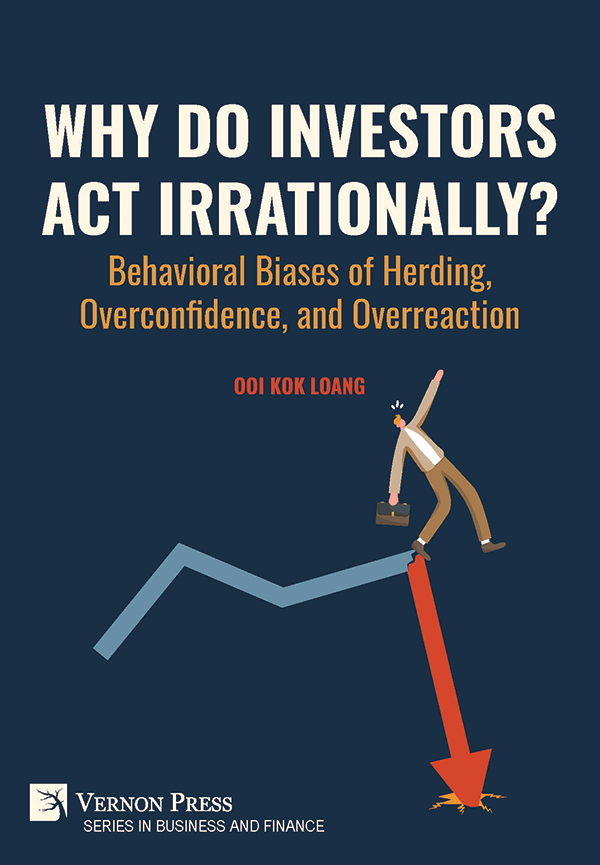
Ooi Kok Loang
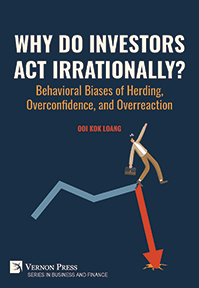
'Why Do Investors Act Irrationally? Behavioral Biases of Herding, Overconfidence, and Overreaction' explores the powerful psychological forces that drive investor decisions, often leading to irrational behavior and market turbulence. This book provides an in-depth analysis of three critical behavioral biases—herding, overconfidence, and overreaction—that influence investors across various financial markets. Drawing on cutting-edge research and real-world examples, it delves into why even experienced investors sometimes fall prey to these biases, challenging conventional financial theories that assume rational behavior. Designed for scholars, finance professionals, and advanced students, this book fills a gap in behavioral finance literature by examining not just the existence of these biases, but their consequences and the conditions that amplify or mitigate them. Unlike traditional finance texts, which focus primarily on quantitative models, this work bridges psychology and finance, making it uniquely suited for those interested in understanding the ‘why’ behind investor actions. It positions itself alongside essential readings in behavioral finance, offering original insights and a fresh perspective that will be invaluable to researchers, policy advisors, and practitioners alike. Its accessible yet academically rigorous content also makes it ideal for classroom adoption in advanced finance and behavioral economics courses, offering thought-provoking discussion points and practical implications. 'Why Do Investors Act Irrationally?' invites readers to rethink traditional assumptions about financial markets and provides actionable strategies to address the influence of irrational biases in investment decisions, making it an indispensable resource in the evolving field of behavioral finance.
Ooi Kok Loang
'Why Do Investors Act Irrationally? Behavioral Biases of Herding, Overconfidence, and Overreaction' explores the powerful psychological forces that drive investor decisions, often leading to irrational behavior and market turbulence. This book provides an in-depth analysis of three critical behavioral biases—herding, overconfidence, and overreaction—that influence investors across various financial markets. Drawing on cutting-edge research and real-world examples, it delves into why even experienced investors sometimes fall prey to these biases, challenging conventional financial theories that assume rational behavior. Designed for scholars, finance professionals, and advanced students, this book fills a gap in behavioral finance literature by examining not just the existence of these biases, but their consequences and the conditions that amplify or mitigate them. Unlike traditional finance texts, which focus primarily on quantitative models, this work bridges psychology and finance, making it uniquely suited for those interested in understanding the ‘why’ behind investor actions. It positions itself alongside essential readings in behavioral finance, offering original insights and a fresh perspective that will be invaluable to researchers, policy advisors, and practitioners alike. Its accessible yet academically rigorous content also makes it ideal for classroom adoption in advanced finance and behavioral economics courses, offering thought-provoking discussion points and practical implications. 'Why Do Investors Act Irrationally?' invites readers to rethink traditional assumptions about financial markets and provides actionable strategies to address the influence of irrational biases in investment decisions, making it an indispensable resource in the evolving field of behavioral finance.
Ooi Kok Loang
'Why Do Investors Act Irrationally? Behavioral Biases of Herding, Overconfidence, and Overreaction' explores the powerful psychological forces that drive investor decisions, often leading to irrational behavior and market turbulence. This book provides an in-depth analysis of three critical behavioral biases—herding, overconfidence, and overreaction—that influence investors across various financial markets. Drawing on cutting-edge research and real-world examples, it delves into why even experienced investors sometimes fall prey to these biases, challenging conventional financial theories that assume rational behavior. Designed for scholars, finance professionals, and advanced students, this book fills a gap in behavioral finance literature by examining not just the existence of these biases, but their consequences and the conditions that amplify or mitigate them. Unlike traditional finance texts, which focus primarily on quantitative models, this work bridges psychology and finance, making it uniquely suited for those interested in understanding the ‘why’ behind investor actions. It positions itself alongside essential readings in behavioral finance, offering original insights and a fresh perspective that will be invaluable to researchers, policy advisors, and practitioners alike. Its accessible yet academically rigorous content also makes it ideal for classroom adoption in advanced finance and behavioral economics courses, offering thought-provoking discussion points and practical implications. 'Why Do Investors Act Irrationally?' invites readers to rethink traditional assumptions about financial markets and provides actionable strategies to address the influence of irrational biases in investment decisions, making it an indispensable resource in the evolving field of behavioral finance.
Duong Hoai An
'Blockchain applications in agriculture: Revolutionizing the food supply chain' is your definitive guide to the transformative impact of blockchain technology on agriculture and the modern food supply chain. In this comprehensive volume, we begin with “Introduction to blockchain technology,” laying the groundwork for readers of all backgrounds. From there, we delve into the intricate relationship between blockchain and the agriculture industry in “Overview of the agriculture industry”. The heart of the book explores practical applications in agriculture and the supply chain, including “Blockchain-based supply chain management,” “Farming and crop management,” “Livestock management and animal welfare,” and “Food safety and quality assurance.” We also explore how blockchain revolutionizes “Agricultural finance and insurance” and fosters “Sustainable agriculture and supply chain sustainability”. Drawing on “Case studies and real-world examples,” you’ll see blockchain in action, offering invaluable insights for farmers, supply chain professionals, academics, and policymakers. Our forward-looking chapter, “Future Trends and Challenges of Blockchain,” anticipates the evolving landscape of this groundbreaking technology. This book stands out for its depth, practicality, and relevance. It is equally suitable for reference, as a methodological guide, for classroom adoption, or as essential reading for researchers and practitioners in the fields of agriculture, technology, supply chain management, and policy. Whether you’re seeking to optimize farming practices, enhance supply chain transparency, or understand the regulatory implications, 'Blockchain applications in agriculture' equips you with the knowledge and inspiration needed to navigate the future of food production and distribution. Join the agricultural revolution today.
Sevgi İneci, Esra Güler, Halil Seyidoğlu, Aatos Hallipelto, Cumhur C. Küçüközmen, Mahir Fisunoğlu, Metin Akyüz, Gökhan Karhan, Mücahit Çayın, M. Ali Seyidoğlu, M. Uzair Zulkifly, İsmail Özsoy, Birol Görmez, Hatice Özkurt Çokgüngör, Aukje van Loon, Mehmet Kaya, Jeremy Kwok, Irfan Kalayci, İlhan Eroğlu, Nalan Kangal, Fatih Yeter, John Marangos, Nikos Astroulakis, Themis Anthrakidis, Angeliki Nestoroudi, Paraskevi Kyrilla, Hazik Mohamed, and Necati Çoban
Behind productive and prosperous economies are independent central banks that implement effective monetary policies. This observation is especially valid for the G20, which comprises the world’s top twenty economies in terms of gross domestic product and the largest stakeholders of the global economic system. These economies include Argentina, Australia, Brazil, Canada, China, France, Germany, India, Indonesia, Italy, Japan, Mexico, Russia, Saudi Arabia, South Africa, South Korea, Turkey, the United Kingdom, the United States, and the European Union. Three features of this book, which focuses on central banking and monetary policy in the G20, an intergovernmental platform, stand out: Firstly, as contemporary theories and global practices confirm, the main purpose of central banks is to ensure monetary and price stability, not despite the government but in cooperation with it. This principle is strongly emphasized here. Governments, which must maintain fiscal discipline, are key to the success of central banks in combating inflation and deflation. Secondly, since the authors of the book chapters come from various countries and academic institutions, the book offers a range of perspectives and intellectual richness. Without deviating from the book's main axis, the authors examine the changing paradigms in central banking and the increasing challenges of monetary policy. This examination is based on developed and emerging economies, integrations, financial organizations, and economic crises within the G20, informed by significant sources. Thirdly, this book offers university researchers, professional business practitioners, and curious readers the opportunity to explore and reflect on new concepts such as green central banking, digital money, and interest-free monetary policies, which have gained prominence in the wake of the global COVID-19 pandemic, alongside mainstream topics. It is hoped that this book, consisting of 14 chapters, will inspire those who wish to conduct new and renewed academic studies on global central banks and monetary policies and will fill a gap in the literature.
Hazik Mohamed, Esra Güler, Halil Seyidoğlu, Aatos Hallipelto, Cumhur C. Küçüközmen, Mahir Fisunoğlu, Metin Akyüz, Gökhan Karhan, Mücahit Çayın, M. Ali Seyidoğlu, M. Uzair Zulkifly, İsmail Özsoy, Birol Görmez, Hatice Özkurt Çokgüngör, Sevgi İneci, Aukje van Loon, Mehmet Kaya, Jeremy Kwok, Irfan Kalayci, İlhan Eroğlu, Nalan Kangal, Fatih Yeter, Necati Çoban, John Marangos, Nikos Astroulakis, Themis Anthrakidis, Angeliki Nestoroudi, and Paraskevi Kyrilla
Behind productive and prosperous economies are independent central banks that implement effective monetary policies. This observation is especially valid for the G20, which comprises the world’s top twenty economies in terms of gross domestic product and the largest stakeholders of the global economic system. These economies include Argentina, Australia, Brazil, Canada, China, France, Germany, India, Indonesia, Italy, Japan, Mexico, Russia, Saudi Arabia, South Africa, South Korea, Turkey, the United Kingdom, the United States, and the European Union. Three features of this book, which focuses on central banking and monetary policy in the G20, an intergovernmental platform, stand out: Firstly, as contemporary theories and global practices confirm, the main purpose of central banks is to ensure monetary and price stability, not despite the government but in cooperation with it. This principle is strongly emphasized here. Governments, which must maintain fiscal discipline, are key to the success of central banks in combating inflation and deflation. Secondly, since the authors of the book chapters come from various countries and academic institutions, the book offers a range of perspectives and intellectual richness. Without deviating from the book's main axis, the authors examine the changing paradigms in central banking and the increasing challenges of monetary policy. This examination is based on developed and emerging economies, integrations, financial organizations, and economic crises within the G20, informed by significant sources. Thirdly, this book offers university researchers, professional business practitioners, and curious readers the opportunity to explore and reflect on new concepts such as green central banking, digital money, and interest-free monetary policies, which have gained prominence in the wake of the global COVID-19 pandemic, alongside mainstream topics. It is hoped that this book, consisting of 14 chapters, will inspire those who wish to conduct new and renewed academic studies on global central banks and monetary policies and will fill a gap in the literature.
Jeremy Kwok, Mehmet Kaya, Hatice Özkurt Çokgüngör, Birol Görmez, İsmail Özsoy, M. Uzair Zulkifly, M. Ali Seyidoğlu, Mücahit Çayın, Gökhan Karhan, Metin Akyüz, Mahir Fisunoğlu, Cumhur C. Küçüközmen, Aatos Hallipelto, Halil Seyidoğlu, Esra Güler, Aukje van Loon, Hazik Mohamed, Irfan Kalayci, İlhan Eroğlu, Nalan Kangal, Fatih Yeter, Necati Çoban, John Marangos, Nikos Astroulakis, Themis Anthrakidis, Angeliki Nestoroudi, Paraskevi Kyrilla, and Sevgi İneci
Behind productive and prosperous economies are independent central banks that implement effective monetary policies. This observation is especially valid for the G20, which comprises the world’s top twenty economies in terms of gross domestic product and the largest stakeholders of the global economic system. These economies include Argentina, Australia, Brazil, Canada, China, France, Germany, India, Indonesia, Italy, Japan, Mexico, Russia, Saudi Arabia, South Africa, South Korea, Turkey, the United Kingdom, the United States, and the European Union. Three features of this book, which focuses on central banking and monetary policy in the G20, an intergovernmental platform, stand out: Firstly, as contemporary theories and global practices confirm, the main purpose of central banks is to ensure monetary and price stability, not despite the government but in cooperation with it. This principle is strongly emphasized here. Governments, which must maintain fiscal discipline, are key to the success of central banks in combating inflation and deflation. Secondly, since the authors of the book chapters come from various countries and academic institutions, the book offers a range of perspectives and intellectual richness. Without deviating from the book's main axis, the authors examine the changing paradigms in central banking and the increasing challenges of monetary policy. This examination is based on developed and emerging economies, integrations, financial organizations, and economic crises within the G20, informed by significant sources. Thirdly, this book offers university researchers, professional business practitioners, and curious readers the opportunity to explore and reflect on new concepts such as green central banking, digital money, and interest-free monetary policies, which have gained prominence in the wake of the global COVID-19 pandemic, alongside mainstream topics. It is hoped that this book, consisting of 14 chapters, will inspire those who wish to conduct new and renewed academic studies on global central banks and monetary policies and will fill a gap in the literature.
Showing 1 to 10 of 87 books
Discover our comprehensive collection of scholarly works in business and finance. From cutting-edge research to foundational texts, find the resources you need for your academic journey.