Loading...
Please wait while we load the content...
Loading...
Please wait while we load the content...

Explore peer - reviewed titles across the humanities and social sciences - rigorous research, fresh perspectives, and scholarship that inspires dialogue across disciplines.
Stay informed about our latest publications, calls for proposals, and special announcements. As a subscriber, you'll also enjoy exclusive member discounts of 10%-20% on all orders. Join our community of scholars, librarians, and readers today.
From special discounts and global distribution partners to downloadable catalogs, flyers, and high-resolution covers, we make it easy to enrich your library’s collection. Access bibliographic data, explore subject-specific listings, and stay updated on forthcoming titles.
Become part of our librarian network and access dedicated tools, discounts, and resources to support collection development and promote new titles to your patrons.

Partner with Vernon Press to provide your customers with high-quality, peer-reviewed scholarship. We offer flexible ordering options, reseller agreements, and promotional materials to support your sales and outreach.

Vernon Press provides dedicated resources to help instructors adopt our books for courses and to support students with affordable access to high-quality scholarship. From desk and examination copies to tailored student editions, we aim to make our titles accessible in the classroom.
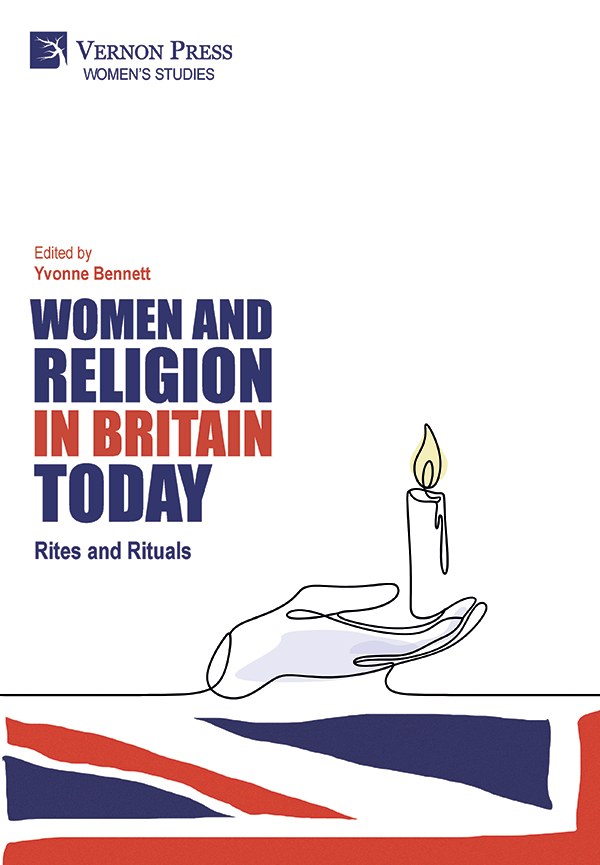
Yvonne Bennett, Amanda Norman, Sharon Jagger, Nicole Holt, Miles Greenford, Pip Wylde, Clair James, and Emily-Louise Wain
This book is the second volume edited by Yvonne Bennett examining the lived religious lives of women in 21st-century Britain. The authors continue to explore contemporary women’s spirituality by looking at the way women use rituals and rites within their lives. Coming from different academic fields, the contributors bring together an interdisciplinary collection of voices on the topic of rituals and ritualistic behaviours. The chapters are woven together to shine a heterogeneous light on religion in the twenty-first century and the impact it has on women in Britain today. The volume also examines the editors’ own spirituality alongside that of the participants, offering a hybrid academic-practitioner viewpoint on ritual. The chapters begin and end with a philosophical examination of ritual and the manner in which ritualistic behaviours are incorporated into human experience. This book takes the reader on a journey from the cradle to the grave and from medieval history to the present day.
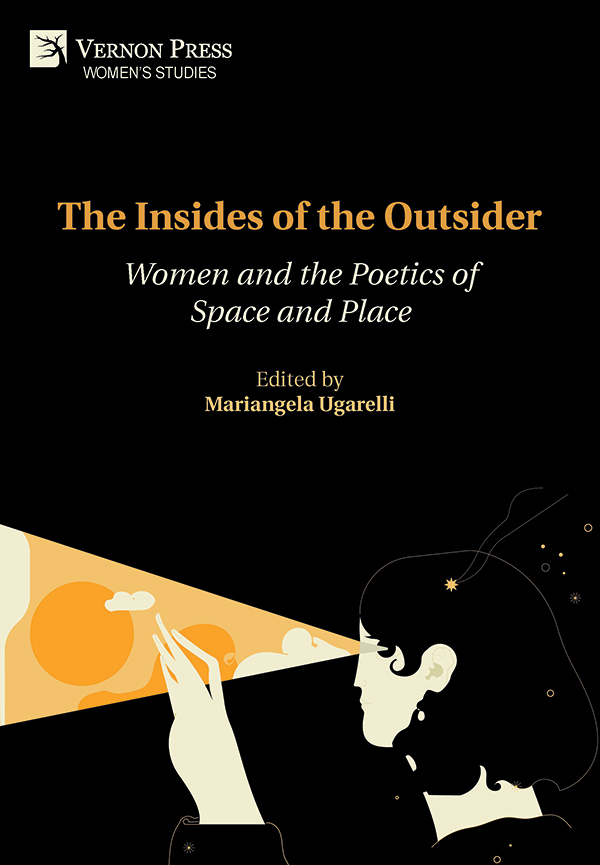
Jhonn Guerra Banda, Juan Diego Perez, Lauren Benjamin Mushro, Mariangela Ugarelli, Cecilia Esparza, Rachel Williams, Erna Anderson, Lisu Wang, Alexandra Arana Blas, Liliana Galindo Orrego, and Victoria Mallorga Hernández
When asked if being a woman had a negative impact on her ability to succeed as a writer, Argentine poet Alejandra Pizarnik stated that, even if not a physical impediment, being a woman in a patriarchal society is ‘a tragedy’ in itself. She followed this comment by saying: ‘What matters is what we do with our own tragedies’. Beyond sex assigned at birth, feminized bodies around the world share a similar phenomenological experience, which is dictated by a complicated relationship to space. Before setting pen to paper, the woman writer, a monster herself within patriarchal discourse, must confront the role society has set for her. For a writer in a feminized body, thus, the act of writing never begins with a tabula rasa but with a refusal and a challenge, an ushering out of the supposed ‘eden’ of the domestic. The question of the women-writer’s space is further exacerbated when considering matters of intersectionality. The poetics of space and place change within the confines of different geopolitical structures and their relations amongst each other. How do they shift when the center becomes de-centered and writing stems not from a place of political power but from the quieted voices of minor literature, queer and racialized bodies or subalternized latitudes? This volume will attempt to address these questions with input from a diverse group of scholars dealing with an equally diverse corpus. North and Latin America converse with Europe while ‘genre’ literature, minor literature and ‘gendered’ literatures take center stage. By taking into account a wide array of cultural objects, from poetry and children’s literature to Gothic tales and television shows, this collection of articles reveals the profound link between space and the female experience through the lens of art and literature.
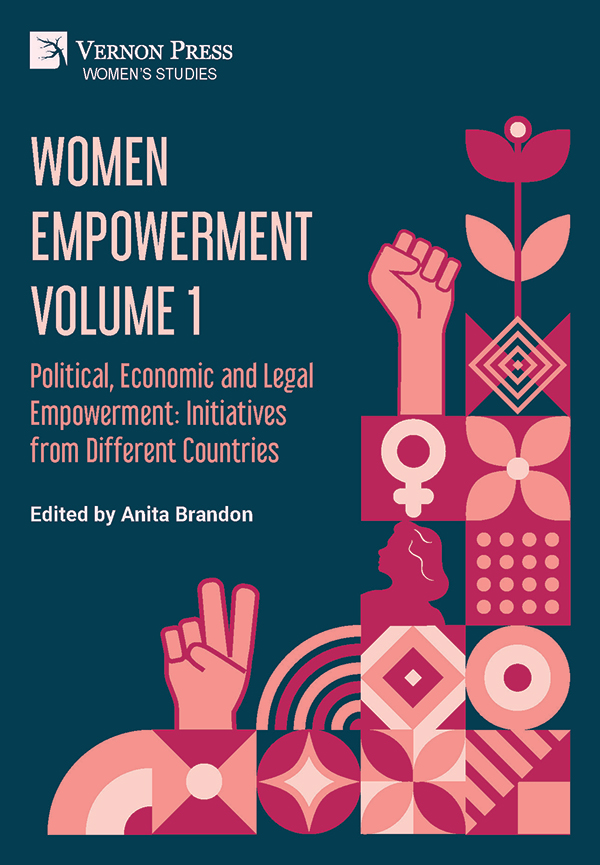
Political, Economic and Legal Empowerment: Initiatives from Different Countries
Talia Esnard, George Mathew, Tamara Martsenyuk, and Maya Lynum-Walker
This volume on Women Empowerment is a showcase for readers interested in case studies on Women Empowerment in the Political, Economic, and Legal Contexts from different countries across the world. The case studies here are presented under four sub-themes.
Diverse Initiatives from Across the World
Afsaneh Tavassoli, Afsaneh Tavassoli, Maliheh Abedi, Ruchira Bhattacharya, Justina Olufunke Aruna, Tarushikha Sarvesh, Hamida Mosharraf Moniea, Tasnim Tarannum, Chandra Shekhar Singhal, Veronica Valencia Gonzalez, and Kathleen Anangwe
This volume brings together powerful voices and lived experiences from across the globe, spotlighting how women are transforming their realities through health initiatives, education, entrepreneurship, social activism, and legal reforms. From rural India to urban Kenya, from the classrooms of Bangladesh to the legislative halls of the U.S., these stories reveal the multiple layers of struggle and strength that define the global movement for gender equality. Drawing from regions as diverse as Iran, Nigeria, and Latin America, the case studies dive deep into the intersections of gender with caste, age, class, and migration, showing how empowerment is not one-size-fits-all, but built through cultural context, resilience, and community. At the heart of this collection is a bold call to action: to rethink how we measure progress and to center women’s realities in policymaking and advocacy. Whether addressing reproductive health, digital entrepreneurship, or the challenges of elderly and immigrant women, the book highlights strategies that are as practical as they are inspiring. Finally, it offers a rich, comparative lens on how far we’ve come—and how much further we must go—to achieve true gender equality.
Terry Novak, Margie Burns, Sarah Fisher Davis, Melissa Jenkins, Lee Skallerup Bessette, Kathleen Ahrens, Nourit Melcer-Padon, Mariana Past, Jeanne Marie Rose, and Dana Shiller
'Ages and Stages: A Glimpse into the Lives of Women in the Academy' offers the perspectives of ten women academics, mostly but not exclusively from the United States, who share both their struggles and their successes in the world of higher education. Ranging from graduate students to those nearing retirement, the essay authors aim to write in conversation with one another and to bring readers into the conversation. Readers will find various perspectives on issues unique to women academics—including motherhood, societal expectations, and institutional assumptions—and will discover various methods of navigating the unique challenges of women academics.
Ayana Allen-Handy, Ayana Allen-Handy, Katie Mathew, Kimberly Sterin, Kimberly Sterin, Tajma Cameron, Joe Omojola, Murty Kambhampati, Phyllis Okwan, Medha Dalal, Tara Nkrumah, Jennifer Kouo, Stacy Klein-Gardner, Zingiswa Jojo, Jacqueline Genovesi, Kimberly Godfrey, Dominique Thomas, Janai Keita, Amber Simpson, Caro Williams-Pierce, Signe E. Kastberg, Carole Burton Sox, Sheryl Fried Kline, Darrin Collins, Erica Dixon, Deborah A. Harmon, and Cheryl L. Price
With the stagnant low percentages of women in STEM careers, identifying practices to satisfy the growing need for professionals in those fields is critical to improve recruitment and retention. Supportive relationships, like mentors and sponsors, have been shown to both inspire women to pursue those careers and to help them succeed in them. This book explores how developing supportive connections helps students, faculty, and teachers see STEM professions as being a place for women to grow and succeed. Early chapters provide essential mentor characteristics and explore engineering education gender inequity from a teacher's perspective of stereotypes, stereotype threat, and bias, offering culturally relevant teacher mentoring approaches to promote equitable pre-college engineering education. Middle chapters describe K-12 mentoring programs: mentorship initiatives empowering young South African Women and girls to advance to mathematical-related careers; programs, methods and activities to achieve the desired goal of making young students aspire to become scientists; and engagement year-round in grades 9-12 combined with 40 years of iterative evaluation created a finely-honed enrichment program for low-income Black women in urban public high schools. A longitudinal undergraduate mentoring program for mentoring early college students in Louisiana provides further insights in that section. The final four-chapter section describes mentoring programs for professors and teachers: reciprocal mentor relationships and role shifting within an informal peer mentoring group; differences between mentoring relationships and sponsoring relationships within academia; the impact of culturally responsive mentorship (CRM) on the development and expression of a pre-service teacher’s woman of science identity; and a program that aims to recruit and retain STEM pre-service teachers and STEM teachers of color. With several longitudinal mentoring programs, several programs for women of color, this book fills a gap to help grow the numbers of women in STEM.
A comparative analysis between Spain and Italy (1993-2015)
Stellamarina Donato
What stage of development are women’s rights as human rights? By specifically regarding the prevention and elimination of all forms of Violence Against Women, the book focuses on two European Mediterranean countries: Italy and Spain. The book first considers the chronological description and analysis of the main international documents, those belonging to the United Nations apparatus, followed by the analysis of the sources on Gender-Based Violence Against Women (GBVAW) of the Council of Europe and the European Union. The analysis of international documents guarantees an initial overview of the debate on GBVAW, following a top-down approach, from the UN to the national level. Successively, the focus is on both national sources as well as the level of government responsiveness in terms of policies on GBVAW in Italy and Spain, while also comparing the cases. The book adopts multimethod research based on qualitative text analysis; an examination of the level of national Government Responsiveness to GBVAW, and a series of in-depth interviews with targeted individuals. The final aim of this book is to understand how international (UN) and regional (CoE, EU) documents on GBVAW, along with the categories and expressions used within the documents, have contributed to different policies in countering GBVAW in Italy and Spain, while also highlighting the reasons why the two countries responded differently. Within a comprehensive international scenario, this book intends to create space for debate on possible future EU policies aimed at contrasting GBVAW.
Christina Foisy, Jessica Lowell Mason, Chloe Leung, Riley Clare Valentine, Maria Rovito, Nadia Steven Rysing, Kyéra Sterling, Stevie Scheurich, Nicole Rizzo, Nicole Turner, Kritika Sharma, Sonakshi Srivastava, Janna Brown, J. M. Gagnon, Erin Soros, and Brittani Smit
'Madwomen in Social Justice Movements, Literatures, and Art' boldly reasserts the importance of the Madwoman more than four decades after the publication of Sandra Gilbert and Susan Gubar’s seminal work in feminist literary criticism, 'The Madwoman in the Attic'. Since Gilbert and Gubar’s work was published, the Madwoman has reemerged to do important work, rock the academic boat, and ignite social justice agency inside and outside of academic spaces, moving beyond the literary context that defined the Madwoman in the late 20th century. In this dynamic collection of essays, scholars, creative writers, and Mad activists come together to (re)define the Madwoman in pluralistic and expansive ways and to realize new potential in Mad agency. This collection blazes new directions of thinking through Madness as a gendered category, comprised of a combination of creative works that (re)imagine the figure of the Madwoman, speeches in which Mad-identifying artists and writers reclaim the label of “Madwoman,” and scholarly essays that articulate ambitious theories of the Madwoman. The collection is an interdisciplinary scholarly resource that will appeal to multiple academic fields, including literary studies, disability studies, feminist studies, and Mad studies. Additionally, the work contributes to the countermovement against colonial, sanist, patriarchal, and institutional social practices that continue to silence women and confine them to the metaphorical attic. Appealing to a broad audience of readers, 'Madwomen in Social Justice Movements, Literatures, and Art' is a cutting-edge inquiry into the implications of Madness as a theoretical tool in which dissenting, deviant, and abnormal women and gender non-conforming writers, artists, and activists open the door to Mad futurities.
Belonging
Amanda Norman, Nazia Yaqub, Sharon Jagger, Nicole Holt, Ayse Çirçr, and Miles Greenford
Little is written about the lived religious lives of women in 21st-century Britain. The authors of this book seek to address this gap by exploring contemporary women’s spirituality in Britain. As the authors inhabit different academic fields, we bring together an interdisciplinary collection of voices to address this subject. We examine a range of ways in which religion continues to impact the lives of women in Britain today. The chapters of this book examine the manner in which religion and spirituality continue to impact women’s lives, and by doing so, we offer a heterogeneous look at religion in the 21st century. We not only tackle the spirituality of our research participants but, by writing about our experiences as ‘women being spiritual’, we offer a hybrid academic-practitioner viewpoint. From Islamic marriage laws to the ordination of female Anglican clergy, we focus on the concept of belonging (or not) through culture and the use of female-only spaces and organisations. Belonging is an important social motive; the need for acceptance and belonging is a fundamental concept that drives behaviours. Exploring how we belong grants an understanding of how choices are made, both by the individual and the group.