Loading...
Please wait while we load the content...
Loading...
Please wait while we load the content...

Explore peer - reviewed titles across the humanities and social sciences - rigorous research, fresh perspectives, and scholarship that inspires dialogue across disciplines.
Stay informed about our latest publications, calls for proposals, and special announcements. As a subscriber, you'll also enjoy exclusive member discounts of 10%-20% on all orders. Join our community of scholars, librarians, and readers today.
From special discounts and global distribution partners to downloadable catalogs, flyers, and high-resolution covers, we make it easy to enrich your library’s collection. Access bibliographic data, explore subject-specific listings, and stay updated on forthcoming titles.
Become part of our librarian network and access dedicated tools, discounts, and resources to support collection development and promote new titles to your patrons.

Partner with Vernon Press to provide your customers with high-quality, peer-reviewed scholarship. We offer flexible ordering options, reseller agreements, and promotional materials to support your sales and outreach.

Vernon Press provides dedicated resources to help instructors adopt our books for courses and to support students with affordable access to high-quality scholarship. From desk and examination copies to tailored student editions, we aim to make our titles accessible in the classroom.
Volume 2: Representations
Author information not available
No description available
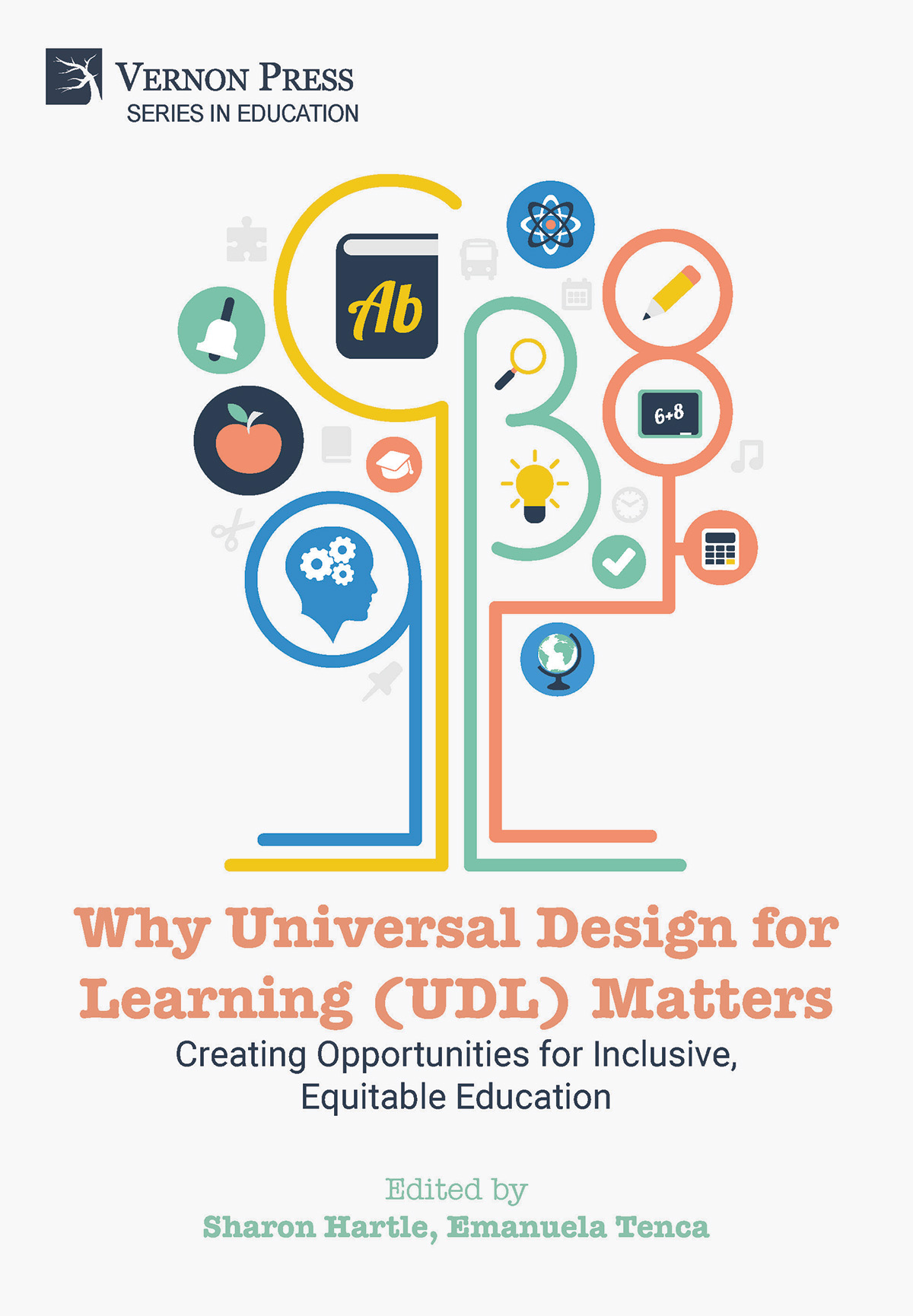
Creating opportunities for inclusive, equitable education
Cristina Dumitru, Aleshia V. A. Allert, Lisa Francis-Charles, Maria Cristina Nisco, Domenico Tafuri, Giorgia Andreolli, Melissa Bishop, Diane Montgomery, Giorgia Pomarolli, Sabrina Piccinin, Serena Dal Maso, Maria Vender, Jhon Alexander Garcia Camargo, Judy Constanza Beltrán-Rojas, and Nhora Paulina Parra-Ortiz
This volume explores the importance of Universal Design for Learning (UDL) as a transformative framework for inclusive and equitable education. Through chapters contributed by international scholars, it examines the practical application of UDL in various educational contexts, including higher education, assessment, language education, and lifelong learning. The book positions UDL as an essential approach for creating accessible learning environments that embrace diversity and overcome barriers. Highlighting innovative case studies and research, it serves as a resource for educators, policymakers, and researchers committed to fostering inclusivity and improving educational outcomes globally.
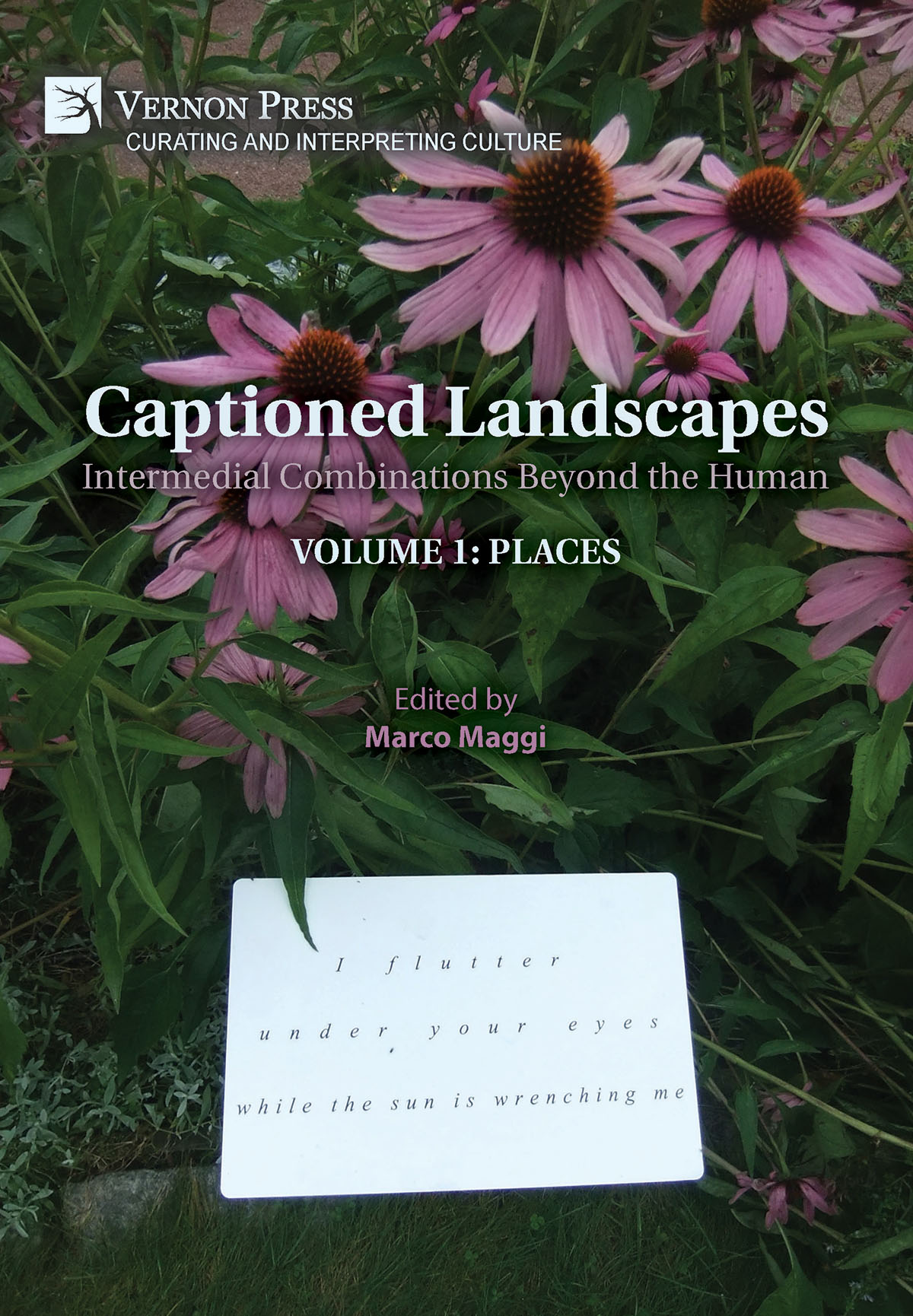
Volume 1: Places
Marco Maggi, Yolaine Escande, Silvia Lavanco Livreri, Erik Erlanson, Vega Tescari, Clodagh Brook, Pedro Medina Reinón, and Caterina Diotto
'Captioned Landscapes' is the first comprehensive monograph on intermedial combinations between writing and natural environments. Writing is traditionally considered as a distinctive sign of the human; interrogating its interactions with the world beyond the human means questioning its presumed centrality and separateness. The multiple angles from which these combinations are studied in this two-volume anthology are relevant for questions regarding the ontologies that structure the relationships between human and non-human, as well as for questions of ideology, interculturality, memory, gender and the postcolonial. Landscape reception studies usually assume not only a distinction but also a separation between the human and the non-human, attributing the privilege of subjectivity only to the former. This dualistic paradigm has been recently replaced by intermedial ecocriticism, which conceives the relationship between human and non-human as a negotiation without rigid and pre-established roles. However, attention has been focused so far on the representations (verbal, but also visual) of these relationships. In this monograph, for the first time, instead of representations of natural environments (in writing or other media), intermedial combinations between writing and landscapes are taken into account; particular attention is also paid, in the second volume, to verbal and visual representations of these combinations. The book addresses Intermedial and Visual Studies and Environmental Humanities scholars. Because of the specific focus on combinations of writing, landscape, and verbal and visual representations of the latter, the book is also aimed at scholars of Literature, Garden and Landscape Design and History, and Visual Arts. By virtue of the case study approach in the chapters and the general theoretical framework provided in the introduction, the book also addresses students of all these disciplines.
Andrea Gremels, Anna Reid, Brianna Mullin, Olivier Penot-Lacassagne, Julia Drost, Victoria Ferentinou, Christina Heflin, Tor Scott, Adam Jolles, Kristoffer Noheden, Krzysztof Fijalkowski, Samantha Kavky, and Terri Geis
'Surrealism and Ecology' is the first volume to consider the intersections of these two fields. It addresses the contribution of the avant-gardes in thinking about the relationship of humans with their environment in the context of massive environmental upheaval in the twentieth century. This volume explores the significant role of Surrealist artists and writers within the history of critical thinking about nature and environment over the last hundred years. It approaches ecology both as a mode of thinking about the many interconnections of life and as a way of experiencing and knowing the world. The relationship of humans with their environment is of paramount significance within contemporary discourse, and the contribution of the historical avant-gardes to this topic remains largely underexplored. In addressing this gap, the book presents a diverse selection of analyses of the ways in which the Surrealists have thought about and represented nature and the human place within it. It emphasises how Surrealism’s interventions in connecting seemingly distinct domains of thought and phenomena can be understood as relevant to more recent developments in the practice of ecological thought. Surrealist practices and the academic field of Surrealism studies are broad in scope and include not only visual art, but also poetry and literature, film, philosophy, exhibition design, and experimental practice. This volume includes contributions from established and developing scholars working across disciplines and locations, who address such varied practices and engage with analyses from multiple perspectives. The international and trans-Atlantic history of Surrealism is well-represented in this book, with over half the texts exploring the work of European Surrealists in exile during the Second World War or the art and environmental and political activism of Surrealists in the Caribbean and throughout the Americas.
Brenda Longfellow, Virginia Luzón-Aguado, Belinda Smaill, Simon R. Troon, Melanie Ashe, Zeke Saber, McKew Devitt, Ariadna Cordal, Jennifer Schell, Aarón Lacayo, Mary Hegedus, Scott Birdwise, Emily Collins, Graig Uhlin, Elio Della Noce, Samantha R. Sharp, and Marek Jancovic
Motivated by the exigency of climate change, 'Cinematic Ecosystems: Screen Encounters with More-than-Humans in the Era of Environmental Crisis' takes cinema to be an audiovisual form whose creation and meaning are deeply connected to more-than-human worlds. As part of the third wave of ecocinema studies, this collection gathers contributions on multiple cinema forms from an international group of scholars and artists who offer diverse, critical perspectives that respond to the question: How does cinema help or hinder us in coming to know the more-than-human world? The collection homes in on the concept of the ecosystem as a biological and technological system that comprises a network of inter-relational living and their inanimate elemental affordances to explore encounters with cinema as a material object and practice, a spectatorial experience, and a representational text. The chapters cover environmental topics that span five continents and multiple histories. This book will be of special interest to film studies scholars and artists interested in cinema and climate change, environmental justice, and posthumanism.
Author information not available
This edited volume presents critical analyses of animism in the arts with a focus on the boundary practices of going feral. Reconsidering the question posed by Cecilia Alemani, Venice Biennale 2022 curator, authors explore ‘what would life look like without us?’, in a world activated by things and a post-humanist animism. These speculative discussions are developed in this volume, in which we consider how the process and practices of going feral might materialise through and across creative investigations. Going feral is a provocative call to untame, queer and radicalize feminist thought and practice, producing more-than-human, multispecies entanglements, and processes of dynamic resistance. The chapters critically analyse processes of going feral in artworks and art practices ranging from fine art, art history and performance to architecture, video games and poetry. They consider how going feral allows audiences to form meaningful relationships with spoiled landscapes, develop human and non-human communities, and to reimagine the domestic and the everyday through the prism of new animism. The creative practices discussed are geographically diverse, including examples from South Africa, Brazil, Ukraine, South Korea, Mexico, the Caribbean, Europe and North America. Through these wide-ranging approaches and case studies, the book asks, what are potential futures materialised through artworks that rethink the present as a world populated by things, a place where the sensibility of materials becomes carriers of agency? This edited volume argues that animism and ferality are vital tools for artists and creative professionals to describe and critique the increasing inequalities and continuous states of emergency that characterise late-stage capitalism. The concept of going feral is a critical framework to frame contemporary issues such as environmentalism, waste and discard studies, and speculate ways of decentring anthropomorphism.
Erik Stanley, Sarah Snyder, Rory O’Dea, Adith K. Suresh, Kayla Kruse West, Chak-kwan Ng, Sony Jalarajan Raj, Keitaro Morita, Kumar Sawan, Will Anderson, and Mayank Kejriwal
'Entangled and Empowered: Agency in Multispecies Communities' is a collection that approaches the inevitable reality of entanglement between humans and other beings from a perspective of action and wonder. It argues that actors as diverse as bacteria, snakes, butterflies, ducks, and cacao trees can help us enact joy in fields as different as art, cinema, literature, and anthropology. While acknowledging the imminent reality of climate change, the sixth extinction, and other overwhelming threats to the Earth, this book argues that humans continue to live, and so do the beings whose lives are entwined with ours, for whom we can acknowledge and work to improve their existence. The nine essays in this volume trace that acknowledgment and work through three sections centered on visual media, queer and feminist readings of empowerment, and movements beyond the boundaries enacted by anthropocentric Western society. Drawing on theories such as new materialism, posthumanism, and ecofeminism, and with an international perspective from authors working at American, South Asian, and East Asian universities, 'Entangled and Empowered' finds hope in the shadow of despair. It engages with work by Anna Lowenhaupt Tsing on entanglement, Donna Haraway on kin-making and multispecies communities, and Karen Barad on intra-actions, among others, while also showing how critiques of these ideas can make the world both more promising and more endangered. This collection will be useful for scholars working in all subfields of environmental humanities, especially those intersecting with the theories described above and as an archive of examples analyzing practical aspects of agency in diverse multispecies communities. Scholars studying texts as well-known as 'The Handmaid’s Tale' and as obscure as the codices of the Mopan Maya will find value in having both under one cover.
Zoi Aliozi, Lu Shegay, Pierpaolo Petrelli, Alana Malinde S. N. Lancaster, Bolanle T. Erinosho, Hashali Hamukuaya, Tajudeen Sanni, Mark Chadwick, Ronald Rogo, Christine Okidi, Shabnam Moinipour, Henna J. Shah, and Vy Thuy Nguyen
'Blue Crimes and International Criminal Law' is a multi-author volume which explores the connection between criminal law and water (including our oceans and other bodies of water). The volume seeks to contribute to evolving discourse around water rights and water justice around the world. This novel volume surveys topics such as climate justice and blue crimes, water governance, illegal, unregulated, and underreported fishing, Rights of Nature, and examines the utility of ocean treaties and justice and accountability mechanisms within international criminal law, 'Blue Crimes and International Criminal Law' is a companion volume to 'Green Crimes and International Criminal Law.'
Caroline Hensley, Yasuko Kase, Eliko Kosaka, Jun Okada, Yana Ya-chu Chang, Gayle Sato, Satarupa Sengupta, Jennie Snow, James Sun, and Ningning Huang
With a focus on the transpacific and transnational relationship between North America and Asia, 'Emerging from the Rubble: Asian/American Writings on Disasters' explores Asian/Americans’ complex and nuanced involvement in disastrous events. Included in this purview of disaster are not only the damages and threats of current ongoing climate change but also the long-lasting ruining effects inflicted by imperialism, neo/colonialism, wars, and these historical components’ entanglement with global capitalism that have generated both spontaneous and slow and/or prolonged violent effects. Moreover, disasters can be acknowledged as manifestations of the Anthropocene — an epoch shaped by human activity — or what scholars like Jason W. Moore and Donna J. Harraway term the ‘Capitalocene,’ a paradigm where nature and capitalist society are deeply intertwined, co-creating an intricate web of life. Asian/American involvement in such a web has never been simple but convoluted: some of them have experienced tremendous losses, whereas others have perpetuated obfuscation of the truth and/or induced violence, often contingently with or without acknowledging the facts. When considering Asian migrants including refugees from Southeast Asia who had little option but to seek asylum in the U.S., and Asian Americans who have pursued their “happiness” under the U.S.’s capitalist premise of constant progress, protection of “human rights,” and freedom of “choice,” it is important to note that Asian migrants and Asian ‘Americans’ have become simultaneously active players and exploited individuals within the context of U.S. racial capitalism. Acknowledging the impossibility of clearly differentiating natural and human-made disasters, scholars who contribute to this volume note the reciprocal influences between nature and civilization. They examine how the entanglements of natural and human-made disasters lead to the acceleration and expansion of damage. This volume explores how Asian Americans’ connections with their ancestral origins along with their particular racial positions, social classes, and socio-historical backgrounds in North American societies force them to experience and witness disastrous events differently from the mainstream discourse on eco-crises.