Loading...
Please wait while we load the content...

Loading...
Please wait while we load the content...
Stay informed about our latest publications, calls for proposals, and special announcements. As a subscriber, you'll also enjoy exclusive member discounts of 10%-20% on all orders. Join our community of scholars, librarians, and readers today.

Availability
In stock
ISBN
9798881903220
Edition
1
Publication Date
September 9, 2025
Physical Size
236mm x 160mm
Illustrations
33 Color
Number of Pages
286
Currency
Quantity
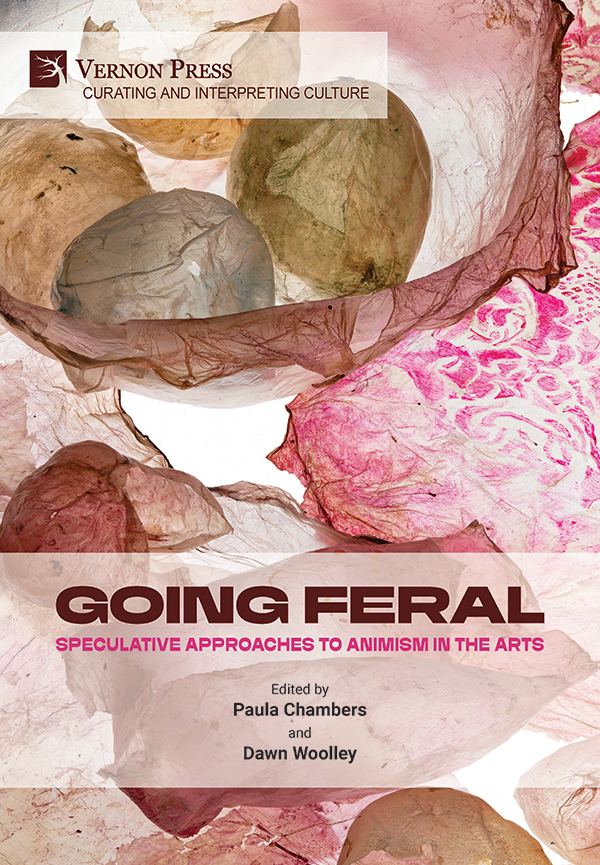
This is an important book that adopts speculative methodologies to consider what it might mean to give agency to materials and non-human co-producers of the world in which we live using a wide range of artworks and artmaking as its scoping tools. Speculation is taken up as a feral act in its capacity to resist boundaries of the known and the historically located. Thus, the essays brought together operate and create space between wild and domestic living, crossing back and forth, contaminating one another and their materials. The essays hover between materialism, animism and post-colonial discourses, disrupting and infecting, drawing attention to state of anxiety and increasing inequalities that have become the characteristics of late-capitalist society. The authors collectively offer new ways to think of what it means to be in community with the world as a whole, offering optimistic approaches that are both realisable and realistic. “Going Feral” is speculative, and it is agential – this volume gives hope and ambition.
Prof. Dr. Catherine Dormor
Textile Practices & Feminisms
University of Westminster
This book responds to the unimagined consequences of imperial, colonial and industrial infrastructures through the boundary art practices of going feral. Grounded in animism and attentive to its cultural and political complexities, it speculates on how to untame and disrupt the European project of expansion. An invaluable multidirectional guide for readers interested in more-than-human entanglements and the potential futures they materialise.
Dr. Basia Sliwinska
Researcher
Art History Institute (IHA), Universidade Nova de Lisboa, Portugal
“Going feral: Speculative approaches to animism in the arts" provides an impactful art theoretical framework with key case studies to further the important intellectual work of debunking dualistic, anthropocentric thinking and carving space for pluralistic understandings of our post-humanist existence. Through the biological and intellectual concepts of ferality and animism, the co-editors produce a nuanced, yet radical framework that pushes past binary-based thinking and brings contemporary conceptualization, including feminist thought, queer theory, post-humanism and performance, into new territories. Through key essays that engage boundary-pushing art and conceptual practices, important voices in the materialist, decolonial and resistance movements of international scope are brought together into one volume. The cross-disciplinary scope of this text, while grounded in contemporary art practices and research, provides imaginative and speculative methodologies to foster meaningful relationships in our precarious and uncharted future through criticality, care and consideration.
Prof. Diana Heise
Kansas City Art Institute
Discover books that expand on the themes explored in this work—titles that engage with similar questions, intersecting disciplines, and complementary perspectives to deepen understanding and broaden the conversation.
Browse all titles
Carmen Flys-Junquera and Alejandro Rivero-Vadillo (Eds.)
View more