Loading...
Please wait while we load the content...

Loading...
Please wait while we load the content...
Stay informed about our latest publications, calls for proposals, and special announcements. As a subscriber, you'll also enjoy exclusive member discounts of 10%-20% on all orders. Join our community of scholars, librarians, and readers today.


Availability
In stock
ISBN
9781622738304
Edition
1
Publication Date
April 6, 2021
Physical Size
236mm x 160mm
Number of Pages
290
Currency
Quantity
Interesting and of sound quality.
Dr. Chaunda L. Scott
Oakland University
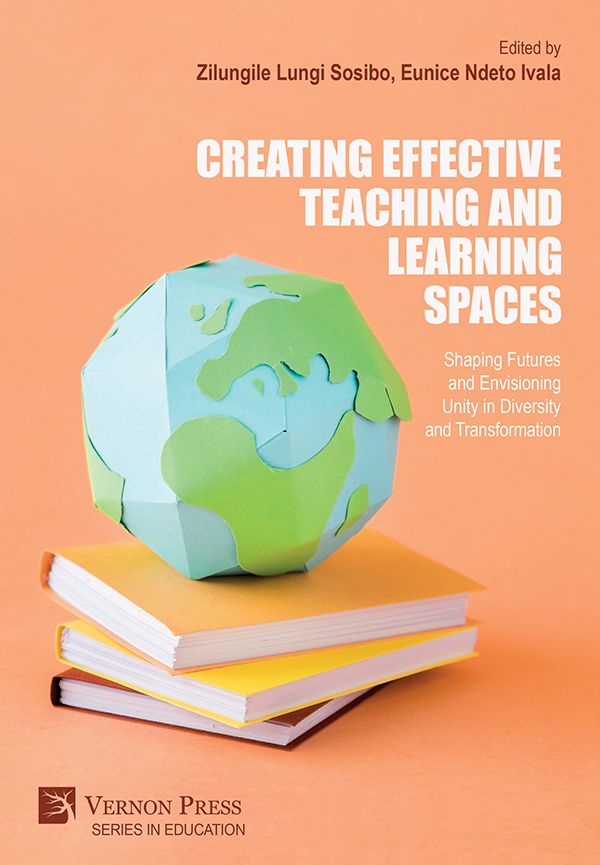
The transformation of teaching methods and curricula to address a changing socioeconomic world and redress social and economic injustice is central to the success of higher education systems. While the chapters in this volume focus on southern Africa, “Creating Effective Teaching and Learning Spaces” provides important and useful case studies, ideas, and recommendations for educators and policymakers around the globe. The history of colonization and apartheid, and the efforts at de-colonization, in southern Africa, makes the knowledge currently being produced there especially important and useful to educators everywhere. I recommend this innovative and useful volume to educators and policymakers who are endeavoring to achieve equity and inclusion and improve the quality of education available to all students.
The strong points of “Creating Effective Teaching and Learning Spaces” include
• • its multifaceted, intersectional approach that includes sex/gender as well as race/culture and socioeconomic status
• • attention to the need to decolonize both knowledge and the educational system itself and to consider how to incorporate indigenous knowledges and pedagogies in HE
• • concern with analyzing both equity of access and equity of outcomes and how HE institutions reproduce and can reduce social inequities
• • discussion of a variety of pedagogical strategies such as bilingual instruction, code-switching, peer assessment, ICT, blended learning, curriculum as process
• • discussion of the need for HE institutions to attend to students’ economic and social environments because these affect their academic success
• • discussion of the need for HE institutions to attend to students’ social and life skills as well as academic skills and knowledge
• • discussion of institutional practices and policies such as education funding (of individual students and HE institutions), teacher professional development, policies and support systems regarding gender-based violence, the curriculum development process
Dr. Diana L. Swanson
Professor Emerita, Department of English
Northern Illinois University
Discover books that expand on the themes explored in this work—titles that engage with similar questions, intersecting disciplines, and complementary perspectives to deepen understanding and broaden the conversation.
Browse all titles
Nicholas D. Young et al.
View more
Teresa A. Citro, Nicholas D. Young, and Angela C. Fain (Eds.)
View more