Loading...
Please wait while we load the content...

Loading...
Please wait while we load the content...
Stay informed about our latest publications, calls for proposals, and special announcements. As a subscriber, you'll also enjoy exclusive member discounts of 10%-20% on all orders. Join our community of scholars, librarians, and readers today.


Availability
In stock
ISBN
9781622733132
Edition
1
Publication Date
June 1, 2019
Physical Size
236mm x 160mm
Illustrations
14 Color
Number of Pages
145
Currency
Quantity
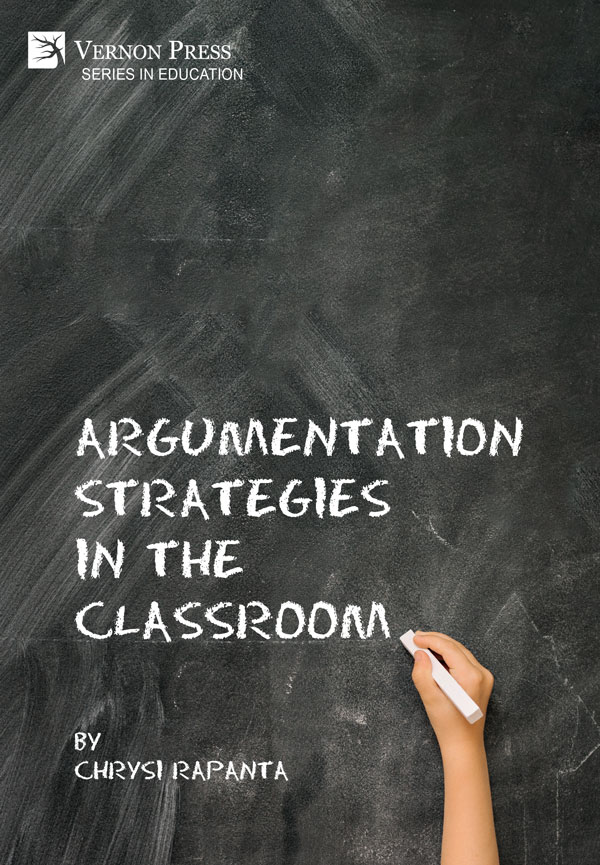
There are few more important educational goals than to help students become skilled, confident arguers. Teachers by and large lack the knowledge and skills needed to meet this goal. This book provides a good introduction tailored for teachers new to the subject.
Prof. Dr. Deanna Kuhn
Columbia University
The strength of the book is its rigorous, exhaustive and very updated theoretical background. The essential concepts in the field of argumentation applied to education are defined very clearly according to the different philosophical perspectives. These concepts help understand the different approaches to the area, sometimes confusing. The book covers a gap in the literature in the field of argumentation and likewise covers an educational need. Teachers need books like this one.
Current literature in the field of argumentation and education claims that argumentation should be part of the school curriculum given its educational benefits. According to this, this book covers an editorial need for in-service and pre-service teachers.
Prof. Dr. Mercè Garcia-Milà.
Universitat de Barcelona, Spain
'Argumentation Strategies in the Classroom' is a wonderful overview of the literature on classroom argumentation. Citing a broad literature that includes argumentation theory, educational psychology, and classroom research, Rapanta has written an accessible and grounded book that helps teachers and other educational practitioners bring theory and research into practice. It also provides an authoritative snapshot of current trends in teaching with and for argumentation in the classroom. As such, it will be of interest to anyone looking to get the big picture on what we know about the role that teachers can play in fostering argumentation in the classroom, or teaching as argument, as she calls it. The book owes much of its insight to Rapanta’s IMPACT Project, a design-based research project that she conducted in collaboration with middle school teachers interested in integrating argument-based teaching in their classrooms. Of particular interest is her emphasis on balancing instructional design with classroom discourse and teacher moves. Over the course of the book, Rapanta provides a clear sense of where teachers should point their curriculum, while also providing practical steps for getting there.
Prof. Dr. Mark K. Felton
Connie Lurie College of Education, San Jose State University, USA
Discover books that expand on the themes explored in this work—titles that engage with similar questions, intersecting disciplines, and complementary perspectives to deepen understanding and broaden the conversation.
Browse all titles
Nicholas D. Young et al.
View more
Elizabeth J. Bienia and Teresa A. Citro
View more
Nicholas D. Young et al.
View more