Loading...
Please wait while we load the content...

Loading...
Please wait while we load the content...
Stay informed about our latest publications, calls for proposals, and special announcements. As a subscriber, you'll also enjoy exclusive member discounts of 10%-20% on all orders. Join our community of scholars, librarians, and readers today.


Availability
In stock
ISBN
9781622731282
Edition
1
Publication Date
May 15, 2018
Physical Size
236mm x 160mm
Illustrations
3 Color
Number of Pages
230
Currency
Quantity
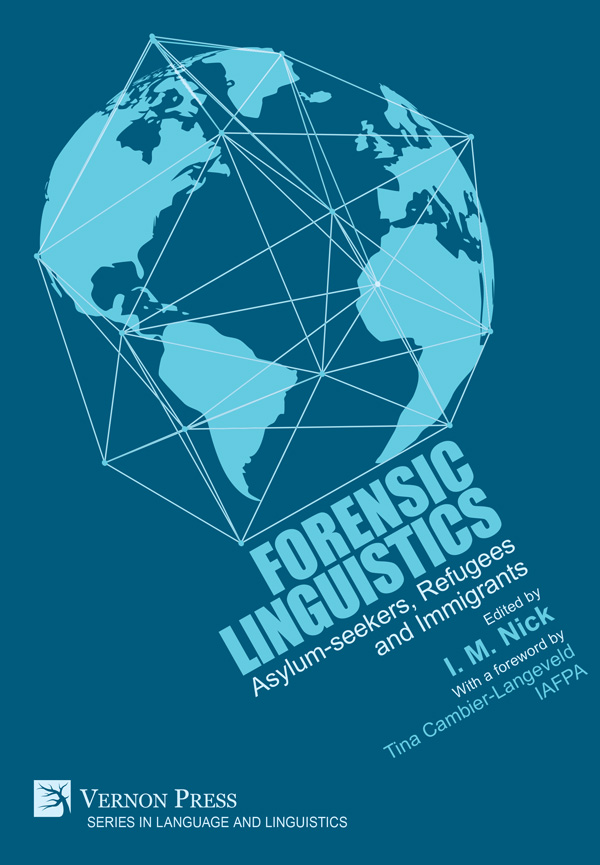
According to international statistics, the world is currently undergoing one of the largest refugee catastrophes in modern history. This humanitarian crisis has stimulated the mobilization of countless private and public rescue and relief efforts. Yet, deep-seated concerns over potential breaches of national security and wide-spread fears over uncontrolled mass immigration have prompted many policy-makers to caution against the unregulated entry of foreigners with little or no identity documentation. In an effort to strike a balance between addressing the needs of these two competing sets of concerns, an increasing number of governments have instituted policies and procedures for identity verification. In this multi-authored work, the focus is placed upon the widespread governmental use of language analyses to investigate displaced persons’ registered origins. This dynamic collection of writings provides readers with a thought-provoking, politically-stimulating, intellectually challenging examination of the pitfalls and promise of these practices across differing sociopolitical, legal, linguistic, and geographical contexts. This contextual diversity reflects the unique strength of this reference work. Unlike so many other publications on the market that focus rigidly upon a single vantage point, this work offers a dynamic exploration of the theory and practice of language analysis for governmentally-mandated identification procedures. From the linguistic scholar to the human rights activist, the agency worker to the asylum-seeking applicant, this collection offers a complex and rich cross-section of professional and personal experiences. The multiplicity of perspectives is powerfully complemented by the heterogeneity of disciplines represented in this work. From sociology, psychology, demography, and language policy to linguistics, ethics, international affairs, government and politics, this work will satisfy a wide variety of readers’ scholarly interests and commensurately serves as an excellent reference work for researchers and practitioners as well as a valuable teaching resource for graduate and undergraduate courses.
Discover books that expand on the themes explored in this work—titles that engage with similar questions, intersecting disciplines, and complementary perspectives to deepen understanding and broaden the conversation.
Browse all titles
Esther Monzó-Nebot and Juan Jiménez Salcedo (Eds.)
View more
Adam Bednarczyk and Magdalena Kubarek (Eds.)
View more