Loading...
Please wait while we load the content...

Loading...
Please wait while we load the content...
Stay informed about our latest publications, calls for proposals, and special announcements. As a subscriber, you'll also enjoy exclusive member discounts of 10%-20% on all orders. Join our community of scholars, librarians, and readers today.


Availability
Temporarily unavailable
ISBN
9781622736034
Edition
1
Publication Date
October 15, 2019
Physical Size
236mm x 160mm
Illustrations
1 Color
Number of Pages
222
Currency
Quantity
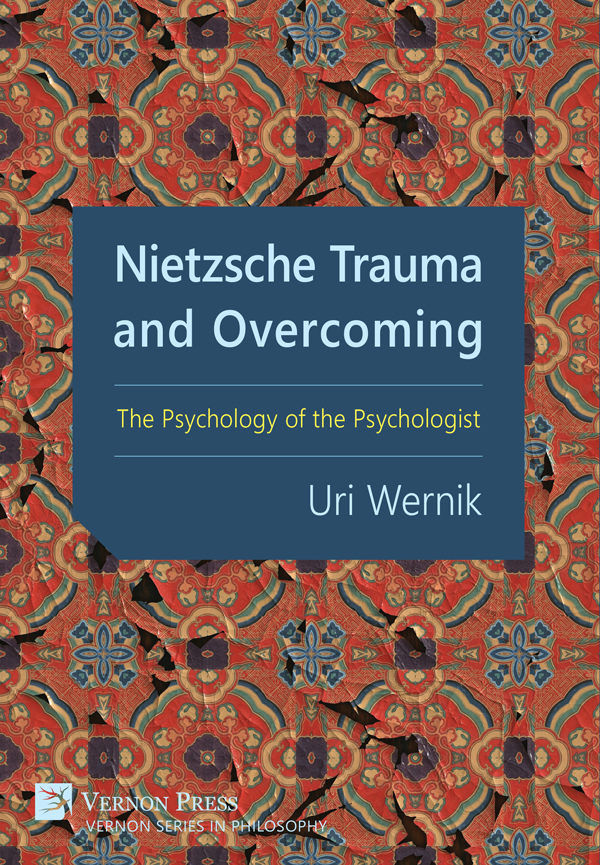
This is an original and convincing account of the left-libertarian dimensions of Nietzsche’s thought, and a valuable corrective to its distorted appropriation by the far right.
Prof. Dr. Uri Gordon,
Co-convenor, Anarchist Studies Network
What is the relationship between Nietzsche and anarchism? And what relevance does Nietzsche have for understanding emergent forms of radical politics? These are the two questions that drive this compelling investigation into Nietzsche’s philosophy. Surely this is an impossible premise, though. Many have tried and failed to derive a radical political interpretation from Nietzsche. Isn’t Nietzsche’s critique of Enlightenment humanism irretrievably tied to an aristocratic conservatism? And didn't he once refer to the anarchists of the nineteenth century as dogs roaming the streets of European culture, dripping with the venom of ressentiment and embodying the worst aspects of slave morality and the democratic herd?
However, as Iliopolous shows in his original reading, there are a series of ‘elective affinities’ that can be formed – through the help of other thinkers like Walter Benjamin and Gustav Landauer - between Nietzsche’s anti-statism and the anti-authoritarian political philosophy of anarchism. What emerges from this is a kind of spiritual anarchism and a creative political and ethical assemblage that can be applied to contemporary insurrections. In a fascinating analysis of the Greek December – the anarchist revolt against the Greek state in 2008 – Iliopoulos shows how we might understand the political event in terms of Nietzschean categories of the Apollonian and Dionysian, master and slave morality, ressentiment, eternal return, and the overman.
Not only does the book open up a new way of reading Nietzsche, but also equips activists with a series of philosophical and ethical tools for understanding themselves and the struggles in which they are engaged.
Prof. Dr. Saul Newman
Goldsmiths University of London, UK
Discover books that expand on the themes explored in this work—titles that engage with similar questions, intersecting disciplines, and complementary perspectives to deepen understanding and broaden the conversation.
Browse all titles